You get the call every HOA manager dreads: water is coming through a Gainey Ranch condo ceiling, and it is not coming from that unit. It is from the one above, or a shared line in the wall, and now two owners and a board are about to spend a week arguing over a bill while the drywall stays wet.
In Arizona condo and townhome communities, a water leak is rarely just a repair. It is a responsibility question — unit owner, neighbor, or the association — and the answer depends on where the water came from and what your CC&Rs say. Meanwhile the mold clock does not care whose fault it is. It starts at 24 to 48 hours regardless of who ends up paying.
Here is how responsibility usually breaks down, and — more important — what to do in the first hour so the damage stops while the adjusters sort out the rest.
The three parties and where the line usually falls
Every condo water loss involves some combination of three parties. The general pattern in Arizona looks like this, though your community's governing documents are what actually control:
- The unit owner is typically responsible for everything from the drywall in — fixtures, supply lines, appliances, and their own interior finishes
- The neighbor whose unit was the source may be liable if their negligence caused it — an overflowed tub, an unmaintained water heater, a hose they never replaced
- The HOA or association usually covers common elements — shared plumbing inside the walls, the roof, and the building envelope
- Who pays for the damage and who pays to fix the source can be two entirely different parties
Master policy vs. your HO-6 — the gap that surprises owners
Most owners assume the association's master policy covers them. Often it does not cover the inside of your unit at all. That is what an HO-6 condo policy is for, and the gap between the two is exactly where uninsured losses hide.
- The master policy typically covers the building structure and common areas up to a defined point
- Your HO-6 covers your interior finishes, personal property, and often loss assessments passed down by the board
- Many master policies carry a high deductible the association can pass through to the owner who had the loss
- Betterments a previous owner made may only be covered by your HO-6, not the master policy
The first hour: mitigate now, argue later
Whoever ends up paying, the damage has to stop today. Waiting for a responsibility ruling is how a two-room loss becomes a whole-floor mold job that costs every party more.
- Shut off the water — at the fixture, the unit, or ask the board to close a shared line
- Notify the board or property manager immediately, and in writing
- Kill power to affected areas if water is near outlets or the panel and it is safe to reach
- Photograph everything, including the ceiling or wall the water came through and the unit of origin if you can access it
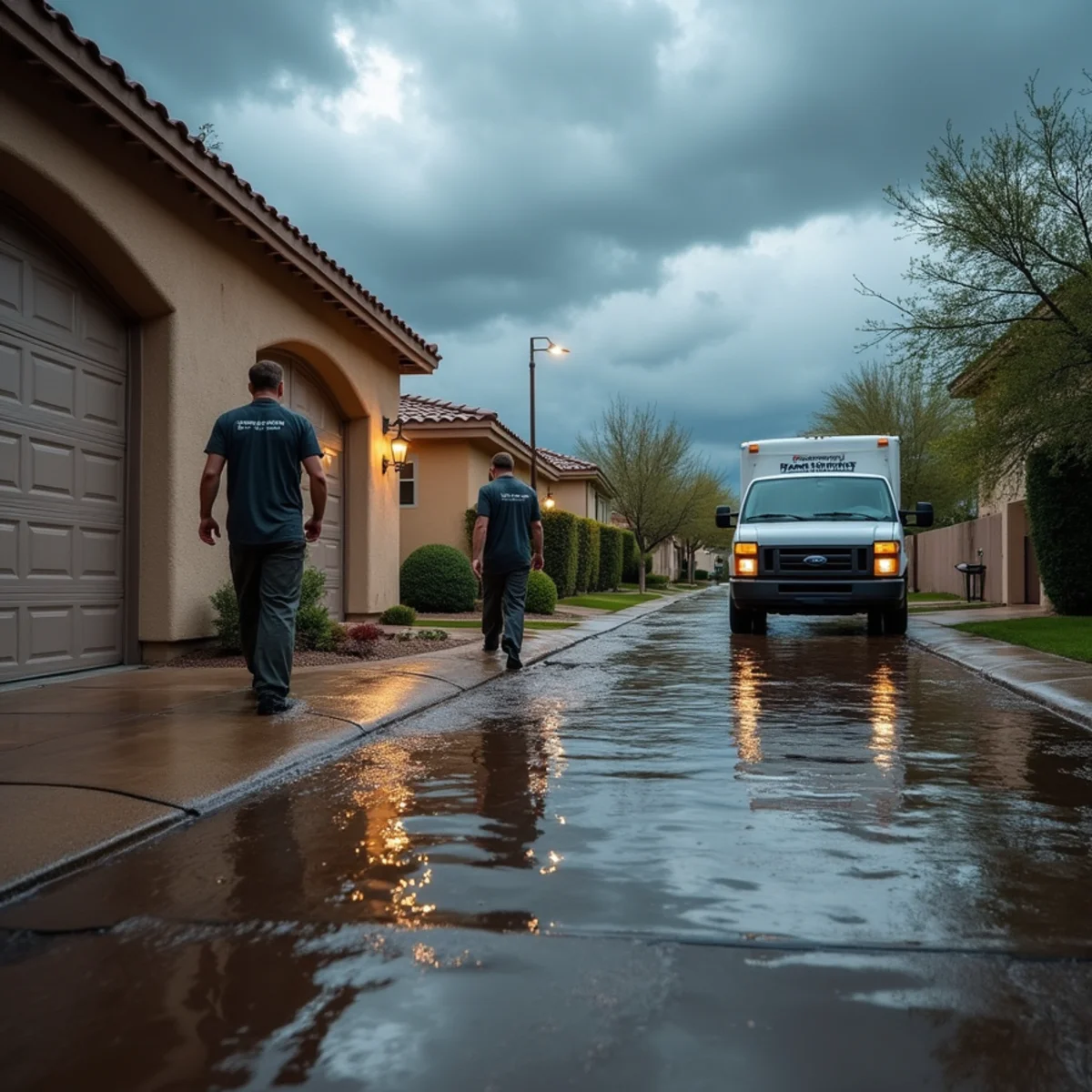
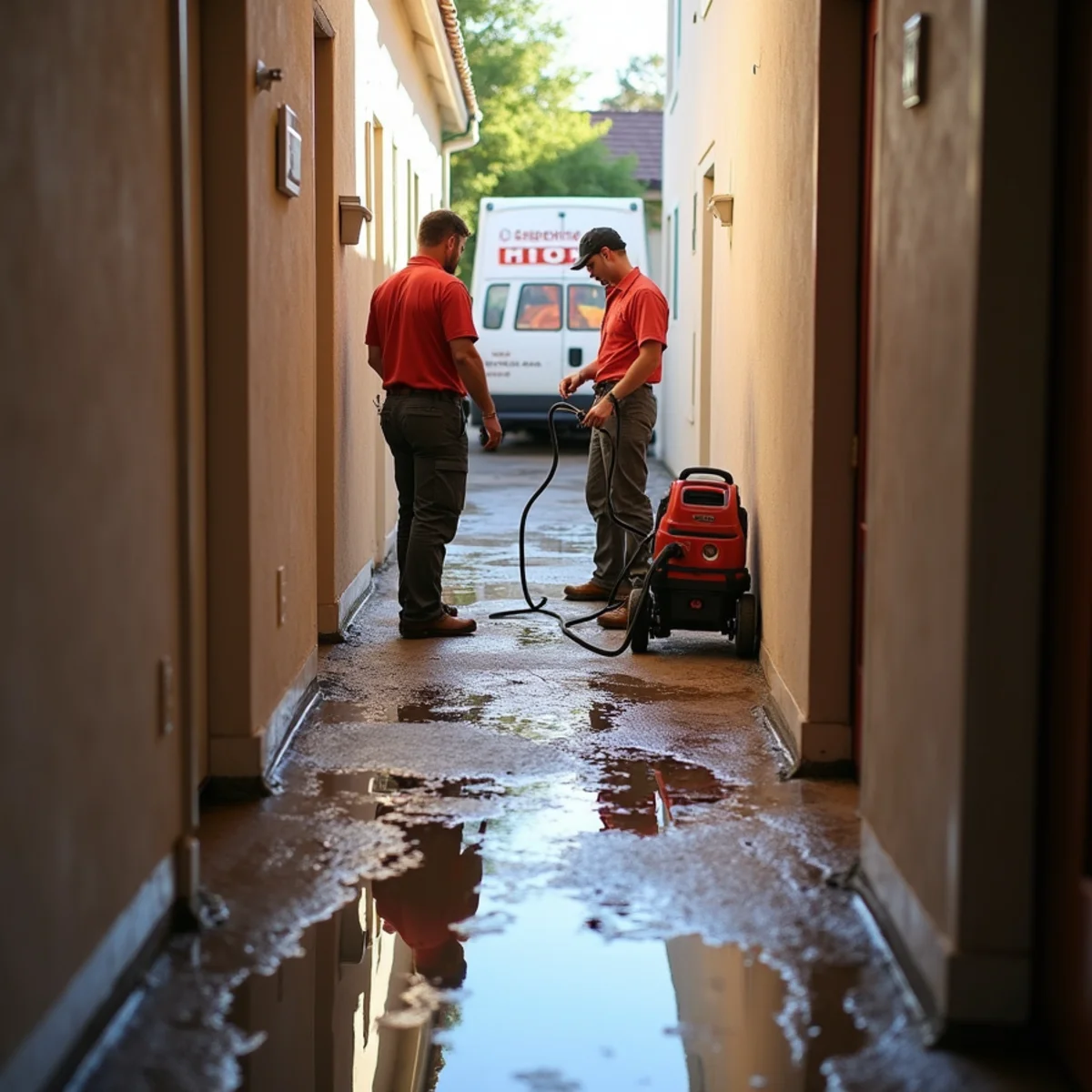
- Call a commercial water damage restoration crew that works multi-unit buildings and can dry two units at once
- Open claims with every potentially responsible policy — yours, the neighbor's, and the master policy
What boards and managers should have ready
Associations that handle these calls well have a plan on the shelf before the season's first leak. Build it now:
- A pre-vetted 24/7 restoration vendor familiar with multi-unit access and board billing
- A current copy of the CC&R water-loss and maintenance-responsibility sections
- Master policy details, including the deductible and what triggers a pass-through to an owner
- A protocol for entering an absent owner's unit to stop a leak — common in Scottsdale's snowbird-heavy communities
- An owner-communication template so notifications go out fast and in writing
Documentation that settles the responsibility question
The responsibility fight is won or lost on evidence. Capture it before anyone cleans up:
- The source of the water, photographed at the unit of origin
- The path and extent of the damage in every affected unit
- Maintenance history for the failed component, if it points to negligence
- The restoration crew's moisture readings and drying logs for each unit
- Every timestamped notification between owners, board, and vendors
Scottsdale-specific wrinkles
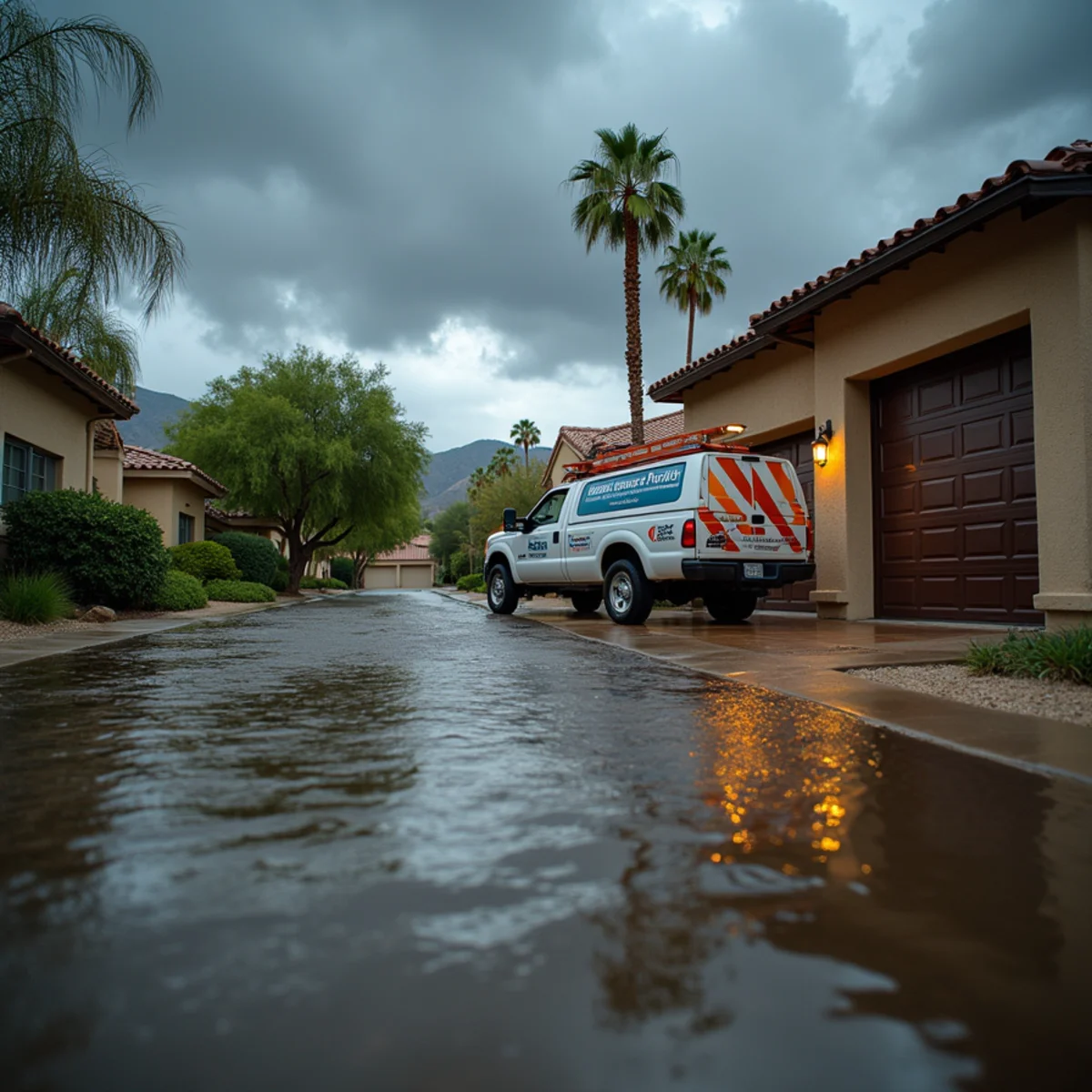
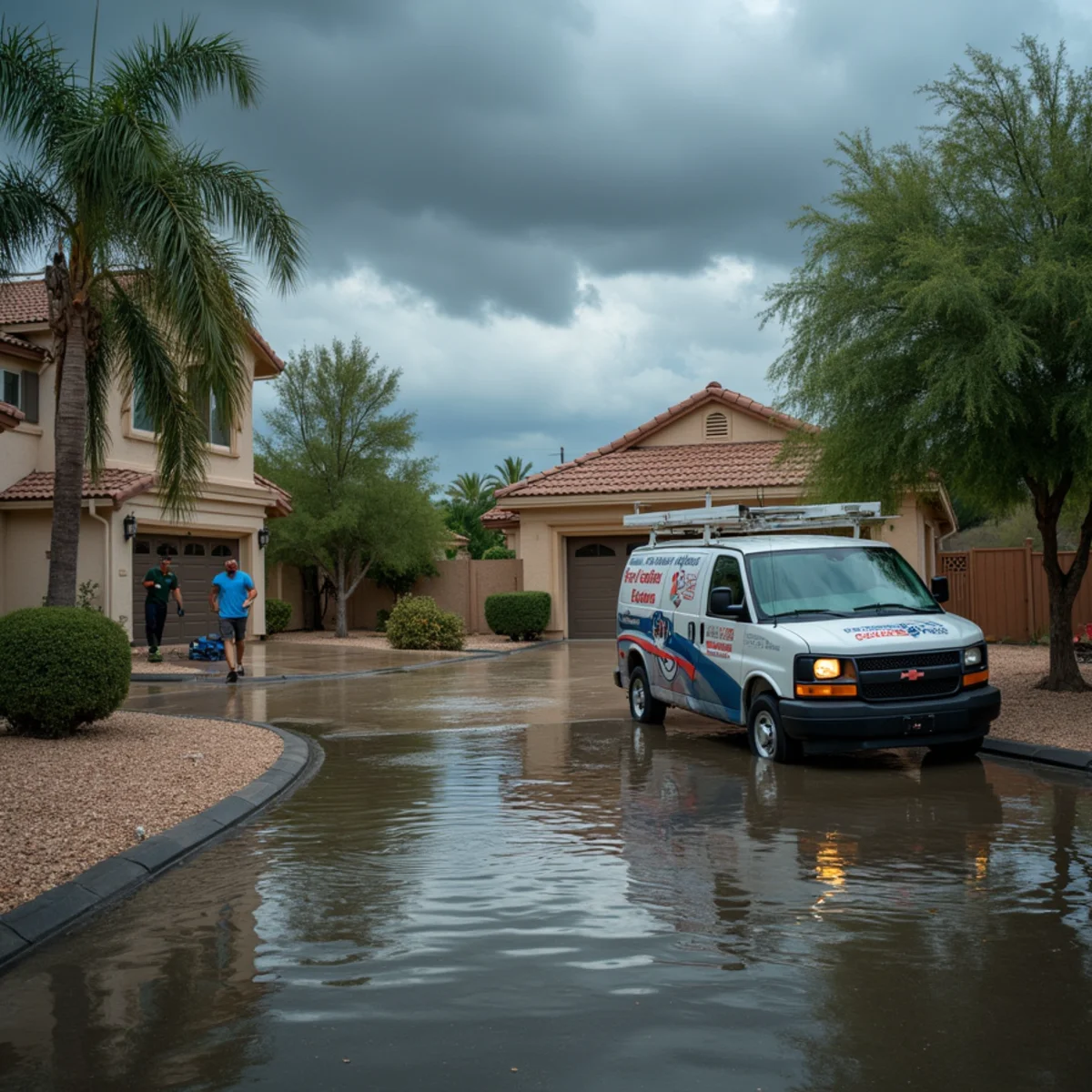
Scottsdale adds its own complications. The city's hard water runs up to 25 grains per gallon — the harshest in the Valley — and it shortens the life of water heaters and supply lines across older condo stock, so failures tend to cluster. Flat-roofed condo buildings around Gainey Ranch and nearby McCormick Ranch take a beating in monsoon season, and a roof leak into a top-floor unit lands squarely in common-element territory. If you manage a community anywhere across our Scottsdale service area, the move is the same every time: stop the water first with fast water damage restoration, document hard, and let responsibility sort out while the building dries. We answer at 2 a.m., and we know how to work a building where the leak and the damage live in two different units.
Frequently Asked Questions
It depends on the source and on your CC&Rs. As a general pattern, the unit owner covers everything from the drywall in, the association covers common elements like shared pipes and the roof, and a neighbor may be liable if their negligence caused the leak. Your governing documents control the specifics.
Usually not. Most master policies stop at a defined point in the structure, and your interior finishes and belongings fall to your HO-6 condo policy. Many master policies also carry a high deductible that can be passed through to the owner who had the loss, which surprises people every time.
No. Waiting is how a contained leak turns into a building-wide mold problem. Emergency mitigation is time-sensitive and almost always reimbursable once responsibility is settled, so stop and dry the water first. Fast mitigation protects every party, including whoever ends up paying.
Yes. Multi-unit losses are a regular part of the work. We coordinate access with the board or property manager, set drying equipment in each affected unit, and document moisture readings separately so each party's claim has the evidence it needs.
Need Help With This in Person?
Our local crew handles it 24/7. Explore the related services and areas below, or just call (866) 688-0301.