Skip to content
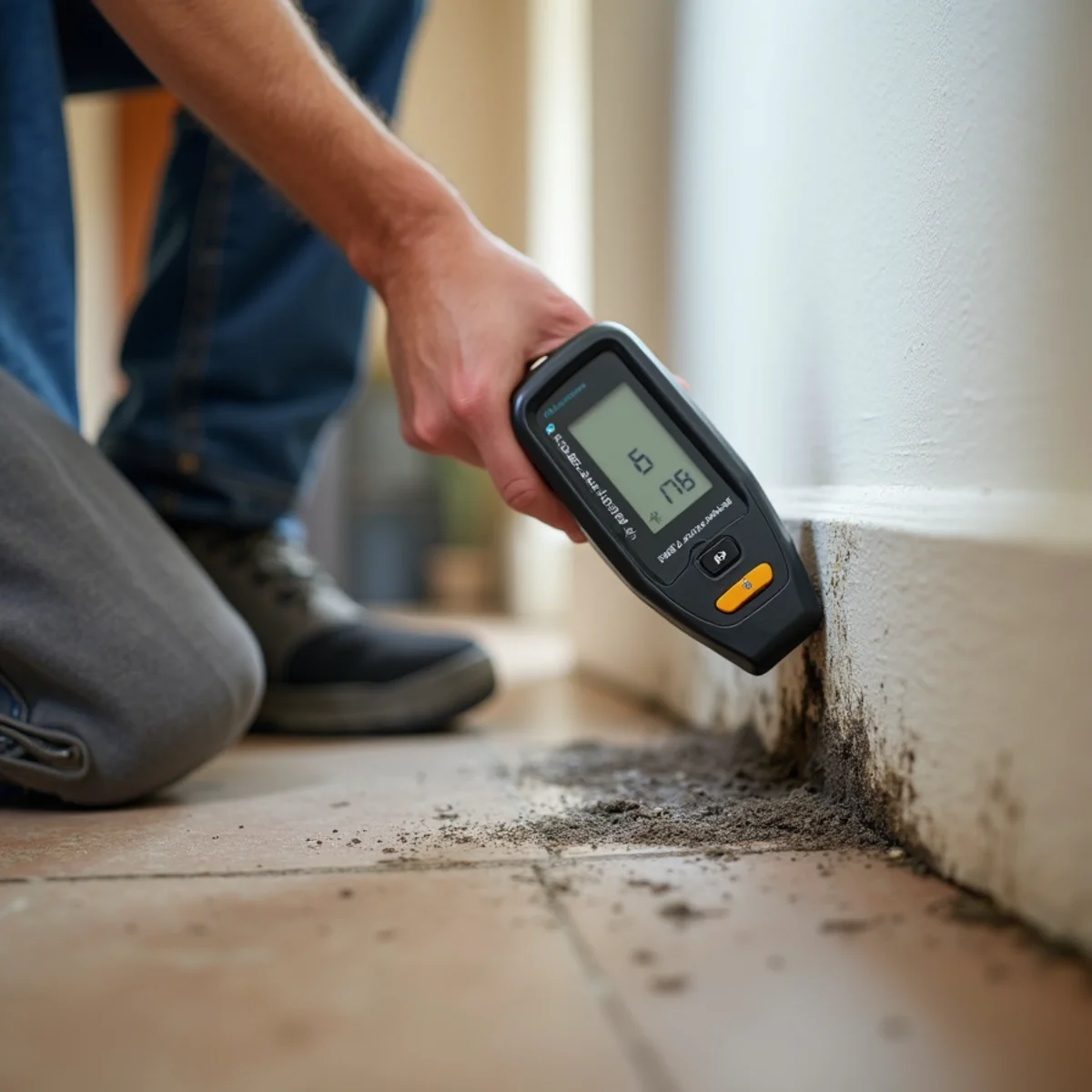
Technician taking moisture readings to inspect for mold after a water leak in a Tempe, AZ home

Water Damage Service

Mold After Water Damage in Tempe, AZ

Had a leak that was never dried right? Mold can start in 24 to 48 hours, even here — we inspect, take moisture readings, and stop it before it spreads.

  • 4.9★ · 137+ reviews
  • Licensed & Insured · IICRC-Certified
  • 24/7 · 60 minutes response
  • 15+ years · Locally owned

You had a leak. Maybe it was a burst pipe, a slow appliance drip, or a monsoon roof leak, and it got mopped up and mostly forgotten. Now there is a musty smell that will not leave, a stain that keeps darkening, or someone in the house whose allergies flare only at home. That is mold, and it almost always traces back to water that was never dried properly.

People assume the desert protects them, and it does not. Mold does not care what the outdoor humidity reads — a wet wall cavity, a soaked cabinet base, or a damp subfloor is a sealed, dark, humid pocket where growth begins within 24 to 48 hours, the IICRC's standard window. The dry Tempe air never reaches the moisture trapped inside the wall, so it just sits there and feeds the colony.

If a past leak was not dried to the core, the smart move is an inspection now, before a small patch becomes a whole room. We check the areas the water reached, take moisture readings behind and beneath surfaces, and tell you straight what is going on. Call (866) 688-0301 to get eyes on it.

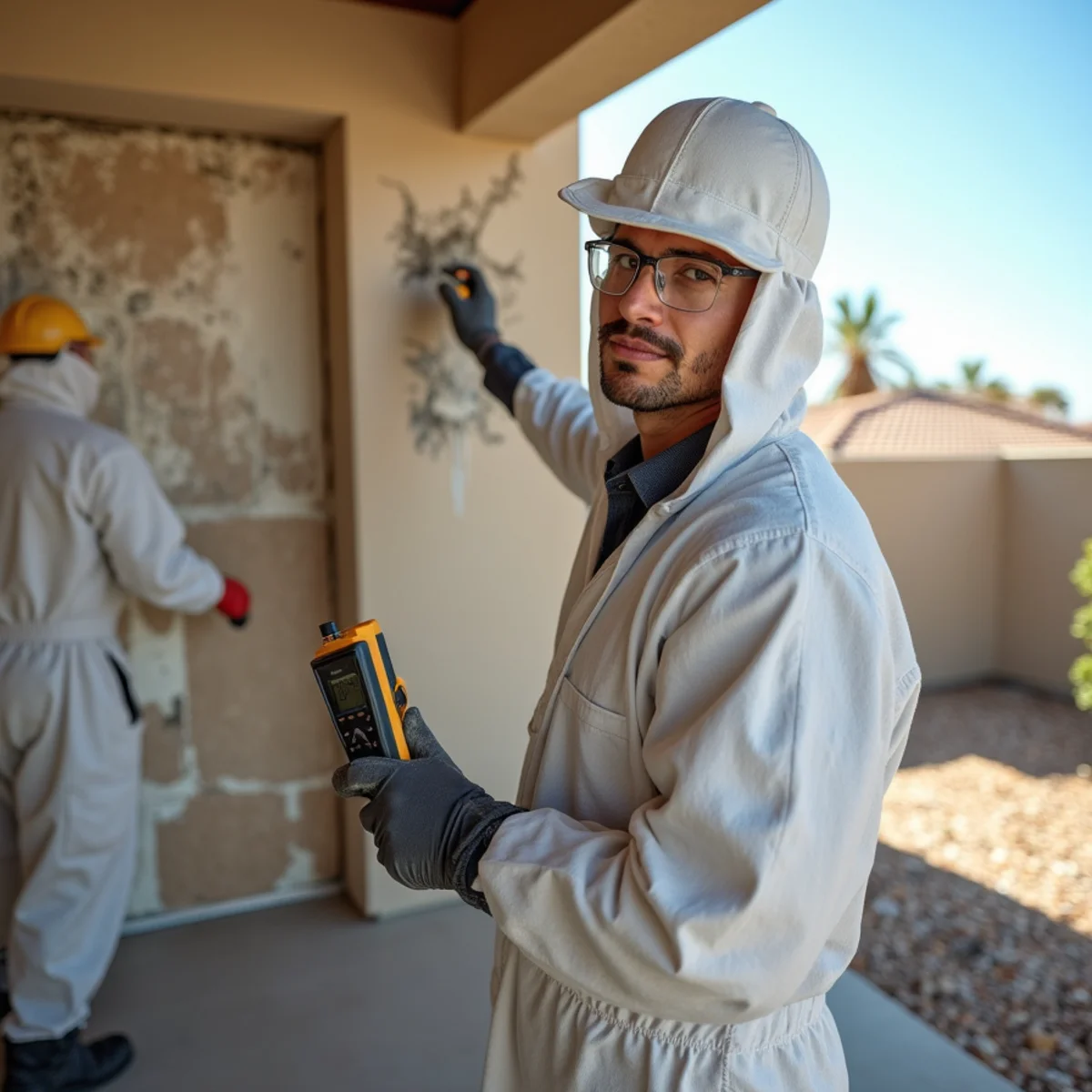
Mold After Water Damage in progress — a technician at work in a Tempe, AZ home

Signs of mold after a water leak

  • A musty, earthy smell that lingers weeks after a leak was cleaned up
  • A water stain that keeps spreading or darkening, or paint that is bubbling
  • Visible spots of black, green, or white growth on drywall, trim, or a cabinet base
  • Allergy symptoms, congestion, or irritation that ease when you leave the house
  • A past leak — pipe, appliance, roof, or slab — that was never professionally dried
  • Warped drywall or a soft baseboard along a wall that took on water before

Our Process

  1. 1

    Inspection & moisture readings

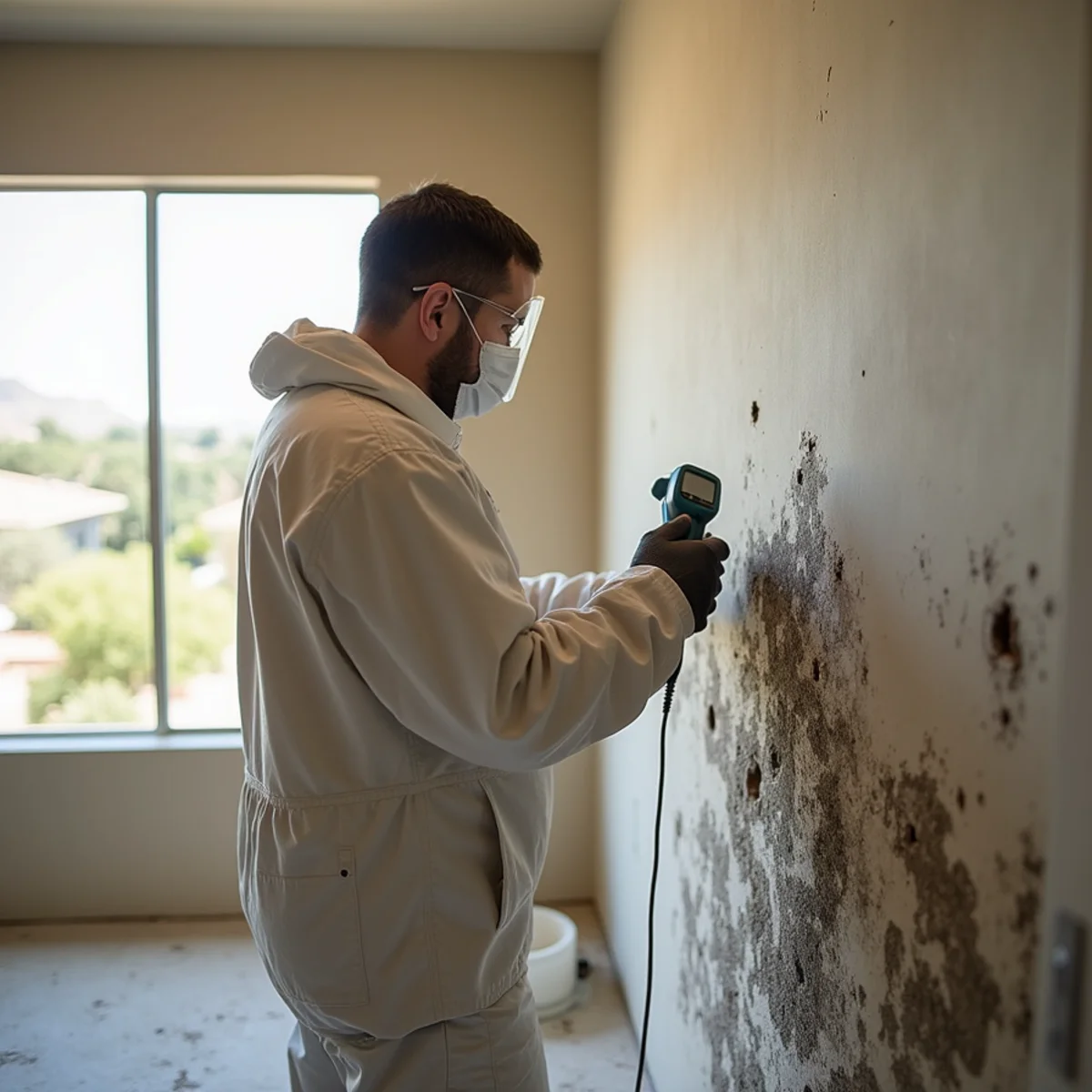
    We start where the water was. Using moisture meters and thermal imaging, we check behind walls, under flooring, and inside cabinet bases for the damp pockets mold needs. This tells us whether you have active growth, lingering moisture, or a space that dried out on its own.

  2. 2

    Find and confirm the source

    Mold is a symptom; moisture is the cause. If the original leak is still active or a new one is feeding the area, we identify it — because remediating without stopping the water just guarantees it comes back.

  3. 3

    Contain & remove affected materials

    Where growth is confirmed, we seal the area with containment and negative air pressure so spores cannot spread, then remove porous materials that cannot be saved — affected drywall, insulation, carpet pad — under HEPA filtration.

  4. 4

    Treat, dry & verify

    We apply antimicrobial treatment, dry the space completely so mold has no moisture to return to, and verify the area is clean before anything is rebuilt. Fixing the moisture and drying to standard is what keeps it from coming back.

Why fast drying is the real mold prevention

Almost every mold job we see started as a water job that was never finished. The water got wiped up, the surface felt dry, and everyone moved on while the subfloor or wall cavity stayed wet. That is the entire problem. When we dry a loss to the core with monitored [structural drying](/structural-drying/), mold never gets its start — there is no moisture left for it to grow in. And the reason the desert does not save you is simple: read [how fast mold grows in Arizona heat](/blog/how-fast-does-mold-grow-arizona-heat/) and you will see that attic and wall-cavity temperatures actually speed growth on wet framing. Heat plus trapped moisture is a mold accelerator, not a preventive.

This is the entry point — full remediation is the next step

Think of this page as the front door for one specific situation: you had water, and now you are worried about mold. If our inspection finds active growth beyond a small surface patch, the work moves into full [mold remediation](/mold-remediation/) — containment, HEPA removal, treatment, and clearance done by the book. If it finds moisture but no mold yet, we dry it out and you have dodged the problem entirely. Either way, the inspection is what turns guessing into knowing, and it is a lot cheaper than a tear-out you could have prevented.

What Affects the Cost

Every loss is different, so we give you an itemized estimate before work begins — never a number pulled from the air. These are the factors that move the price:

  • Whether the inspection finds active mold or just lingering moisture
  • Size of the affected area and how many surfaces or rooms are involved
  • Whether growth is surface-level or inside wall cavities, subfloor, or HVAC
  • Amount of porous material (drywall, insulation, carpet) that must be removed
  • Containment and HEPA filtration required to keep spores from spreading
  • Whether third-party clearance testing is requested after removal

Frequently Asked Questions

The IICRC benchmark is 24 to 48 hours after materials stay wet. In an enclosed, warm space like a wall cavity or under a cabinet, that timeline holds even in Tempe's dry climate, because the outdoor air never reaches the trapped moisture. The faster a leak is fully dried, the less likely mold ever starts.

Related Reading

Mold beginning to grow on a wet baseboard inside a Tempe, AZ home after a leak
Problem Solving 7 min

How Fast Does Mold Grow After a Leak in Arizona's Heat?

Arizona's dry air does not protect you from mold; it just makes people underestimate it. Mold can start within 24 to 48 hours of a leak, and Tempe's heat only speeds the clock. Here is the real timeline.

Aug 1, 2025Read
Technician inspecting mold behind drywall in a Scottsdale, AZ home
Cost & Insurance 8 min

Mold Remediation Cost in Scottsdale & Tempe: What to Expect

Mold remediation quotes range from a few hundred dollars to five figures for a reason. Here are the real cost drivers in Scottsdale and Tempe — size, location, containment, testing — and why bleach is the most expensive shortcut.

Sep 18, 2025Read

Mold After Water Damage Across Tempe & the East Valley

We bring mold after water damage to homes and businesses across the Valley — here are the areas we're called to most.

Mold After Water Damage You Can Count On

Our Tempe crew answers 24/7 and aims to be at your door within the hour. Get extraction and drying started before the mold clock runs out.

24/7 Emergency Service · 60 minutes response · Licensed & Insured

Call Now Free Estimate