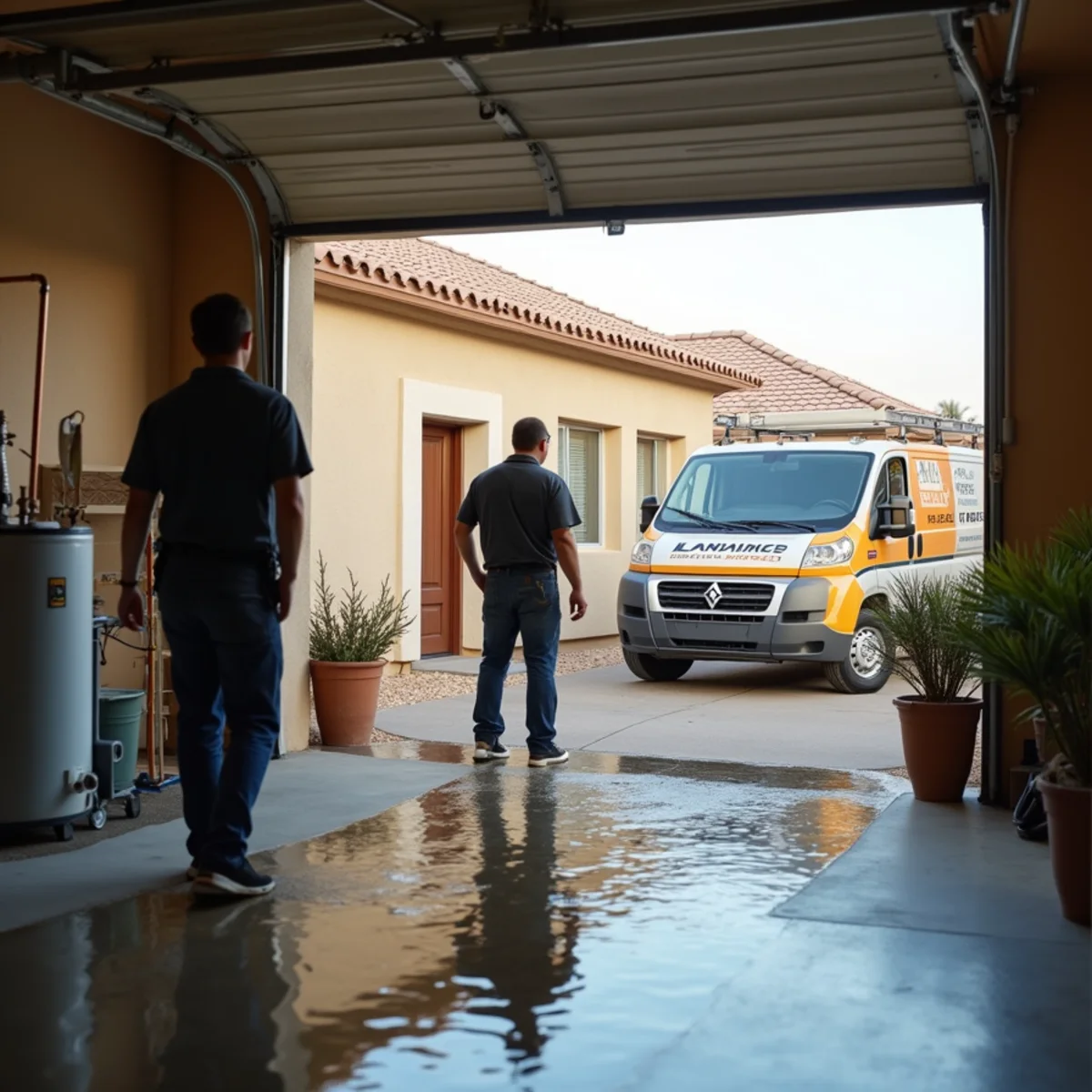
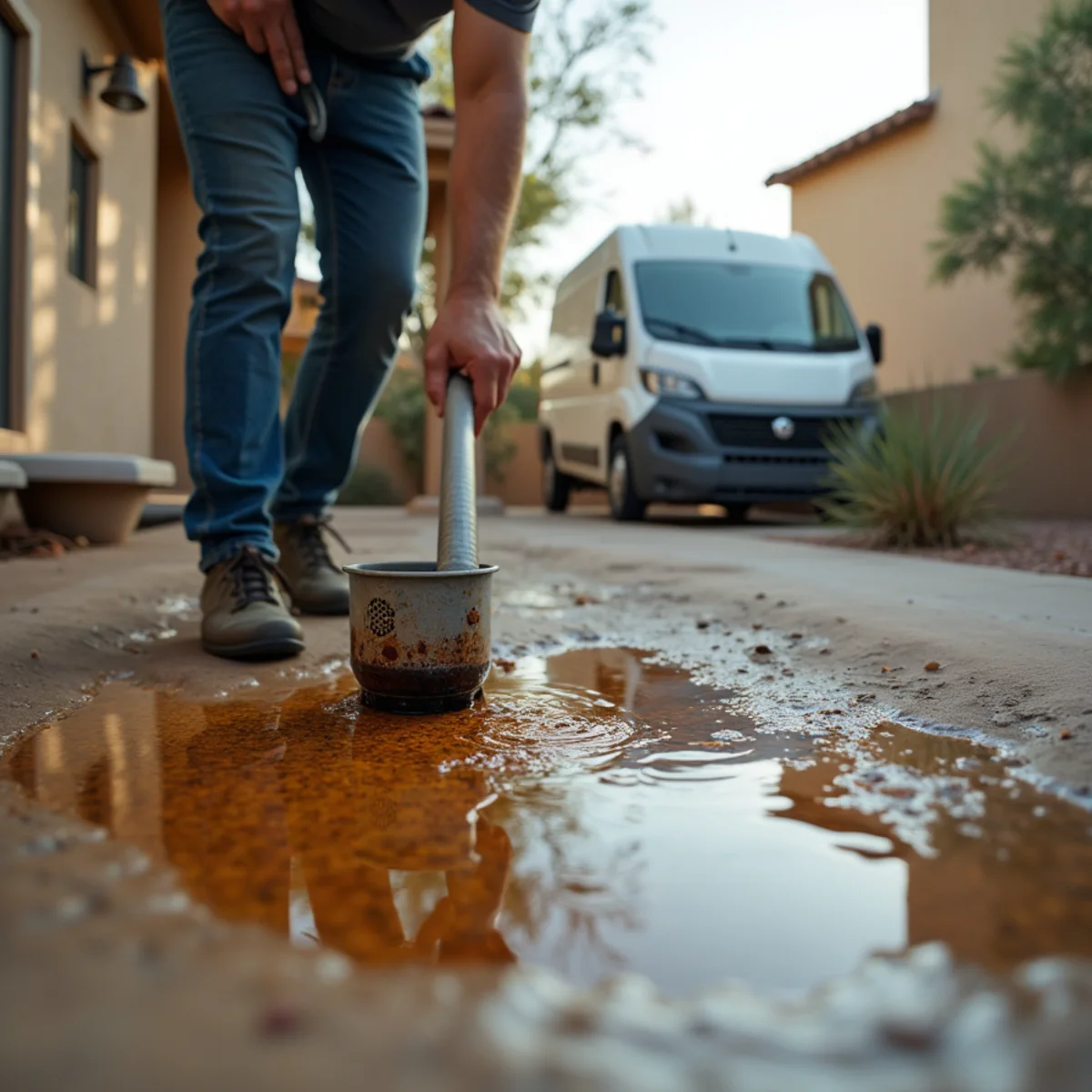
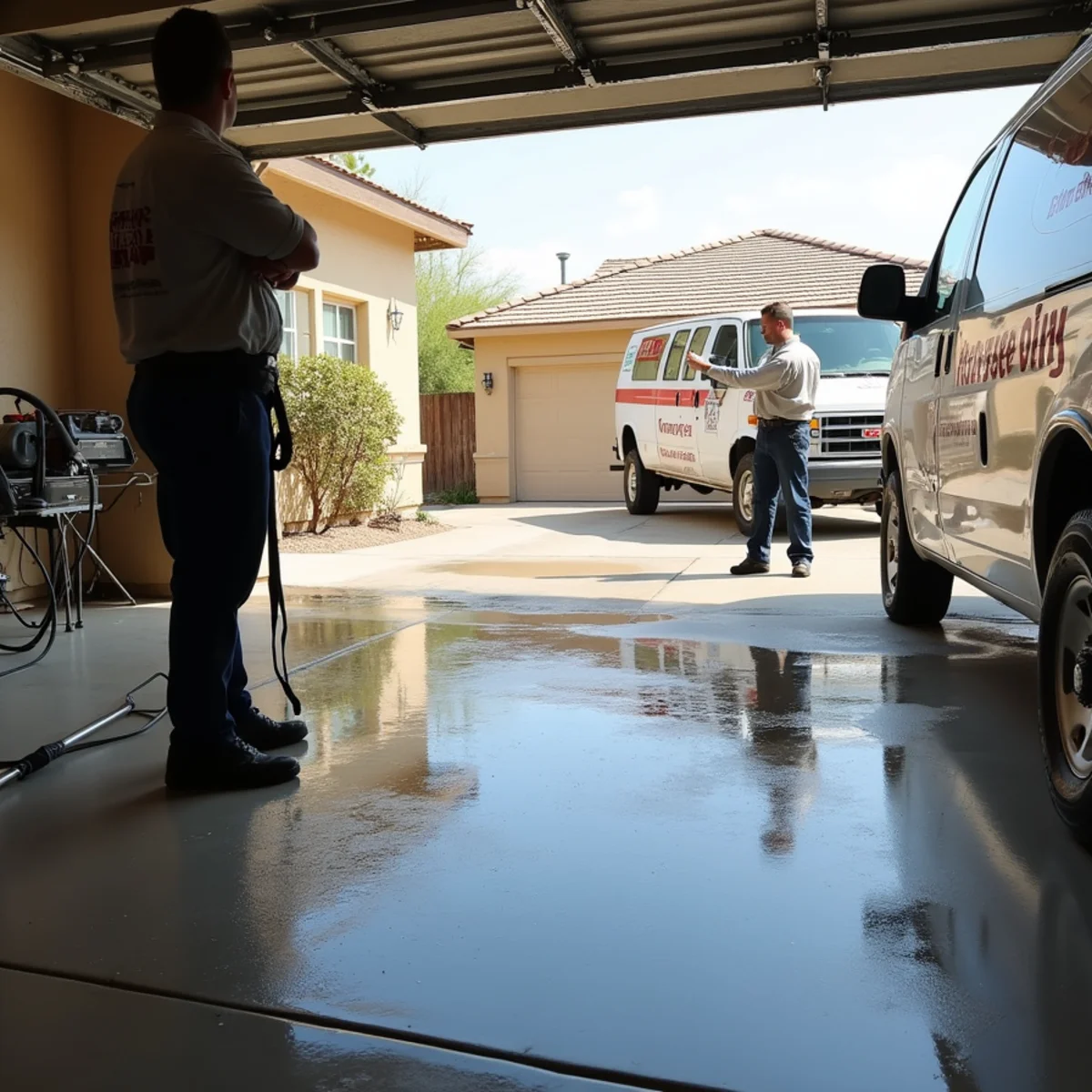
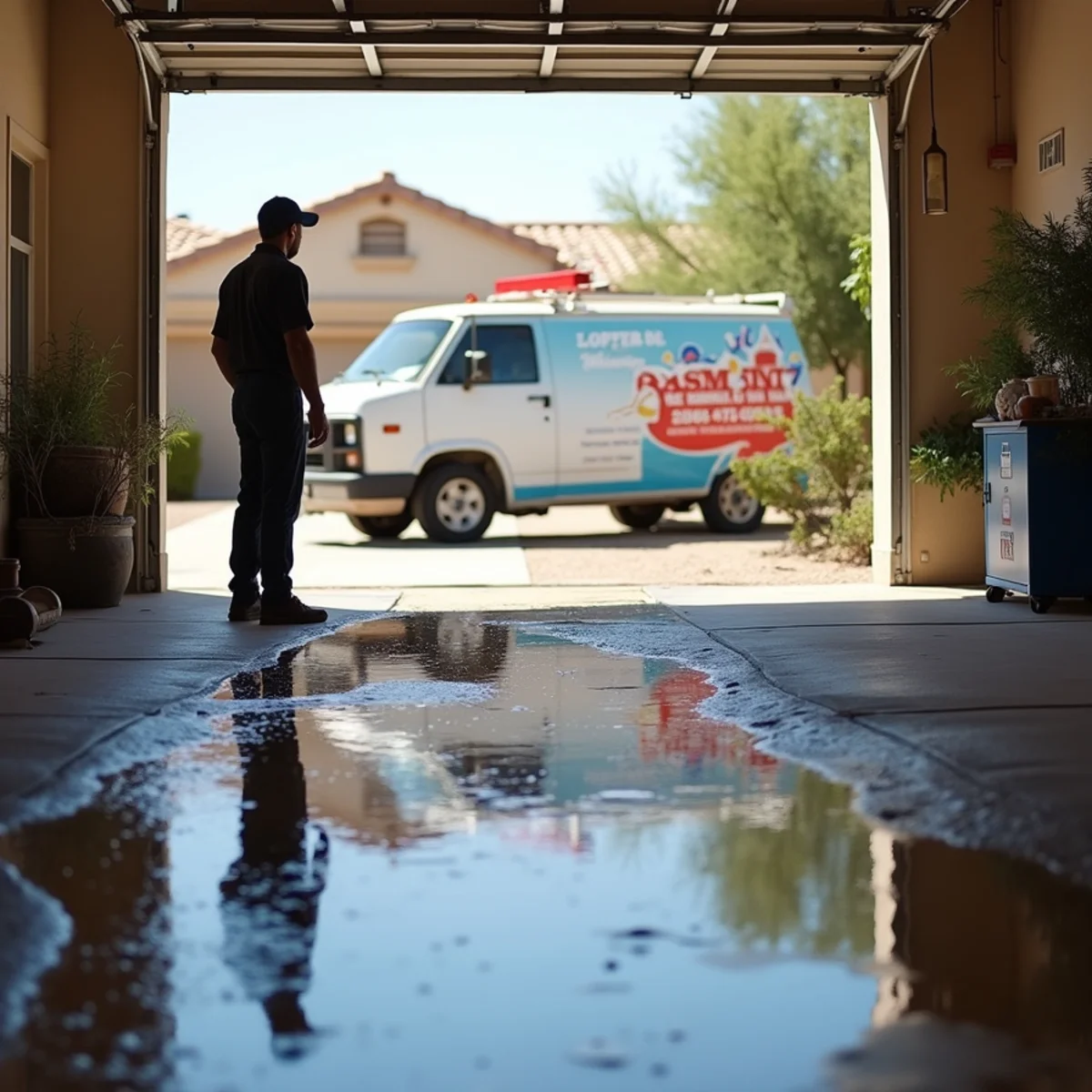
A water heater does not leak politely. When the tank fails, it can dump its full 40 to 50 gallons at once and keep feeding from the supply line until someone shuts it off. In a garage it floods across to the drywall and into boxes stored on the floor; in a hallway or closet heater, it runs straight into the living space and under the baseboards.
In Tempe, this is not an if — it is a when. Our water runs 16 to 21 grains per gallon hard, some of the hardest in the country, and that mineral load cakes into sediment at the bottom of the tank. The sediment traps heat, the steel overheats and fatigues (you can sometimes hear it as a rumbling or kettling sound), and the tank rusts through years early. Most Tempe water heaters are worn out in six or seven years, not the ten or twelve on the label.
When yours goes, call (866) 688-0301. We shut off the water and the gas or power, pump out the flood, and dry the drywall, baseboards, and framing before they wick the water up and stay wet. We handle it as a full water damage cleanup, because that is what a tank failure is.
Tempe's hard water is why this keeps happening
This is the local reality no one warns new homeowners about. At **16 to 21 grains per gallon** (and Scottsdale pushing 25), Valley water is brutal on a storage tank. Minerals settle out as the water heats and build a rock-hard sediment layer on the tank floor. That layer insulates the burner from the water, forces the steel to run hotter, and accelerates corrosion until the tank splits or a fitting rusts through. It is the same hard water that scales your fixtures — only at the water heater it ends in a flood. Flushing the tank on a schedule helps, which we cover in our [hard water and water heater guide](/blog/tempe-hard-water-kills-water-heaters/).
Why you cannot wait on a water heater flood
The temptation is to mop the garage, set a fan, and deal with it tomorrow. The problem is where the water already went. Drywall touching a wet slab wicks moisture up several inches within hours, the paper facing feeds mold, and baseboards and bottom plates stay damp long after the floor looks dry. In an interior closet the stakes are higher because carpet, pad, and subfloor are in play. Acting in the first hours is what keeps a tank failure a cleanup instead of a demolition.