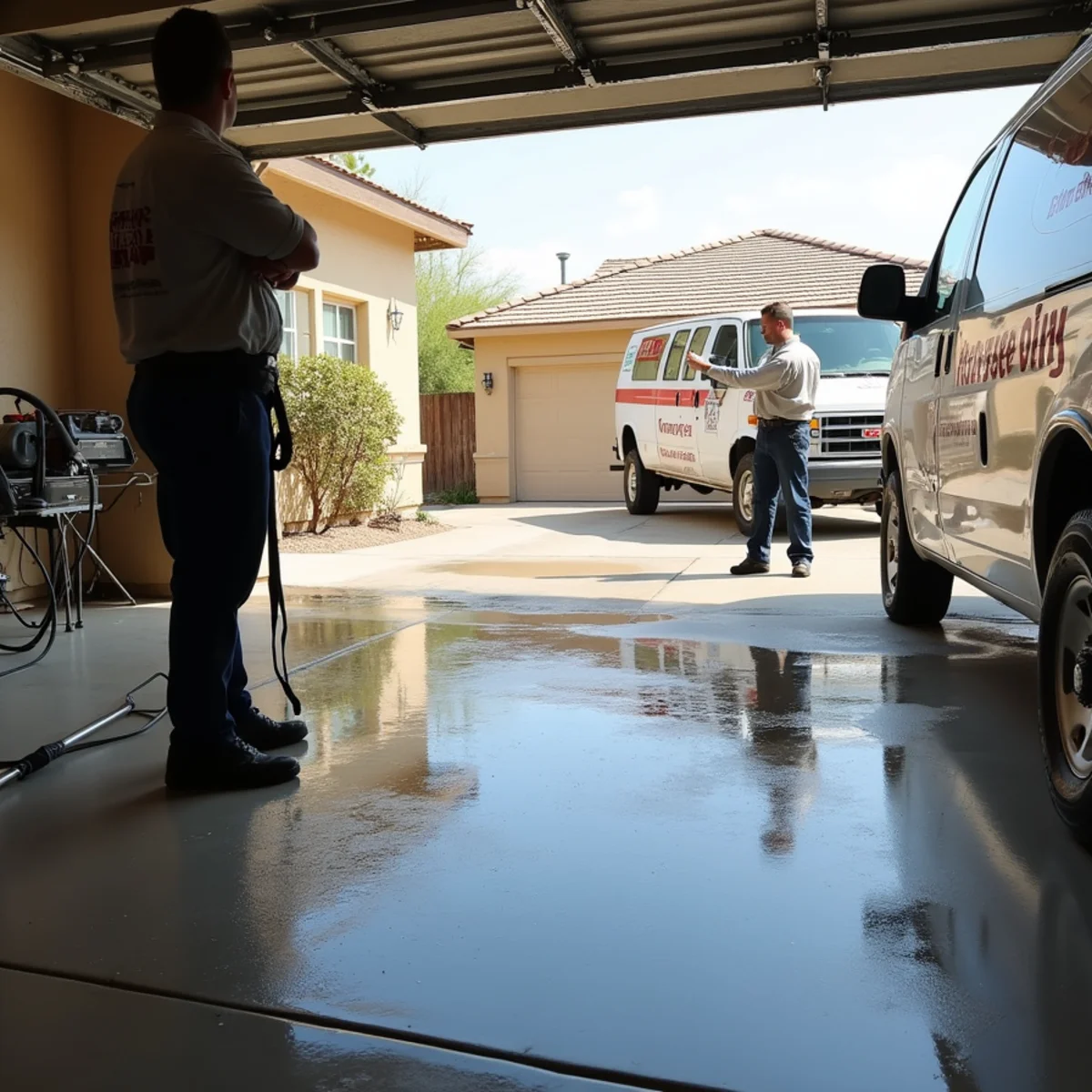
You open the garage door and step into an inch of water. In the corner, your water heater is quietly emptying itself across the slab — and a standard tank holds forty to fifty gallons, with the supply line feeding more in behind it. By the time most Tempe homeowners find it, the water has already crept under the door into the hallway, the closet, and the first row of boxes on the floor.
A burst water heater feels less dramatic than a pipe letting go in the ceiling, so people move slowly. That is the mistake. Water is water, and a garage tank sits right next to the door into your living space. Move fast and in the right order, and you keep this to the garage. Here is what to do first.
Step 1: Shut off the water to the heater
Look for the cold-water shut-off valve on the pipe running into the top of the tank; turn it clockwise until it stops. If it is stuck or you cannot find it, go straight to your home's main shut-off — often at the front hose bib, in the garage, or at the meter by the street. Stopping the supply is what turns an active flood into a cleanup.
Step 2: Cut the power or gas to the unit
A tank that keeps heating after it has drained can be damaged or dangerous. Shut off the heater's energy source before you deal with the water.
- Electric heater: switch off the dedicated breaker in your panel — usually a double-pole 30-amp breaker labeled 'water heater.'
- Gas heater: turn the gas control knob to 'Off,' and if you smell gas, leave the house and call the gas company from outside.
- Do not relight or reset anything until the unit has been checked. A burst tank is a replacement, not a repair.
Step 3: Get the water moving away from the house
Garages usually slope toward the door, which helps — but the door threshold and the interior wall into the house are where water sneaks inside. Open the garage door and squeegee or push water outward. Lay towels or your monsoon sandbags along the interior door threshold to block the path into the hallway. Lift boxes and anything stored on the floor up onto shelves or out into the driveway.
Step 4: Document it for your claim
Before you haul out the soaked boxes, photograph everything: the failed tank, the waterline on the wall, the wet drywall at the base of the shared wall, and every damaged item with its label. Sudden, accidental water damage from a ruptured tank is typically covered by a standard homeowners policy — though the tank itself usually is not. Good documentation is what makes the mitigation claim go smoothly.
Why Tempe water heaters die young
Here is the part that surprises people: your water heater probably failed early, and the reason is in your tap water. Tempe's water runs hard — roughly 16 to 21 grains per gallon — and that mineral load bakes into a thick scale on the bottom of the tank. The scale insulates the burner, overheats the steel, and corrodes the tank from the inside. The result is tanks that fail in about six to seven years here, well short of the ten to twelve you might expect elsewhere.
That is why a tank you installed 'not that long ago' can let go without warning. If yours is pushing six years, it is on borrowed time. We break down the chemistry and the warning signs in our guide on how Tempe's hard water kills water heaters, and the fix — an annual flush — is laid out in our hard-water flush schedule.
Drying the garage and the rooms next door
This is where garage floods fool people. The slab dries and looks fine, so they call it done — while water has already wicked into the drywall on the shared wall, into the bottom plate of the framing, and under the flooring of the hallway or bedroom on the other side. That hidden moisture is what warps baseboards and grows mold weeks later.
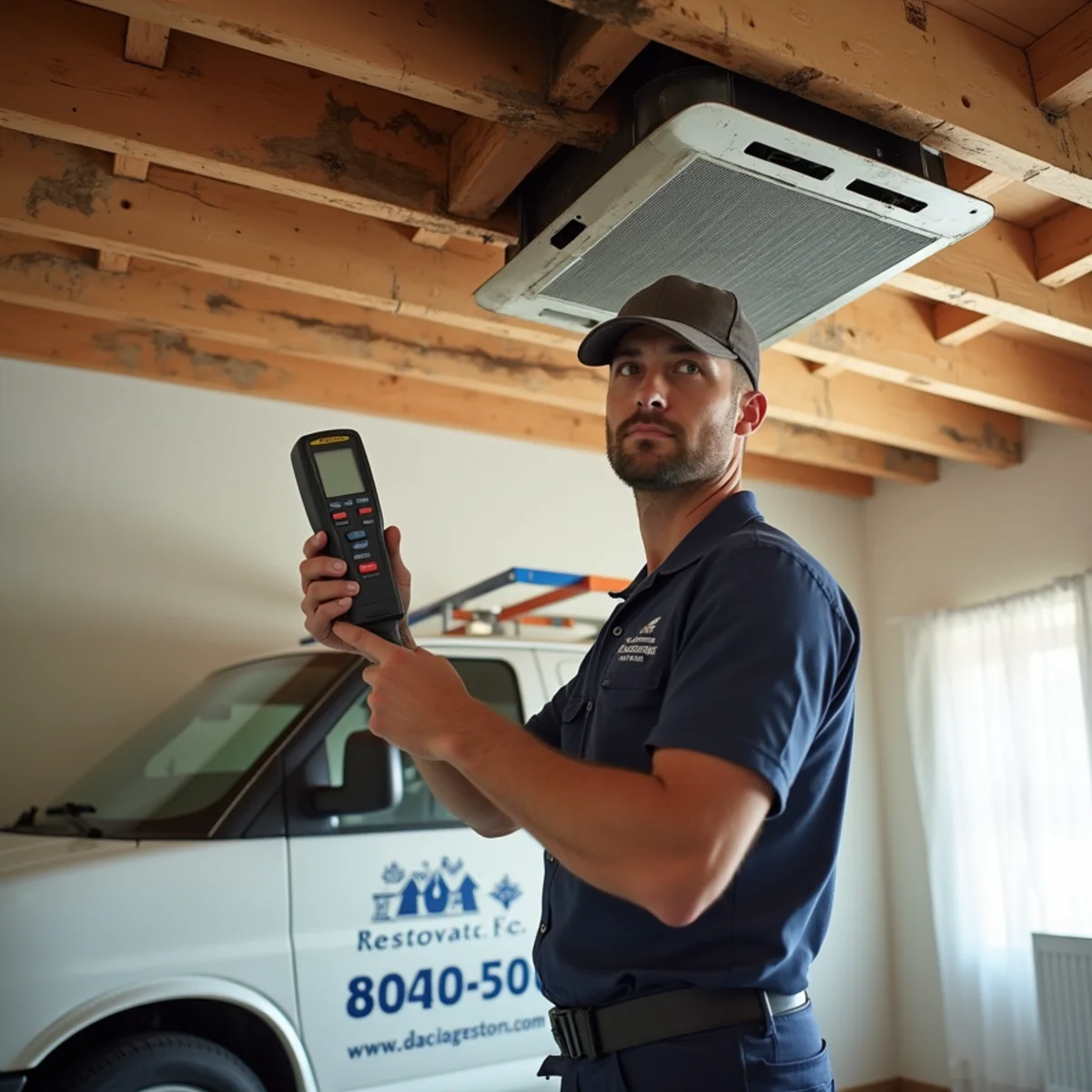
Professional water heater burst cleanup starts with real extraction, then moisture mapping to trace how far the water traveled into adjoining rooms. We set air movers and dehumidifiers and monitor the materials until meters confirm they are dry — not just dry to the touch. If the water reached carpet, pad, or living-space flooring, fast emergency water removal is what keeps a garage problem from becoming a whole-corner-of-the-house problem. We have done this all over Tempe, including quiet slab-home streets like Marilyn Ann.
When to call
Call once the water has reached the interior door, gotten into drywall, or spread into a room you actually live in. We answer the phone at 2 a.m., our base off W Auto Dr keeps a crew close, and we give you an itemized estimate for exactly what needs drying and why — no upsell to replace what is still good.
Frequently Asked Questions
A standard residential tank holds 40 to 50 gallons, and it all releases when the tank fails — plus more from the supply line until you shut the water off. That is why shutting the cold-water valve or the main is the critical first step.
Tempe's hard water — about 16 to 21 grains per gallon — builds scale that overheats and corrodes the tank from inside, so heaters here often fail in six to seven years. An annual flush slows it down. If yours is past six years, watch it closely.
The resulting water damage is typically covered under a standard homeowners policy, but the failed tank itself usually is not. Document the damage and the waterline, file promptly, and keep receipts for emergency mitigation, which is generally covered.
Yes. The slab dries first while water stays trapped in the shared drywall, framing, and any adjoining room's flooring. That hidden moisture warps materials and grows mold. Professional moisture mapping confirms the structure is dry, not just the surface.
Need Help With This in Person?
Our local crew handles it 24/7. Explore the related services and areas below, or just call (866) 688-0301.