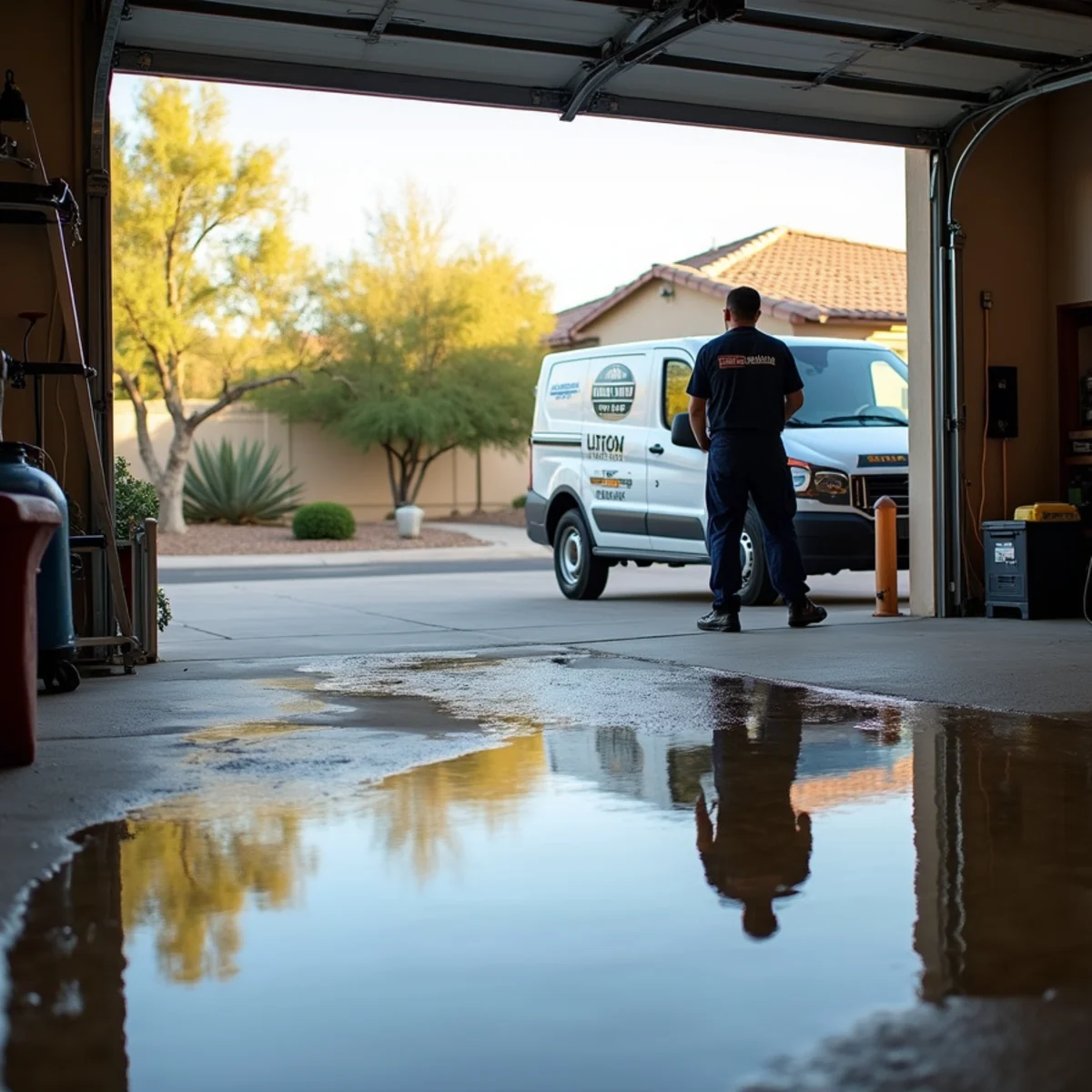
Tempe water is hard — 16 to 21 grains per gallon, and up toward 25 grains if you are near Scottsdale. That mineral load is rough on everything it touches, and your water heater takes the worst of it. Left alone, a Tempe tank often gives out in six or seven years, sometimes with a rusty seam that lets go while you are at work and puts forty gallons across the garage floor.
Here is the good news. A water heater is one of the few appliances you can genuinely extend with a little routine attention. This is the schedule we recommend for homes running on our hard water.
Why Hard Water Is So Hard on Tank Heaters
When you heat hard water, dissolved calcium and magnesium drop out of solution and settle to the bottom of the tank as a crusty layer of sediment. That layer does three bad things at once.
- It insulates the burner from the water, so the heater works harder and your gas bill climbs.
- It creates hot spots that stress and crack the glass lining, exposing bare steel to corrosion.
- It fills the bottom of the tank, shrinking your hot-water supply and making the unit rumble or pop.
Every one of those failures ends the same way — a leaking tank. And a tank does not usually leak politely. It splits, and it does it on its own schedule.
The Flush Schedule for Tempe Hardness
Most manufacturers say to flush once a year. On Tempe water, once a year is the bare minimum, and twice a year is smarter. Here is the routine worth keeping.
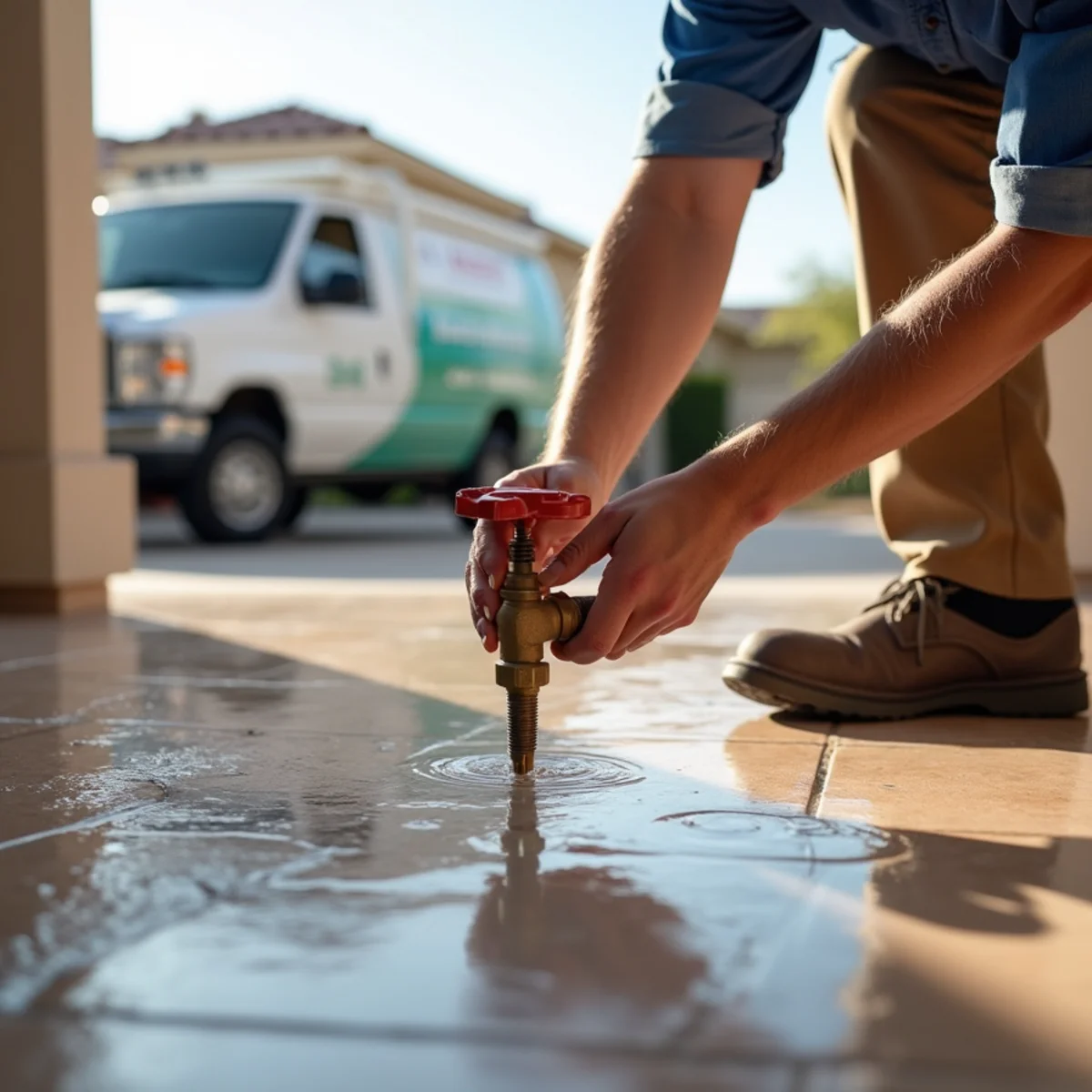
- Every 6 months: drain and flush the tank until the water runs clear of sediment.
- Every 6 months: test the temperature-and-pressure (T&P) relief valve by lifting the lever.
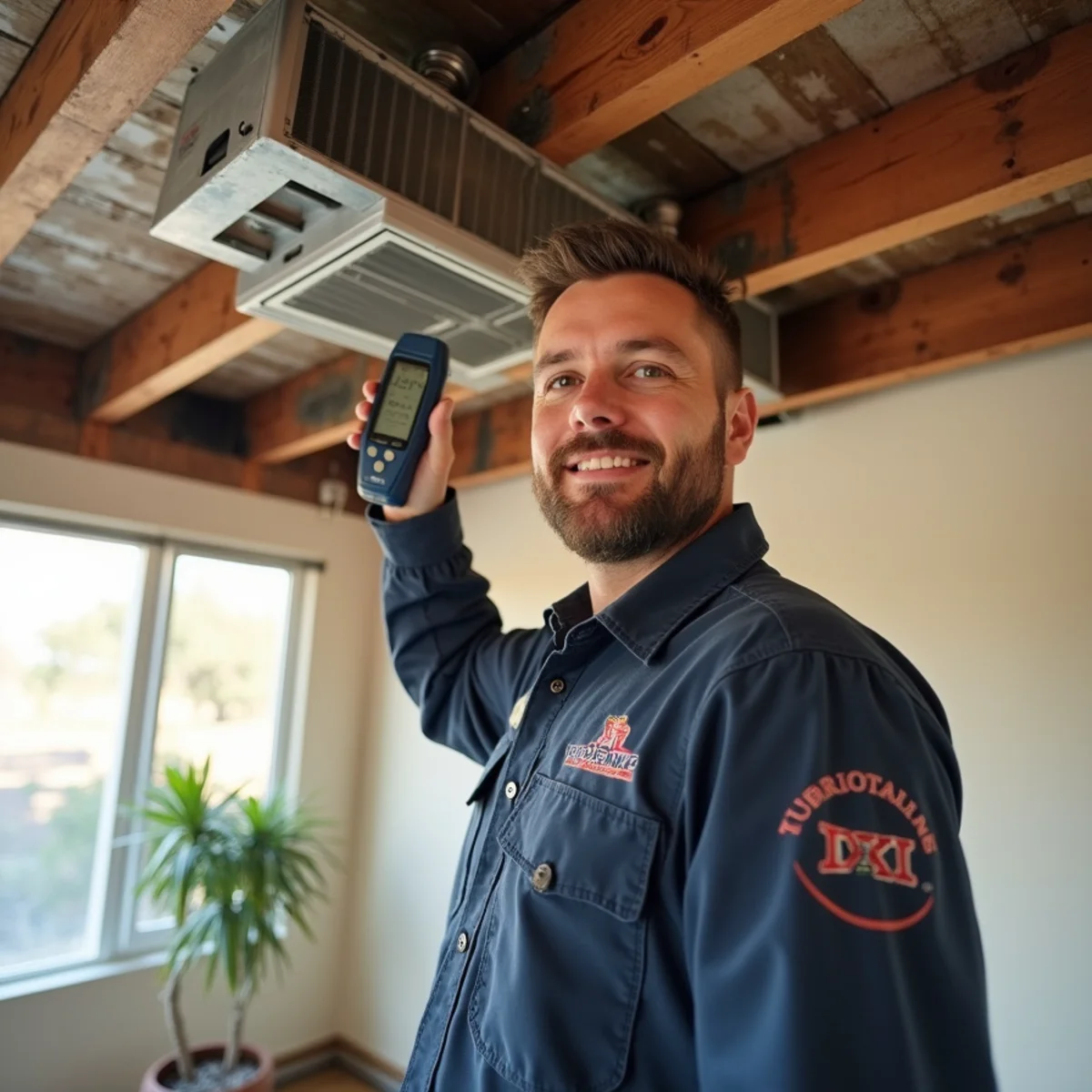
- Every 2 years: inspect the anode rod and replace it if more than half consumed.
- Every year: check the drain pan, the pan drain line, and the cold-inlet shut-off valve.
- At year 6 to 7: start budgeting for replacement and watch closely for weeping at the seams.
The Anode Rod Is the Part Nobody Checks
The anode rod is a sacrificial metal rod that hangs inside the tank. It is designed to corrode so your tank does not. On hard, mineral-heavy water it can be eaten down to the core wire in as little as three or four years, and once it is gone, the tank lining is next in line to fail.
Pull it, look at it, and replace it if it is down to the bare steel wire. A twenty-dollar rod can buy you years of tank life. Skipping it is a big reason so many Tempe heaters die young.
What About Tankless and Softened Systems?
Two upgrades change this math. A whole-home water softener strips out most of the calcium and magnesium before they ever reach the tank, which slows sediment to a trickle and can add years of life. If you run a tankless unit, hard water is still the enemy — scale builds up inside the heat exchanger instead of on the tank floor, so plan on a vinegar descaling flush once a year, and closer to twice a year on Scottsdale-edge hardness.
Neither upgrade lets you skip maintenance entirely. A softener still needs salt, and the tank still benefits from a flush. A tankless unit still needs its inlet screen cleaned. On our water you are always fighting minerals — the tools just change.
Signs Your Heater Is Already on the Way Out
Maintenance buys time, but nothing lasts forever. Call for a replacement quote — before it fails, not after — if you notice any of these.
- Rusty or discolored hot water, or a metallic smell from the hot tap.
- Rumbling, popping, or banging as the burner fires against a bed of sediment.
- Moisture, rust, or mineral trails around the base or the fittings.
- Not enough hot water even though the unit is sized right for the house.
- The unit is already past its ten-year mark.
Where the Tank Lives Matters
In many Corona del Sol and Warner Ranch homes, the heater sits in the garage — which is the best place for it to fail, because the water has somewhere to go besides your hardwood. If yours lives in an interior closet or up in the attic, the stakes are higher. Confirm there is a drain pan plumbed to a safe discharge, and consider a simple leak alarm or an automatic shut-off valve on the supply.
We see the aftermath across the Corona del Sol neighborhood every year, usually in older homes still running their original tanks. A little maintenance is a lot cheaper than the cleanup that follows a failure.
When Maintenance Comes Too Late
If your tank has already let go, the priority shifts from the heater to your home. Forty to fifty gallons, plus whatever keeps feeding the line, soaks into drywall, baseboards, and subfloor fast. Shut the water at the tank's cold inlet or the main, kill power to the area, and move what you can out of the water.
Then call for water heater burst cleanup. The tank itself is a plumbing swap, but the water it released is a drying job, and hidden moisture behind walls is what turns into mold. A slow drip that ran for weeks under a cabinet is really an appliance leak that needs professional drying. For the emergency version of this, read what to do when a water heater bursts in the garage.
Frequently Asked Questions
On our hard water, twice a year beats the once-a-year rule most manuals print. Sediment builds up faster here, so a spring and fall flush keeps the tank efficient and buys it more years of life.
Around six to seven years is typical in the Tempe area, versus ten to twelve in soft-water regions. Our 16-to-21-grain hardness is the reason. Regular flushing and anode-rod changes can push that number up meaningfully.
Yes. A softener removes most of the calcium and magnesium before the water ever reaches the tank, which cuts sediment buildup dramatically and extends heater life. You should still flush the tank, just less aggressively.
The sudden water damage a failed tank causes is often covered by a standard homeowners policy, while the tank itself usually is not — that is treated as a maintenance replacement. Documenting the failure and drying fast both help the claim.
Need Help With This in Person?
Our local crew handles it 24/7. Explore the related services and areas below, or just call (866) 688-0301.