A leak in an occupied home gets caught in minutes. A leak in a vacant home runs for months. Snowbirds who close up an Arizona house for the season and drive north sometimes come back to a water heater that failed in June and fed the slab until October — a five-figure disaster that a two-dollar valve turn would have prevented.
An empty house is not automatically a safe house. If anything, it is more dangerous, because no one is there to hear the drip, smell the mold, or shut the water off. Here is how to lock a seasonal home down so it stays dry while you are gone.
The One Rule That Prevents Most Disasters
Shut off the water to the whole house. That is the single most important thing you will do, and it makes almost every other worry moot. If no water is under pressure in the lines, a failed hose, a cracked fitting, or a leaking valve cannot flood the house — there is simply nothing feeding it.
Turn off the main supply valve, then open a few taps to bleed the pressure out of the lines. Most seasonal leak catastrophes we clean up trace back to a home left under full water pressure for months with no one home.
The Full Shut-Down Checklist
Work through this on the day you leave, not the week before. Some of it only makes sense right at departure.
- Shut off the main water valve and bleed the lines by opening the lowest and highest taps in the house.
- Turn off the water heater — set gas units to the 'vacation' or pilot setting, and switch electric units off at the breaker so they cannot run dry.
- Close the individual angle stops under every toilet and sink as a second line of defense.
- Turn off the ice maker and its water line at the refrigerator.
- Shut the washing machine's hot and cold supply valves.
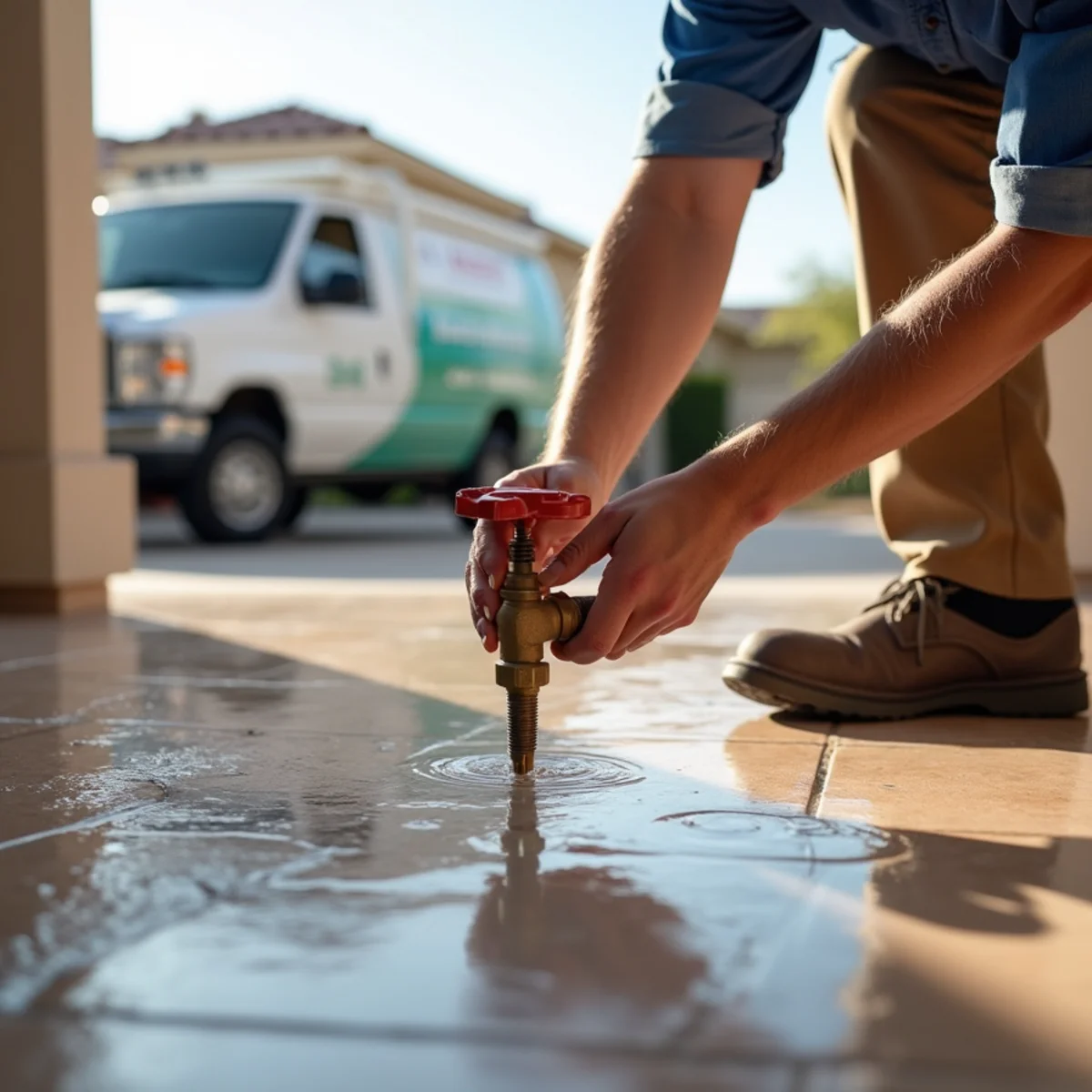
- Drain outdoor hose bibs and disconnect any attached hoses.
- Leave the AC set to a reasonable hold temperature — not off — so heat and humidity do not cook the house.
- Clean out the fridge and pour water down each drain trap so nothing rots or dries into a clog.
For a long absence, give the water heater extra thought. With the main off and the tank isolated, a gas unit left on its lowest setting is fine. But if you will be gone the entire summer, draining the tank removes the last reservoir of water that could leak while you are away. Just never fire a drained tank back up until it has completely refilled.
Add Eyes and Alarms You Do Not Have to Be There For
Shutting the water off is your foundation. Cheap technology backs it up while you are two thousand miles away.
- Install battery or Wi-Fi water leak sensors near the water heater, under sinks, and by the washer.
- Consider a whole-home automatic shut-off valve that closes when it detects an abnormal flow.
- Add a smart thermostat you can check from up north, so you know the AC is still holding.
- Put a few interior lights on timers so the home looks lived-in.
Line Up a Real Person to Check In
No sensor replaces a human walking the house. Arrange for someone — a neighbor, a family member, or a paid house-watch service — to come through on a set schedule.
- Walk every room looking and smelling for water, monthly at a minimum.
- Confirm the AC is still running and holding its temperature.
- Check ceilings and floors for new stains or soft spots.
- Keep your contact numbers and a restoration company's number posted inside the house.
Sun City and the retirement communities out west are built around this rhythm of seasonal residents, and the smart ones never leave a house truly unwatched. If you own in the Sun City area, a trusted monthly check-in is worth more than any gadget you can buy.
Know Your Policy's Vacancy Clause
Read your homeowners policy before you go. Many carriers include a vacancy or unoccupancy clause that reduces or voids coverage once a home sits empty beyond 30 or 60 consecutive days — which is exactly what a summer away creates. Some insurers will list the home as seasonal or add a rider if you ask. A five-minute call now beats a denied claim in the fall.
Coming Home to a Problem
Sometimes you open the door in the fall to a musty smell, a stained ceiling, or a warped floor — the signature of a leak that ran the whole time you were gone. Resist the urge to just open the windows and air it out. Water that sat for weeks or months has almost certainly grown mold and soaked deep into the structure.
Get it assessed and dried properly instead. A tank that failed months ago is both a plumbing replacement and a real water damage restoration job, and long-standing water heater failures usually mean saturated drywall and subfloor that have to come out. We answer the phone 24/7, so even if you discover it at 11 p.m. on your first night back, someone is on the way. For the hoses most likely to fail while a house sits empty, read our guide on washing machine supply line failures.
Frequently Asked Questions
Yes, and it is the most important step. Shut the main valve and open a couple of taps to bleed the pressure. With no water under pressure in the lines, a failed hose or fitting has nothing to flood the house with while you are gone.
No. Leave it set to hold around 85 degrees. An unconditioned Arizona house can exceed 120 degrees inside in summer, which warps floors and furniture and encourages mold. The modest power bill is far cheaper than heat and humidity damage.
Water heaters and washing-machine supply hoses left under pressure with no one home to catch the failure. A tank or hose can let go in June and feed water into the house for months, which is exactly why shutting off the main is so effective.
Yes. Leak sensors and a whole-home shut-off valve help, but nothing replaces a person walking the house monthly to look for stains, smell for mold, and confirm the AC is holding. In snowbird areas like Sun City, house-watch services do exactly this.
Need Help With This in Person?
Our local crew handles it 24/7. Explore the related services and areas below, or just call (866) 688-0301.