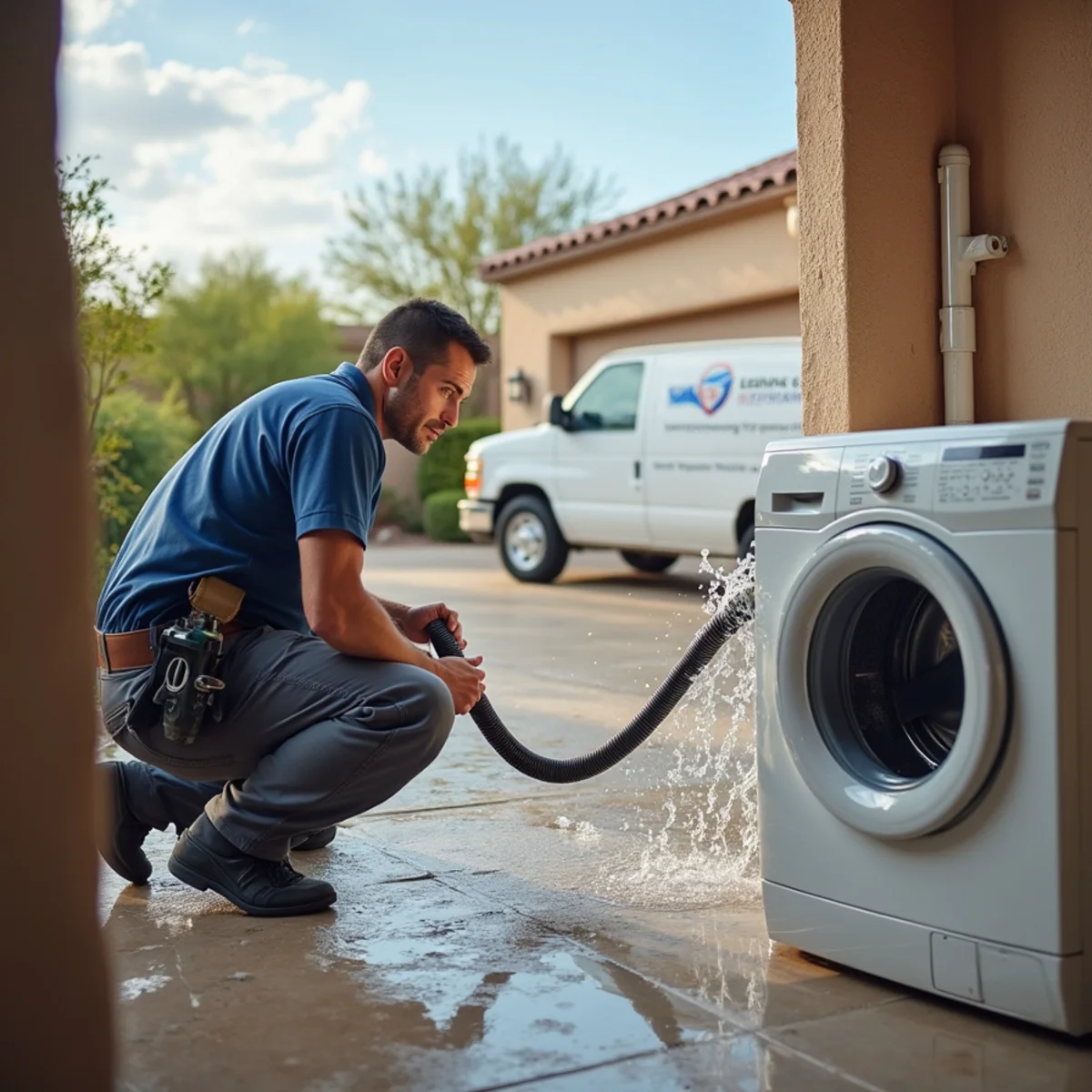
Most laundry-room floods do not start with the machine. They start with the two hoses behind it — the supply lines feeding hot and cold water — and those hoses are almost always the cheap rubber ones that came in the box years ago. They are under household water pressure 24 hours a day, whether the machine is running or not. When one lets go, it does not drip. It sprays.
A washing machine supply line failure is the single most common cause of laundry-room flooding, and it is also one of the most preventable. Here is why they fail, what it costs when they do, and the five-minute upgrade that takes the whole problem off the table.
Why supply lines fail
The standard-issue rubber supply hose has a short, hard life:
- Rubber degrades. Over five to ten years, rubber hardens, cracks, and loses elasticity, especially where it bends behind the machine.
- Constant pressure. The lines hold full water pressure around the clock. Every hour is stress on an aging hose.
- Vibration and movement. Each wash cycle shakes the machine and flexes the hoses, working connections loose over time.
- Kinks and crimps. A machine pushed too close to the wall pinches the hose, creating a weak point that eventually splits.
The failure mode that scares us most is the one that happens when nobody is home. The hose does not wait for laundry day — a line under constant pressure can burst at 3 a.m. or while you are at work, and then it runs unchecked for hours.
There is a Tempe-specific aggravator, too. When the washer's valves snap shut at the end of a fill cycle, the sudden stop sends a pressure spike back through the line — the knock you sometimes hear in the wall, called water hammer. On an already-brittle rubber hose, thousands of those little shocks over the years are one more thing working the weak spot loose. Higher static pressure in parts of the water system only sharpens the effect.
The numbers that make this urgent
A burst washing-machine supply line under normal household pressure can release on the order of several hundred gallons per hour — commonly cited around 650 gallons in a single hour. Now do the math on an eight-hour workday: that is thousands of gallons across your floor before anyone walks in the door. In a slab home that water spreads room to room; on an upper floor it comes straight through the ceiling below.
Second-floor laundry is the worst case
Laundry rooms have migrated upstairs in a lot of newer East Valley homes, and that convenience comes with risk. A supply-line failure on a second floor sends water through the subfloor and into the ceiling, walls, and rooms below, turning a one-room problem into a two-story one. If your laundry is upstairs, the prevention steps below are not optional.
The five-minute fix
This is one of the rare water-damage risks you can nearly eliminate in an afternoon:
- Replace rubber hoses with braided stainless-steel lines. They resist bursting far better and cost only a few dollars more. This one swap is the single highest-value thing you can do.
- Turn off the supply valves when you travel. If you are leaving town, shutting the hot and cold valves behind the machine removes the pressure entirely.
- Leave a gap. Keep several inches between the machine and the wall so hoses are not kinked or crimped.
- Replace lines every five years, and inspect them twice a year. Write the install date on the hose with a marker so you are not guessing later.
- Consider a single-lever shut-off valve or an automatic leak-shutoff device for the laundry box.
When a line does fail, speed decides the damage. The water that soaks into subfloor, pad, and wall cavities is what breeds mold within 24 to 48 hours in Tempe's heat, so professional appliance leak water damage response and structural drying matter more than any mop. We run these calls across central Tempe, including Mitchell Park, and a yearly once-over like the one in our leak-prevention walkthrough for central Tempe catches tired hoses before they burst. Reach us any hour at (866) 688-0301.
Frequently Asked Questions
Every five years is the common recommendation for rubber hoses, and sooner if you see cracking, bulging, or corrosion. Upgrading to braided stainless-steel lines extends that considerably and greatly reduces burst risk. Note the install date on the hose so you are not guessing later.
Yes. For a few dollars more than rubber, braided stainless-steel supply lines resist bursting far better and last much longer. It is the most cost-effective flood-prevention upgrade in the entire laundry room, and it takes about five minutes to install.
It is a smart habit, especially with older rubber hoses. The valves behind the machine keep the lines pressurized around the clock, so shutting them while you travel removes the pressure that causes a hose to burst while no one is home to catch it.
A lot — on the order of 650 gallons an hour under normal household pressure. Over a workday or overnight, that reaches thousands of gallons. In a slab home it spreads across rooms; on an upper floor it pours into the ceiling below, which is why fast shut-off and extraction matter.
Need Help With This in Person?
Our local crew handles it 24/7. Explore the related services and areas below, or just call (866) 688-0301.