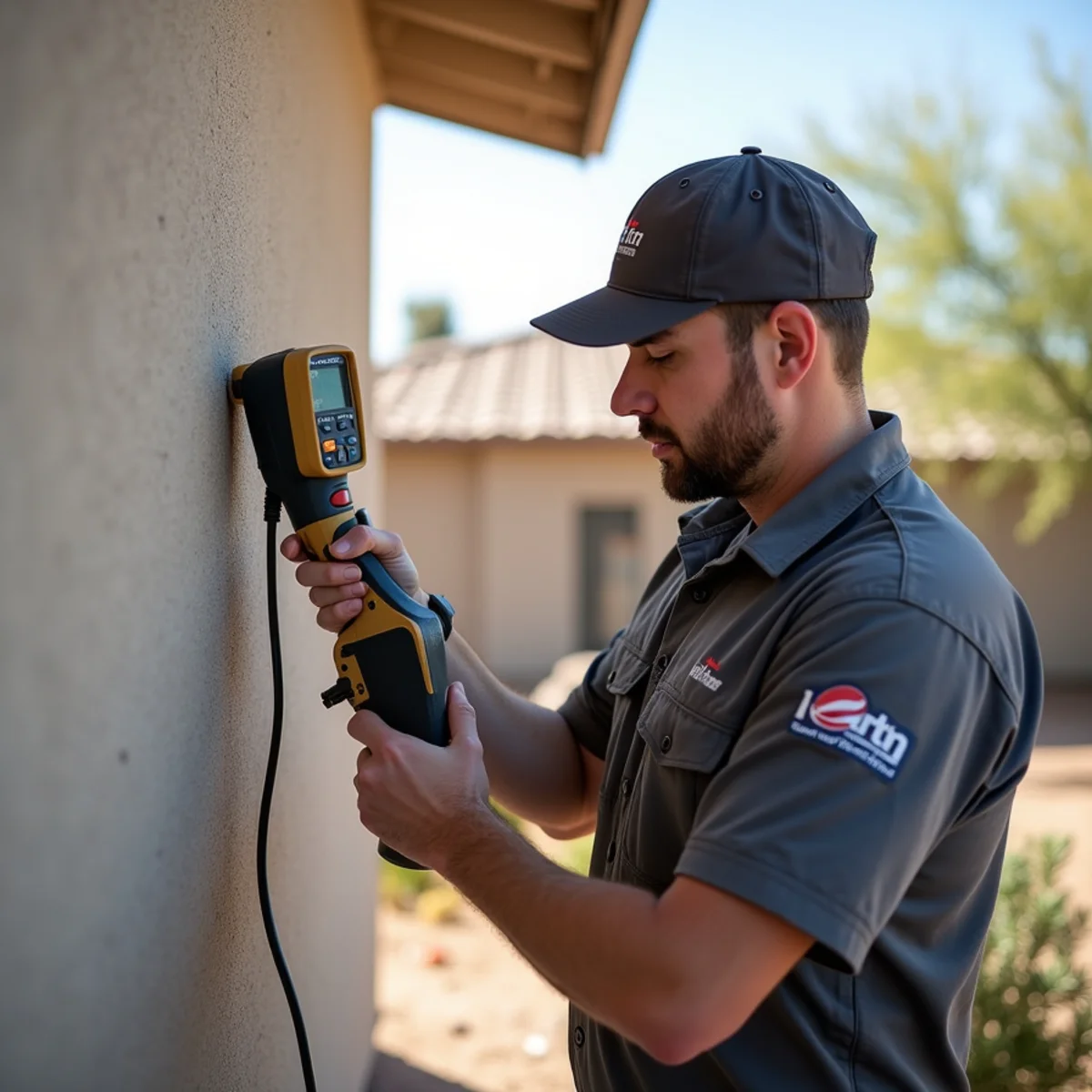
You ran the fans for two days, the carpet feels dry underfoot, and the wall looks fine. So it is dry, right? In a Tempe block home, 'feels dry' and 'is dry' are two very different claims — and the gap between them is exactly where mold and structural damage take hold. The surface is the last thing to feel wet and the first to feel dry. What is inside the wall and down in the slab is a different story.
This is why professional restoration does not trust hands and eyes. It measures. Moisture mapping — documenting the actual moisture content throughout a structure with meters and imaging — is how we know whether a home is truly dry or just superficially dry. In Tempe's block construction, that distinction is everything.
Why 'feels dry' fools everyone
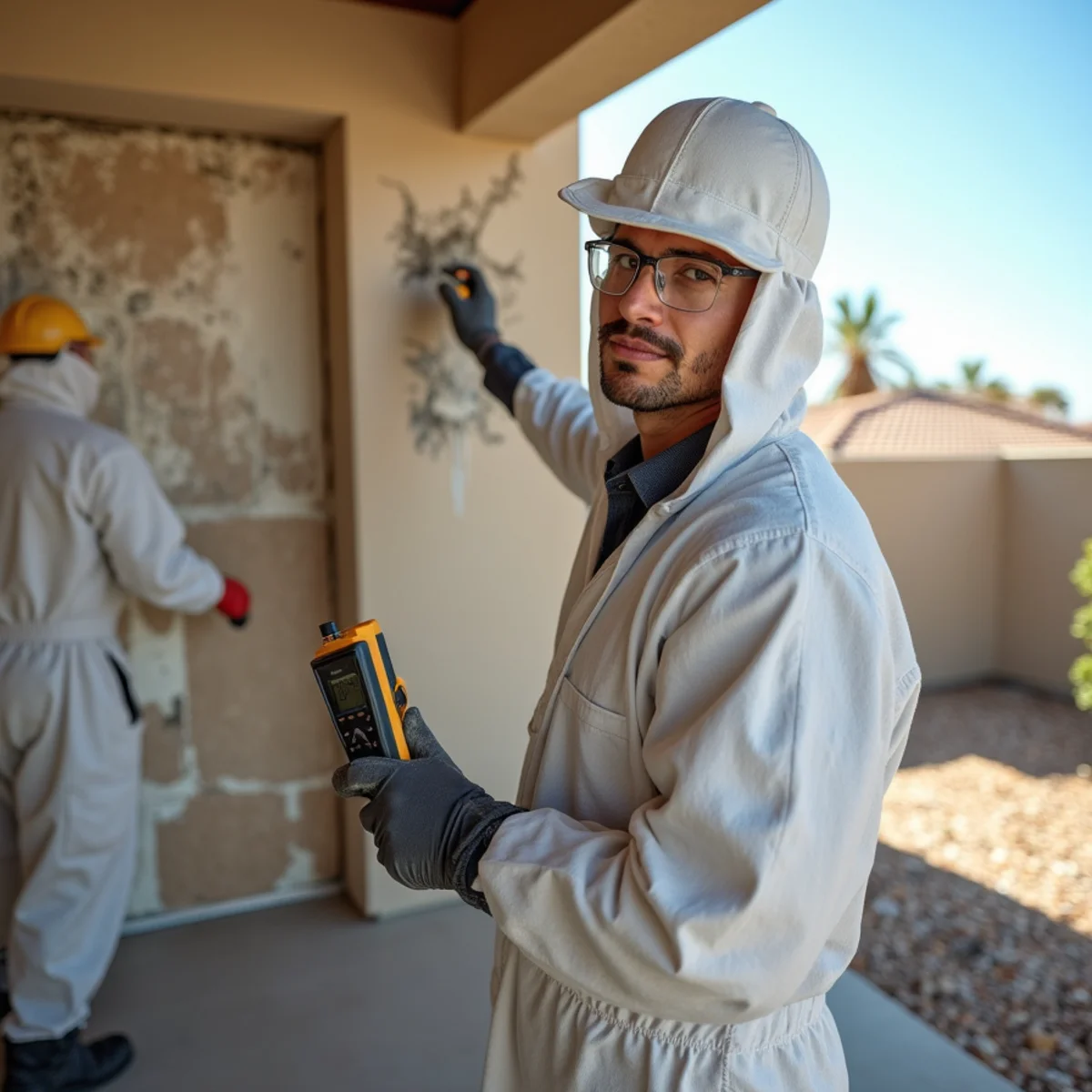
Touch tells you about the surface and nothing about the core. A drywall face can feel dry to the palm while the gypsum behind it and the framing behind that are still saturated. Water hides in the places you cannot touch: inside wall cavities, under flooring, in the subfloor, and deep in porous concrete block. Trusting the surface is how homeowners — and, frankly, some careless contractors — declare victory while moisture quietly does its damage behind the paint.
Tempe block construction holds water you cannot see
Much of Tempe is slab-on-grade with concrete masonry unit (CMU) block walls, and that construction has a specific relationship with water. Concrete and block are porous; they absorb moisture and release it slowly, so a block wall or slab can read wet for days after the room feels dry. Water also travels along the slab and wicks up into wall bases and framing, surfacing far from where it started. A leak in one room can leave moisture two rooms away, and the only way to know is to map it.
What moisture mapping actually involves
Moisture mapping turns an invisible problem into a documented one. The core tools:
- Non-invasive moisture meters that read moisture content through flooring and wall surfaces without damage.
- Pin-type meters that measure moisture at depth inside materials like framing and subfloor.
- Thermal imaging cameras that reveal the temperature signature of evaporating moisture, showing the shape of a wet area behind a wall.
- Hygrometers that track the humidity of the air itself so the drying equipment can be dialed in.
Readings are taken across the affected area and logged, creating a map of where the moisture actually is — which is reliably larger than the visible damage. Those readings are repeated daily so we can prove the structure is trending toward dry, not stalling.
Why the documentation matters to your claim
Moisture mapping is not only about drying well — it is about proving it. Daily moisture logs give your insurer objective evidence of the extent of the loss and of a proper, completed dry-out, which supports the claim and protects you if hidden moisture becomes an issue later. It also justifies the scope: when readings show moisture a foot up a wall, the record explains why that section needed attention. We document these readings on every job, the same discipline that governs our structural drying work.
What happens without it
Skip the mapping and you get the failure we are called to fix constantly: a room that was declared dry, repainted, and reoccupied, only to grow mold behind the new paint within weeks. Trapped moisture in a block wall or subfloor does not announce itself until the musty smell or the stain returns — and by then the repair has to be redone on top of a mold problem. In Tempe's heat, that hidden moisture can start feeding mold within 24 to 48 hours, long before anyone would have guessed the wall was still wet.
The sequence that actually works is simple: extract the water fast, then dry to a measured standard and verify it. Our crew pairs thorough water extraction with documented moisture mapping across Tempe, including Tempe Gardens and its older block homes. The same discipline decides tougher calls, like whether wet drywall can be dried or must be replaced. Call (866) 688-0301 and we will show you the readings, not just tell you it is fine.
Frequently Asked Questions
Moisture mapping is the process of measuring and documenting moisture content throughout a water-damaged structure using meters and thermal imaging. It creates a record of where the moisture actually is — including hidden areas inside walls, subfloor, and slab — so drying can be verified against a dry standard rather than guessed by feel.
Because touch only tells you about the surface. Drywall, framing, and especially Tempe's porous concrete block hold moisture in their core long after the face feels dry. A moisture meter reads what your hand cannot, which is why measured readings — not feel — determine when drying is truly complete.
We establish a dry standard from an unaffected area of the same material and dry the wet areas until they reach that baseline, confirmed with meter readings taken daily. When the affected materials match the dry standard, the structure is genuinely dry — a documented result, not a judgment call.
The daily moisture logs are objective proof of the extent of the damage and of a complete, proper dry-out. That documentation supports your claim, justifies the scope of work, and protects you if a hidden-moisture issue is questioned later. It turns 'we dried it' into a record you can point to.
Need Help With This in Person?
Our local crew handles it 24/7. Explore the related services and areas below, or just call (866) 688-0301.