What to Do When a Pipe Bursts in Your Tempe Home (First 60 Minutes)
A burst pipe can put hundreds of gallons on your floor in an hour. Here is the exact order of operations for the first 60 minutes — and when to stop and call a pro.

24/7 Emergency Service
Find the shut-off, stop the flood, dry the walls — 24/7 burst pipe response from a local crew that knows the Valley's aging plumbing.
A burst pipe empties a shocking amount of water into a home fast. A half-inch supply line can push out gallons a minute, and if it lets go inside a wall or above a ceiling, it can run for hours before anyone notices — soaking insulation, drywall, and framing the whole time.
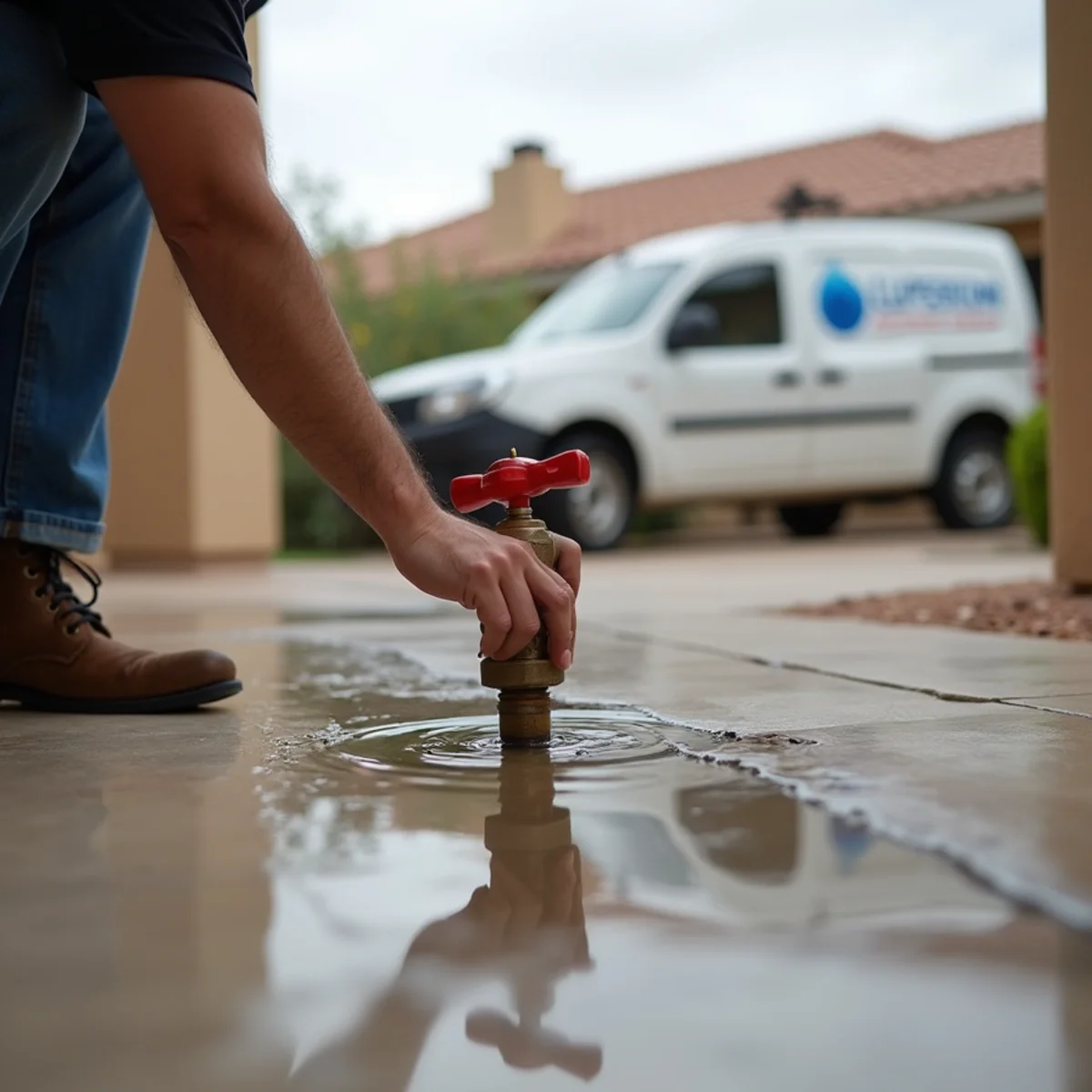
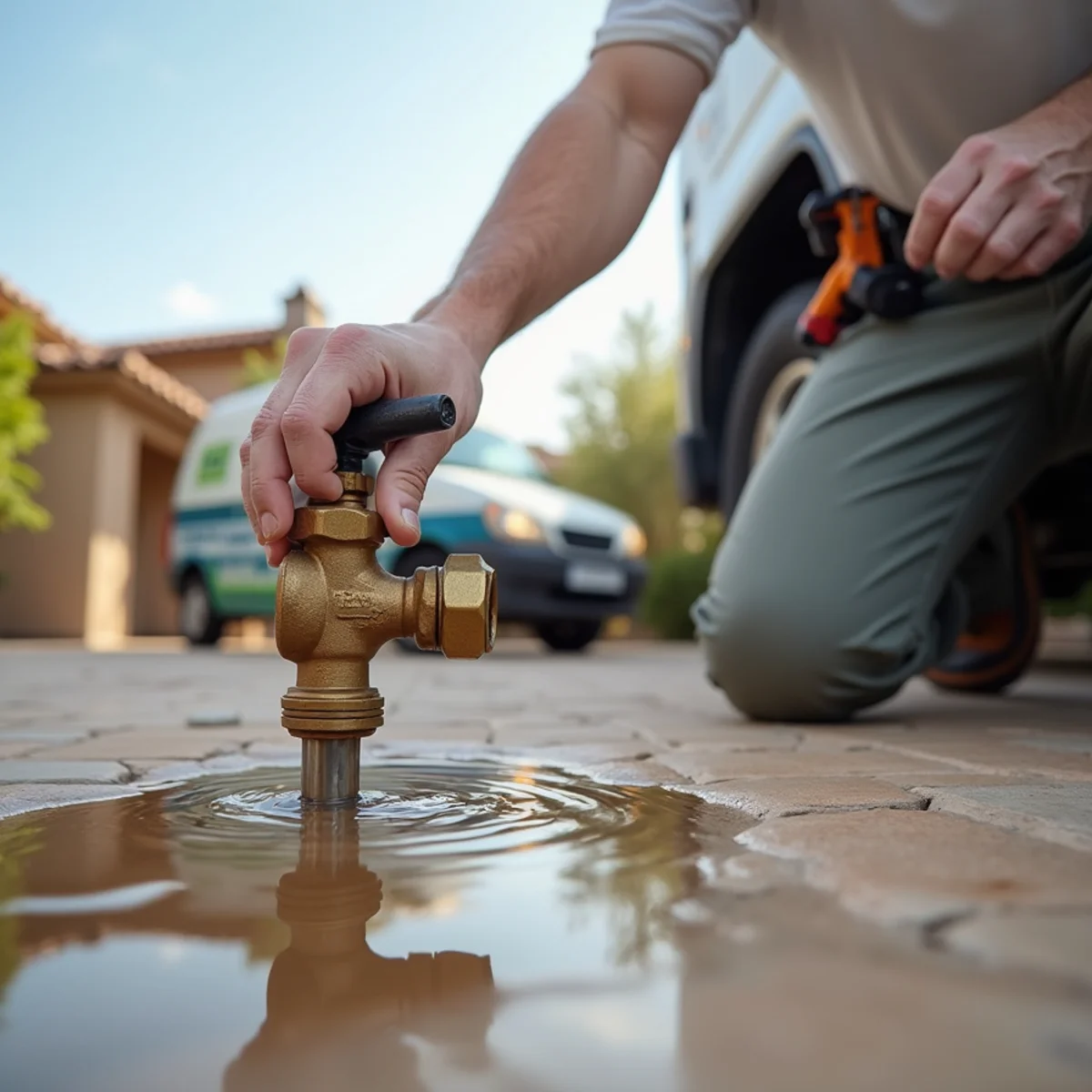
The first move is not to grab towels. It is to shut the water off at the main. In most Tempe homes that valve is near the front hose bib, in a ground box by the street, or where the service line enters the house. Turn it clockwise until the flow stops, then call us. Every minute the line stays live is more water in your walls and floor.
We answer (866) 688-0301 around the clock, help you kill the water over the phone, and roll a crew to extract, dry, and repair. We handle the emergency water removal and the structural drying so the water hiding inside the wall cavity does not become mold or warped floors two weeks from now.

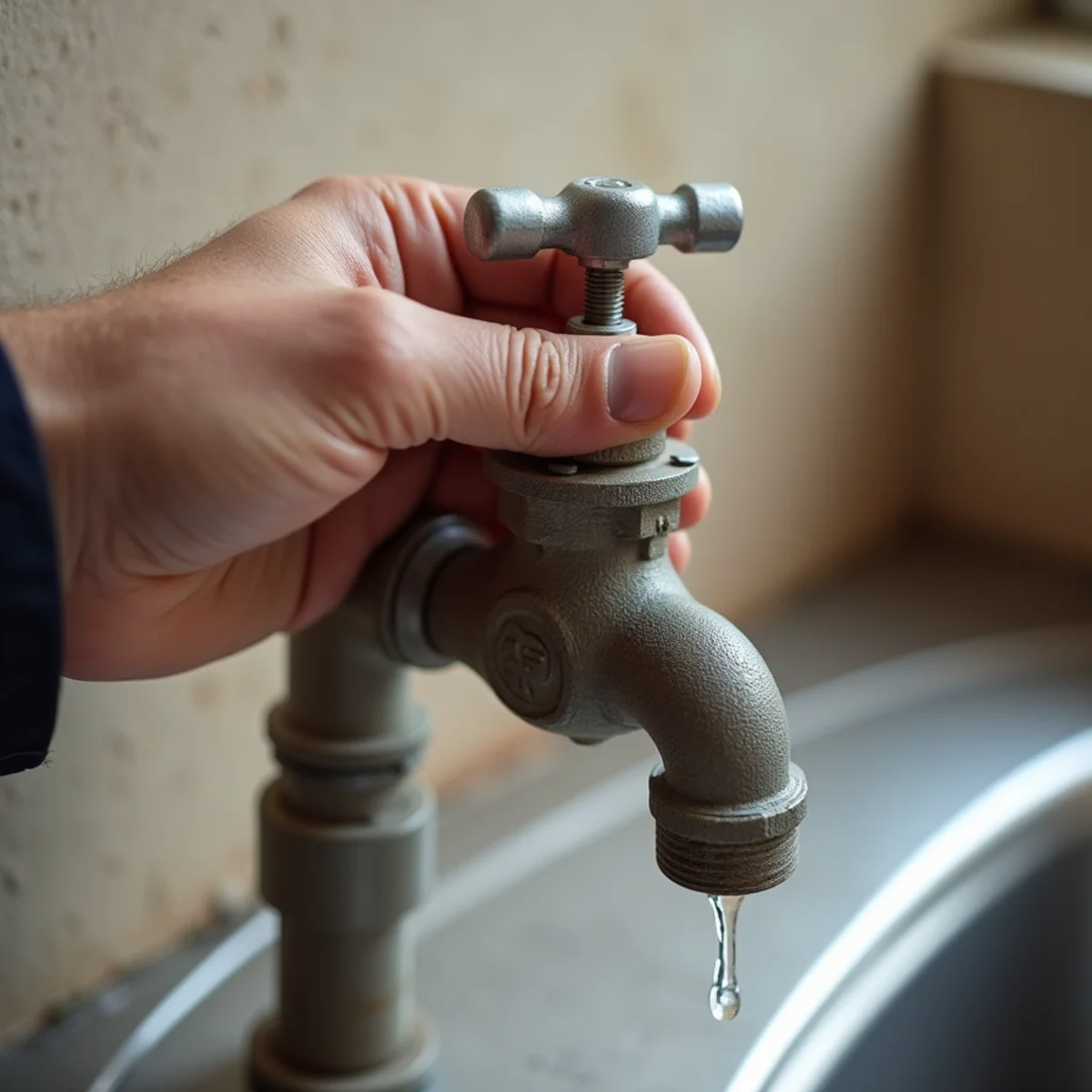
We get you to the main shut-off first — at the street box, the front hose bib, or the service entry — and confirm the flow has stopped. If the break is at one fixture, the local shut-off under it may do the job. Then we dispatch a crew.
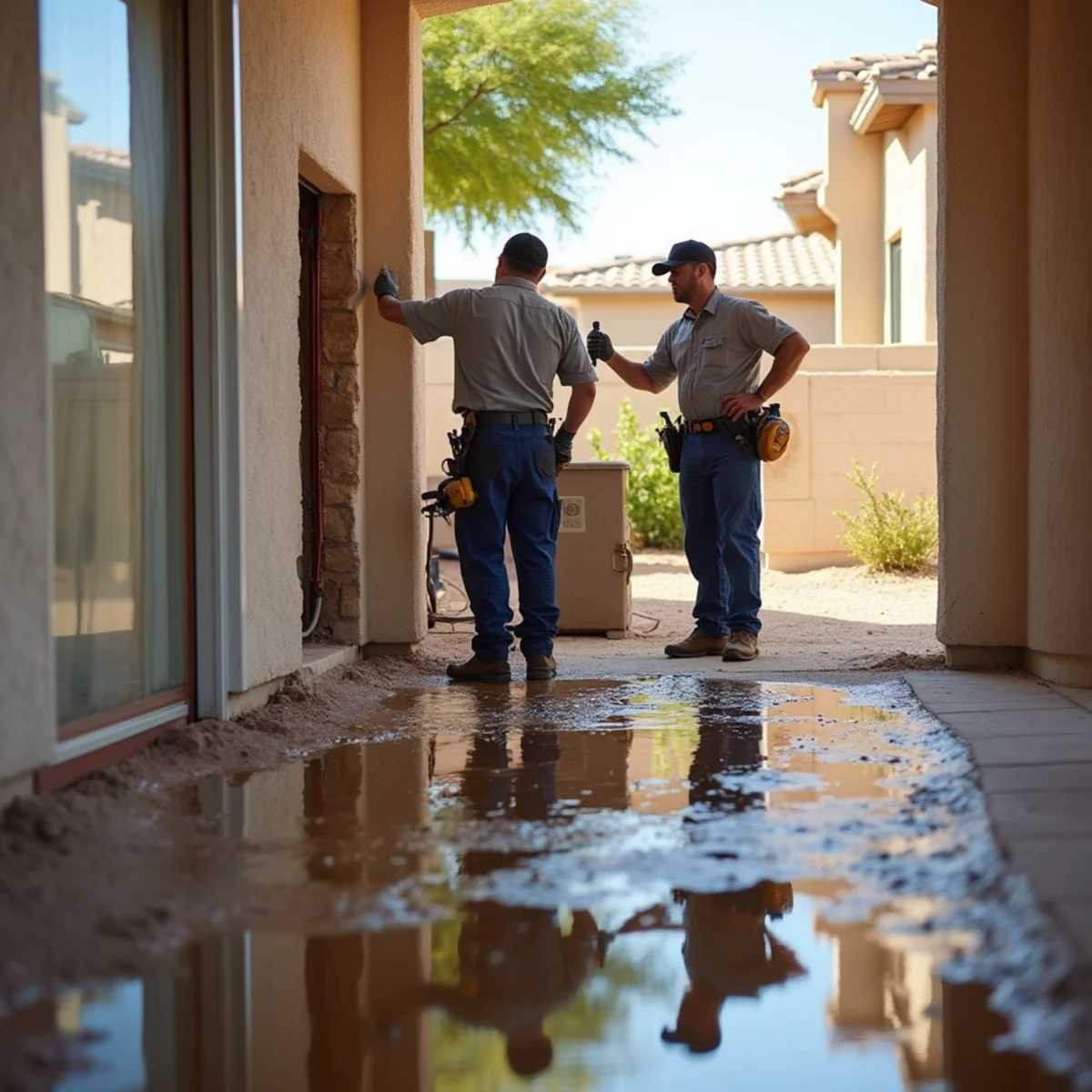
A burst pipe rarely stays where it broke. We use moisture meters and thermal cameras to trace water that traveled along the top plate, down the studs, and into the subfloor, so we dry all of it — not just the wet patch you can see.
We pump out standing water and, where the wall cavity is soaked, make controlled openings to reach the trapped moisture. Drying a wall from the outside only leaves the inside wet and growing mold.
Air movers and dehumidifiers run on a calculated plan with daily moisture readings until the framing and drywall are dry to standard — verified with a meter, not a fingertip.
Once the structure is dry, we put it back — drywall, insulation, baseboards, texture, and paint — so the only sign anything happened is that it looks new again.
Tempe's housing tells the story in its plumbing. Homes near ASU and the historic districts often still carry galvanized steel that corrodes and clogs from the inside until it splits, or in-slab copper that pinholes against Tempe's hard water. And a huge band of East Valley homes built between roughly **1978 and 1995** were plumbed with polybutylene — a gray plastic pipe now known to fail without warning. If your home is in that window, a burst is not bad luck; it is the material aging out. Our [polybutylene pipe risk guide](/blog/polybutylene-pipes-east-valley-risk/) covers what to watch for.
It is rare, but the Valley does get the occasional hard freeze, and it catches Tempe off guard because our plumbing is not built for it. Exposed hose bibs, backflow preventers, and pipes running through an uninsulated garage or exterior wall are the usual casualties on a cold January night. Water expands as it freezes and splits the pipe; the leak shows up when it thaws. If a freeze cracked a line at your place, we handle the cleanup the same way — stop the water, find the hidden moisture, and dry it out completely.
Every loss is different, so we give you an itemized estimate before work begins — never a number pulled from the air. These are the factors that move the price:
Usually one of three places: in the ground box near the street, at or near the front hose bib, or where the water line enters the house (often the garage). Turn the valve clockwise until the water stops. If you can only find a fixture's local shut-off, use that to stop a fixture-specific leak. We will help you locate it on the phone.
It can be, because the water soaks insulation and framing before you ever see a stain, and it hides there. That is exactly why we trace moisture with meters and thermal imaging and open the cavity where needed. Drying only the visible surface is how a burst pipe turns into a mold job.
Sudden, accidental water damage from a burst pipe is typically covered by a standard homeowners policy, including the mitigation work to dry your home. Slow, long-ignored leaks are often excluded. We document the source and the loss so your claim is classified correctly and give your adjuster a clear, itemized scope.
Our focus is the water damage — extraction, drying, and rebuild — and we coordinate with a licensed plumber for the pipe repair itself so the fix and the cleanup happen in the right order. You are not left managing two trades on your own.
A live person answers at 2 a.m., a truck rolls in minutes, and we aim to reach your Tempe door within 60 minutes — pumps ready, no call-center runaround.
Learn moreIn-slab copper fails at the end of its life across Tempe's slab-on-grade homes — we coordinate leak detection, then dry and restore the flooring above it.
Learn more
A burst pipe can put hundreds of gallons on your floor in an hour. Here is the exact order of operations for the first 60 minutes — and when to stop and call a pro.

Gray polybutylene pipe, installed across the East Valley from 1978 to 1995, gets brittle and fails without warning. If your Tempe or Mesa home dates to that era, here is how to find out whether you are at risk.
We bring burst pipe emergency cleanup to homes and businesses across the Valley — here are the areas we're called to most.
Our Tempe crew answers 24/7 and aims to be at your door within the hour. Get extraction and drying started before the mold clock runs out.
24/7 Emergency Service · 60 minutes response · Licensed & Insured