
Skip to content
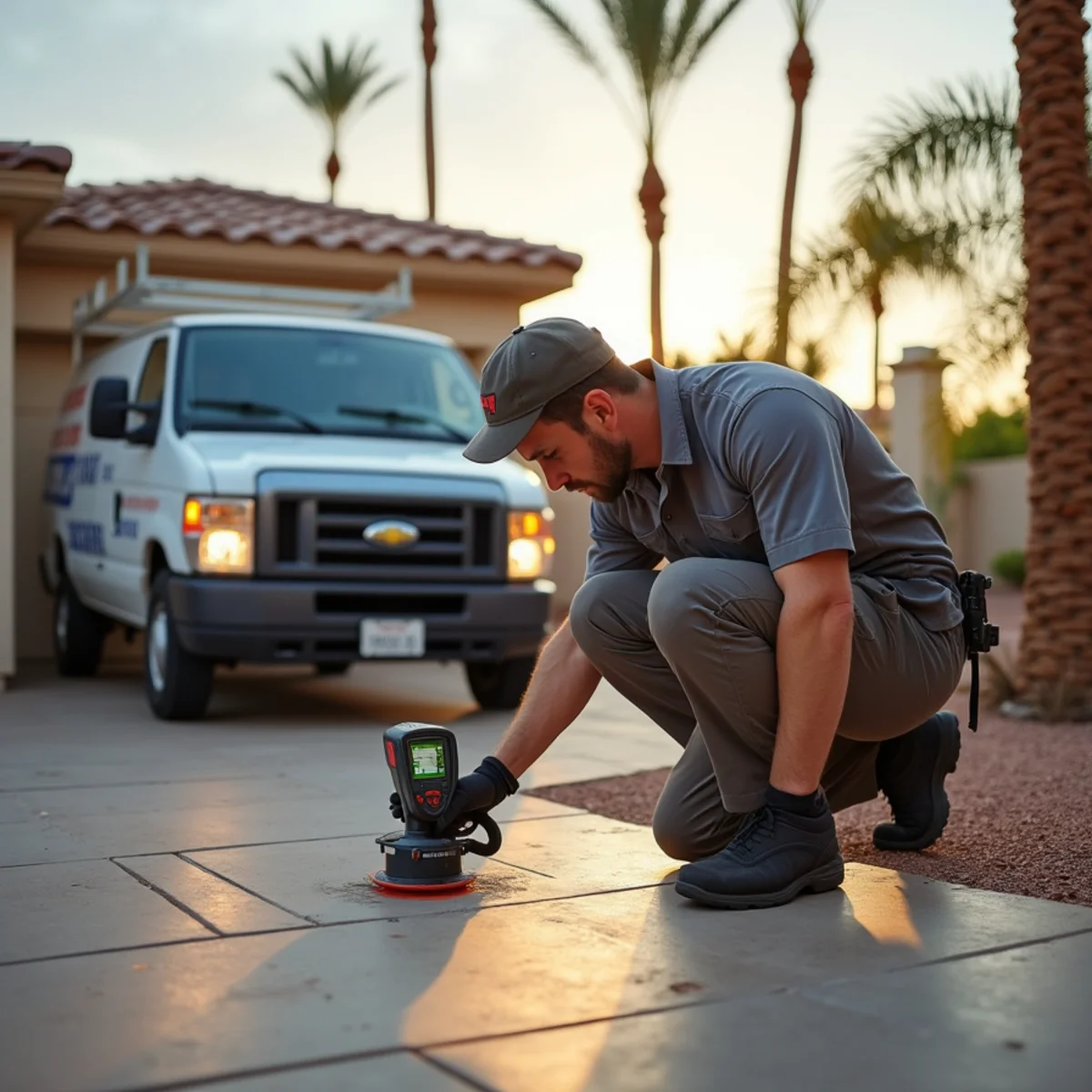
Technician drying a slab leak under tile flooring in a Tempe, AZ home

Water Damage Service

Slab Leak Water Damage Repair in Tempe, AZ

In-slab copper fails at the end of its life across Tempe's slab-on-grade homes — we coordinate leak detection, then dry and restore the flooring above it.

  • 4.9★ · 137+ reviews
  • Licensed & Insured · IICRC-Certified
  • 24/7 · 60 minutes response
  • 15+ years · Locally owned

The first sign is rarely a puddle. It is a water bill that doubled with no explanation, a patch of tile that stays strangely warm underfoot, or the faint sound of running water when every faucet in the house is off. A slab leak is a break in a pressurized supply line buried inside the concrete slab your home sits on, and it can run for weeks before it ever surfaces.

By the time it does surface, the damage is already spreading. Water under a slab has nowhere to go but sideways and up — it wicks across the subfloor, lifts baseboards, delaminates wood flooring, and pushes moisture into the base of block walls. Left alone in Tempe's climate, that trapped moisture becomes a mold problem inside the 24 to 48 hour window the IICRC warns about.

We do this work every week across Tempe's slab-on-grade neighborhoods. We coordinate the leak detection to pinpoint the break, then handle what we do best — drying the structure to the core and restoring the flooring and walls the leak damaged. Call (866) 688-0301 and we will walk you through it.

Slab Leak Water Damage in progress — a technician at work in a Tempe, AZ home

Signs of a slab leak in your Tempe home

  • A water bill that spiked with no change in how much water you use
  • A warm or damp spot on the floor, often on tile or where hot-water lines run
  • The sound of running or trickling water when everything is shut off
  • Cracked or loose tile, or wood flooring that is cupping and lifting
  • A drop in water pressure, or a water heater that runs more than it should
  • A musty smell or mildew at the base of a wall with no visible source

Our Process

  1. 1

    Confirm the leak & pinpoint the source

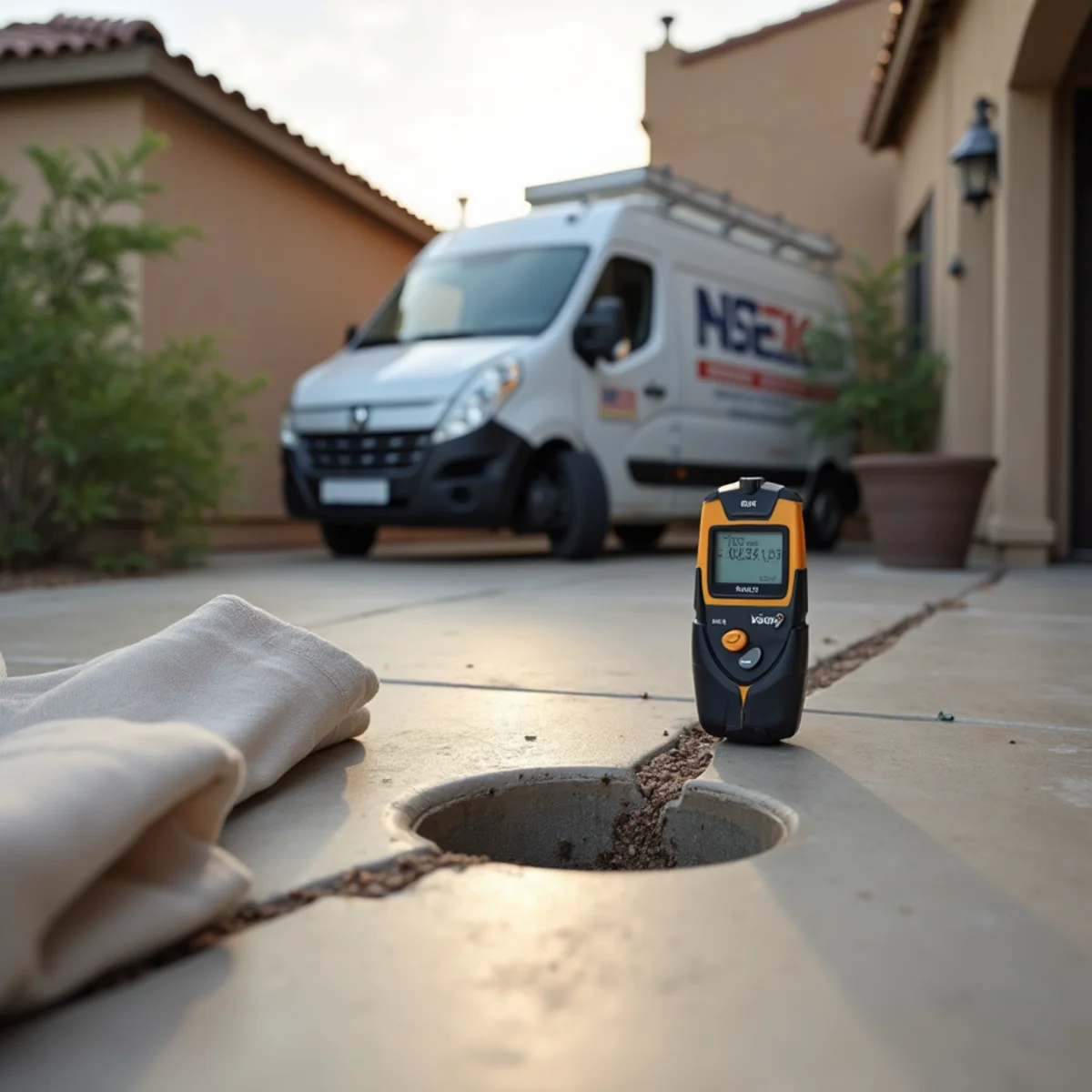
    We start by verifying it is actually a slab leak and not a roof, appliance, or drain problem. Working with a leak-detection specialist, we use pressure testing along with acoustic and thermal equipment to pinpoint the break under the slab — so the access point is precise and the concrete work stays as small as possible.

  2. 2

    Stop the water & open access

    Once the leak is located, the line is isolated or the water is shut off at the main. Reaching an in-slab line means a controlled cut through the flooring and concrete at the marked spot. We protect the rest of the room and keep the opening only as large as the repair actually requires.

  3. 3

    Extract and dry the slab

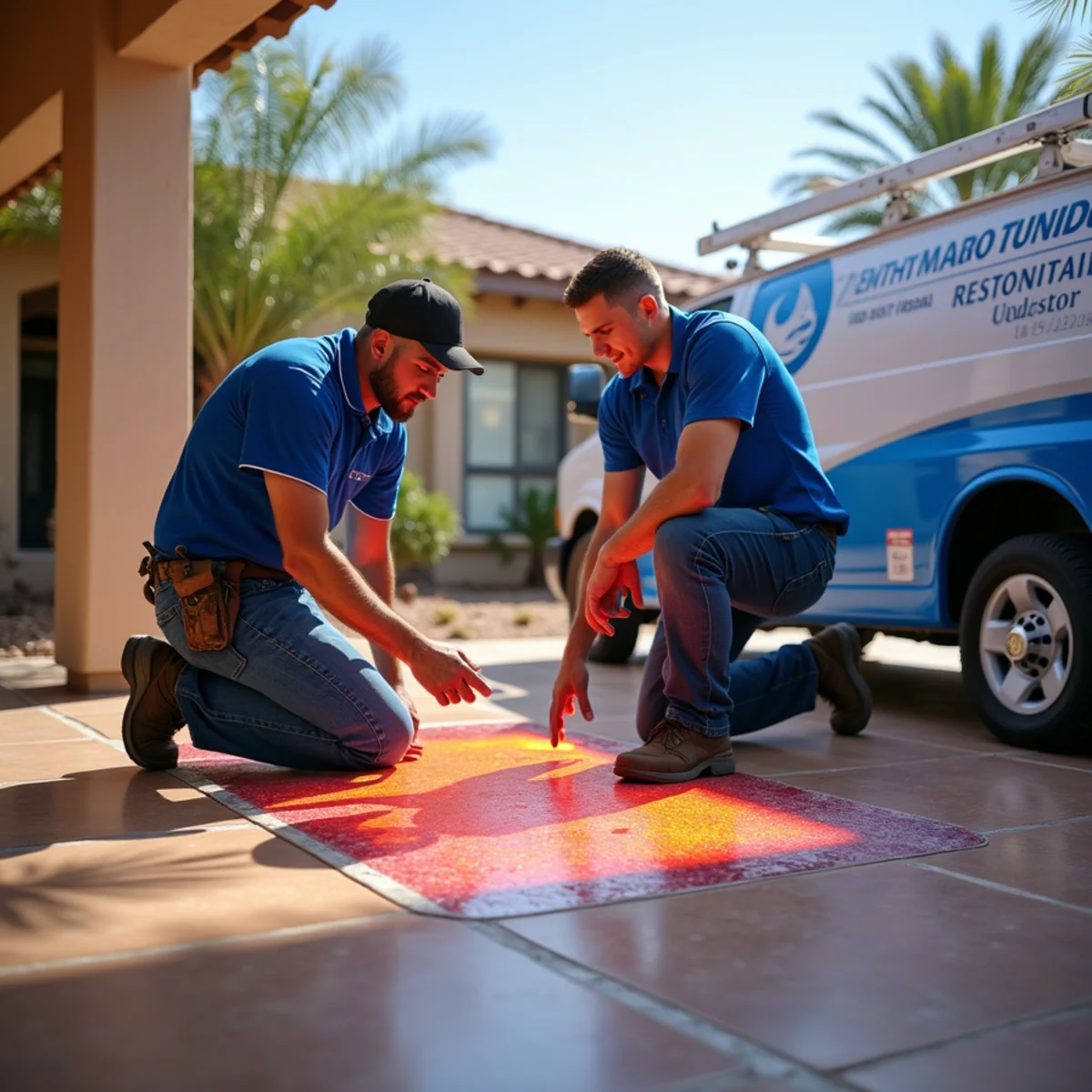
    Water trapped under and around the slab has to come out before anything gets closed up. We extract standing water, then set air movers and dehumidifiers and, where needed, specialty mats and injection drying to pull moisture out of the concrete, subfloor, and the base of the walls. We take daily readings until it is dry to standard.

  4. 4

    Restore flooring, walls & finishes

    With the structure dry, we rebuild what the leak and the access work removed — tile, wood or laminate flooring, baseboards, and any drywall that had to come out. The goal is a room that looks like the leak never happened.

  5. 5

    Document the loss for your claim

    We photograph and log everything from the first inspection through the final moisture reading, and hand you an itemized scope your adjuster can read. Sudden slab-leak damage is often covered even when the pipe repair itself is treated separately.

Why in-slab copper fails in Tempe homes

Much of Tempe is slab-on-grade block construction, and a lot of homes built from the 1960s through the 1980s have copper supply lines run through or under that slab. Decades of Tempe's hard water — 16 to 21 grains per gallon — scale and corrode copper from the inside, and the expansive caliche soil under the Valley shifts with moisture and puts stress on the pipe. Put those together and a pinhole leak at the end of the line's life is not bad luck, it is the expected failure. If you own an older ranch home, it is worth reading the [signs of a slab leak in a 1960s Tempe ranch](/blog/signs-of-slab-leak-1960s-tempe-ranch/) before one catches you off guard.

We coordinate detection, then dry and restore

Here is how the work splits up, because people are often unsure who does what. A plumber or leak-detection specialist finds and repairs the pipe. We handle the water damage around it — the extraction, the [structural drying](/structural-drying/), and the flooring and drywall restoration a slab leak leaves behind. We coordinate the detection so you are not managing two trades on your own, and we make sure the concrete and subfloor are genuinely dry before the finished floor goes back down. Skip that drying step and you seal moisture under new tile, which is how a routine [water damage restoration](/) turns into a mold job.

What Affects the Cost

Every loss is different, so we give you an itemized estimate before work begins — never a number pulled from the air. These are the factors that move the price:

  • How long the leak ran before it was found — a slow leak can saturate a wide area of subfloor
  • The size of the slab and flooring area that has to be opened to reach and dry the line
  • Flooring type over the slab — tile, hardwood, and laminate each cost differently to remove and replace
  • Whether moisture wicked into wall bases and cabinetry beyond the immediate floor
  • Days of drying equipment needed to bring the concrete and subfloor to dry standard
  • Extent of rebuild — tile setting, flooring, baseboard, and paint after the leak is repaired

Frequently Asked Questions

Classic tells are a water bill that jumped for no reason, a warm or damp patch on the floor, the sound of running water when everything is off, and a drop in pressure. None of those are proof on their own, which is why the first step is detection — pressure testing and acoustic or thermal equipment to confirm the leak is under the slab and pinpoint it before anyone cuts concrete.

Related Reading

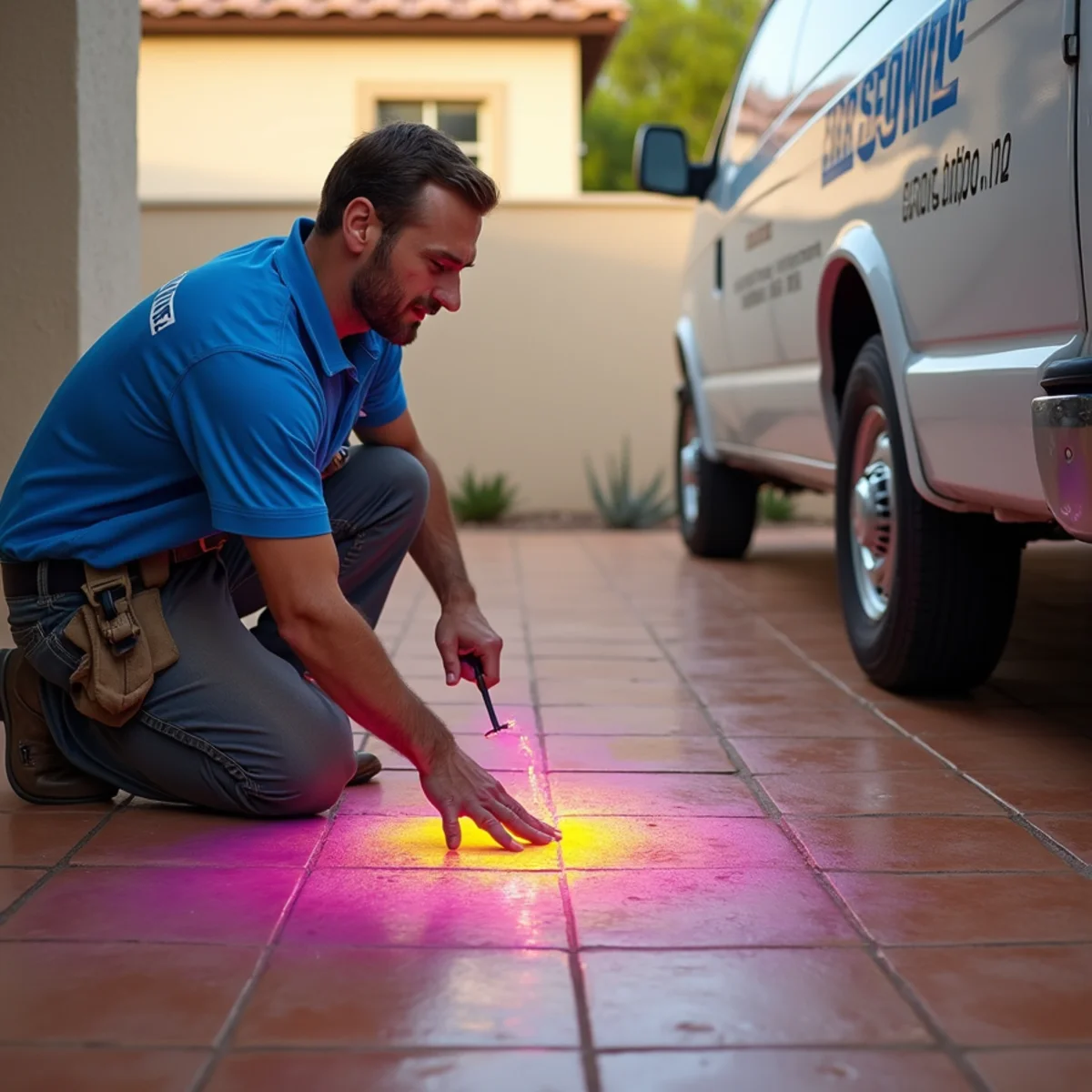
Warm spot on the tile floor of a 1960s Tempe, AZ ranch home indicating a slab leak
Problem Solving 8 min

Signs of a Slab Leak in Your 1960s Tempe Ranch Home

A slab leak in a mid-century Tempe ranch is quiet and slow — but the warm floor spots, the water-bill spike, and the musty smell are readable if you know the signs. Here is how to catch one before it undermines your floor.

Mar 12, 2025Read
Slab Leak Water Damage Across Tempe & the East Valley

We bring slab leak water damage to homes and businesses across the Valley — here are the areas we're called to most.

Slab Leak Water Damage You Can Count On

Our Tempe crew answers 24/7 and aims to be at your door within the hour. Get extraction and drying started before the mold clock runs out.

24/7 Emergency Service · 60 minutes response · Licensed & Insured

Call Now Free Estimate