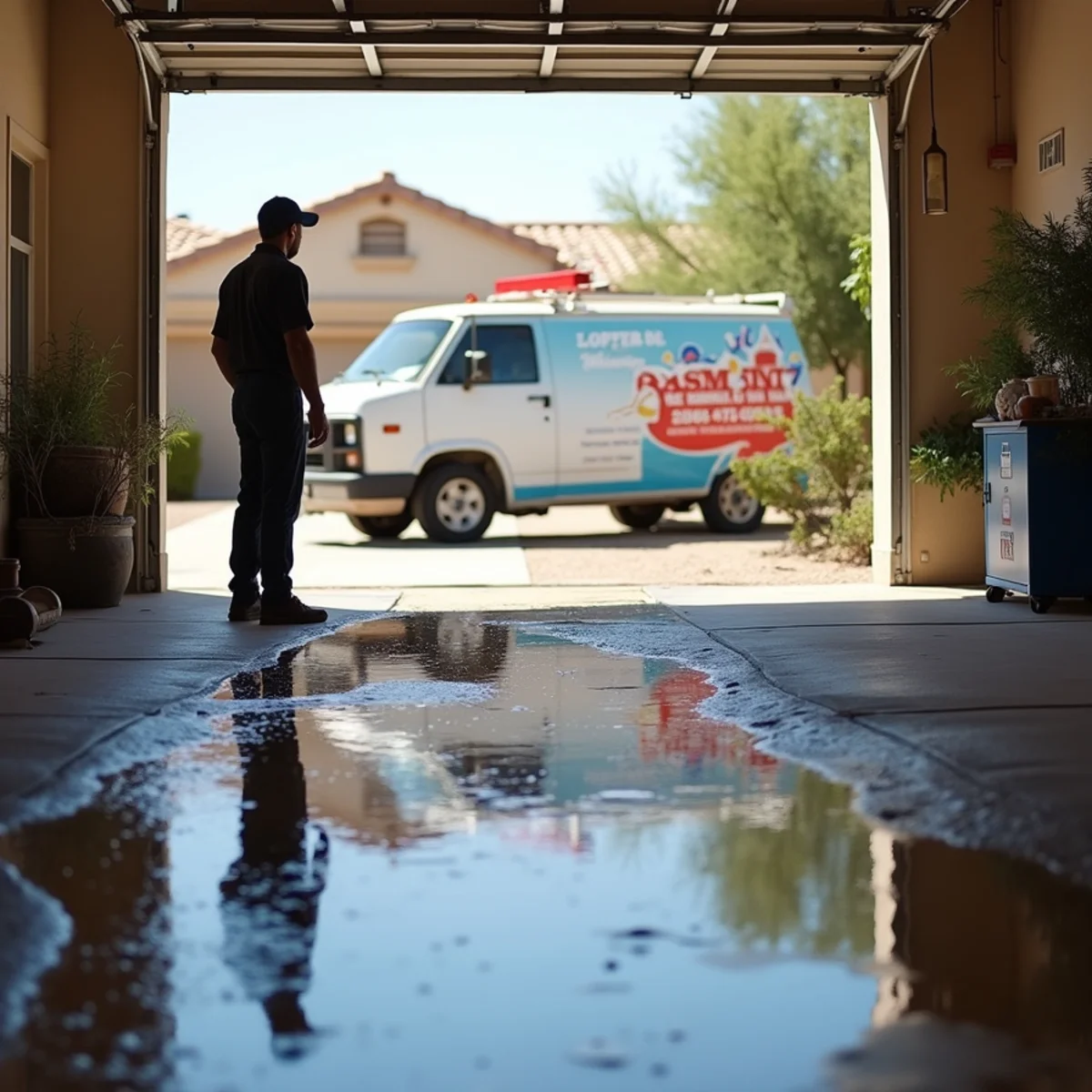
You mopped the same corner of the kitchen twice this week, and it is damp again. Your water bill jumped for no reason you can name. There is a warm patch on the hallway tile you keep stepping over. In a 1960s Tempe ranch home, that combination is not a coincidence — it is the signature of a slab leak, a pipe failing inside or beneath the concrete slab your house sits on.
Slab leaks are quiet. They do not gush or announce themselves the way a burst supply line does. They seep, day after day, into the ground and up through your floor, and by the time the damage is obvious the water has often been moving for weeks. The good news: the early signs are readable if you know what you are looking at. Here is how to spot one in a Broadmor ranch or any mid-century Tempe home — and what to do next.
What a slab leak actually is
Most Tempe homes built in the 1950s and 1960s are slab-on-grade: no basement, no crawl space, just a concrete slab poured on the ground with the house framed on top. The water supply lines — and sometimes the drain lines — run through or beneath that slab. In this era, that often means soft copper tubing embedded in the concrete. When one of those lines springs a leak, the water has nowhere to go but into the soil under your foundation and, eventually, up into your flooring.
A slab leak on a pressurized hot or cold supply line is the most common kind, and it tends to get worse, not better. A pinhole today becomes a steady flow in a month.
The warning signs to watch for
No single sign proves a slab leak, but the more of these you can check off, the more likely it is:
- A sudden, unexplained spike in your water bill with no change in usage — often the first hard evidence.
- The sound of running or trickling water when every faucet and appliance is off.
- A warm spot on the floor, usually tile or vinyl, if the leak is on the hot-water line.
- Cracks appearing in flooring, tile grout, or drywall as the slab shifts on saturated soil.
- A persistent musty or mildew smell near the floor that cleaning does not fix.
- Low water pressure throughout the house as the leak bleeds off supply.
- Damp, warping, or discolored flooring — carpet that stays wet, wood that cups, tile that loosens.
Why 1960s Tempe homes are especially at risk
Two local factors gang up on mid-century copper. First, Tempe's water is hard — 16 to 21 grains per gallon — and decades of mineral-rich water scour and scale the inside of copper tubing until pinholes form. Second, our expansive desert soils swell when wet and shrink when dry, and that constant movement flexes and stresses lines locked in the slab. Add fifty-plus years of service and a slab leak stops being bad luck and starts being a maintenance reality.
Neighborhoods full of original-owner and lightly-updated ranch homes — Broadmor is a classic example — are exactly where we see in-slab copper reaching the end of its life.
How a slab leak is confirmed
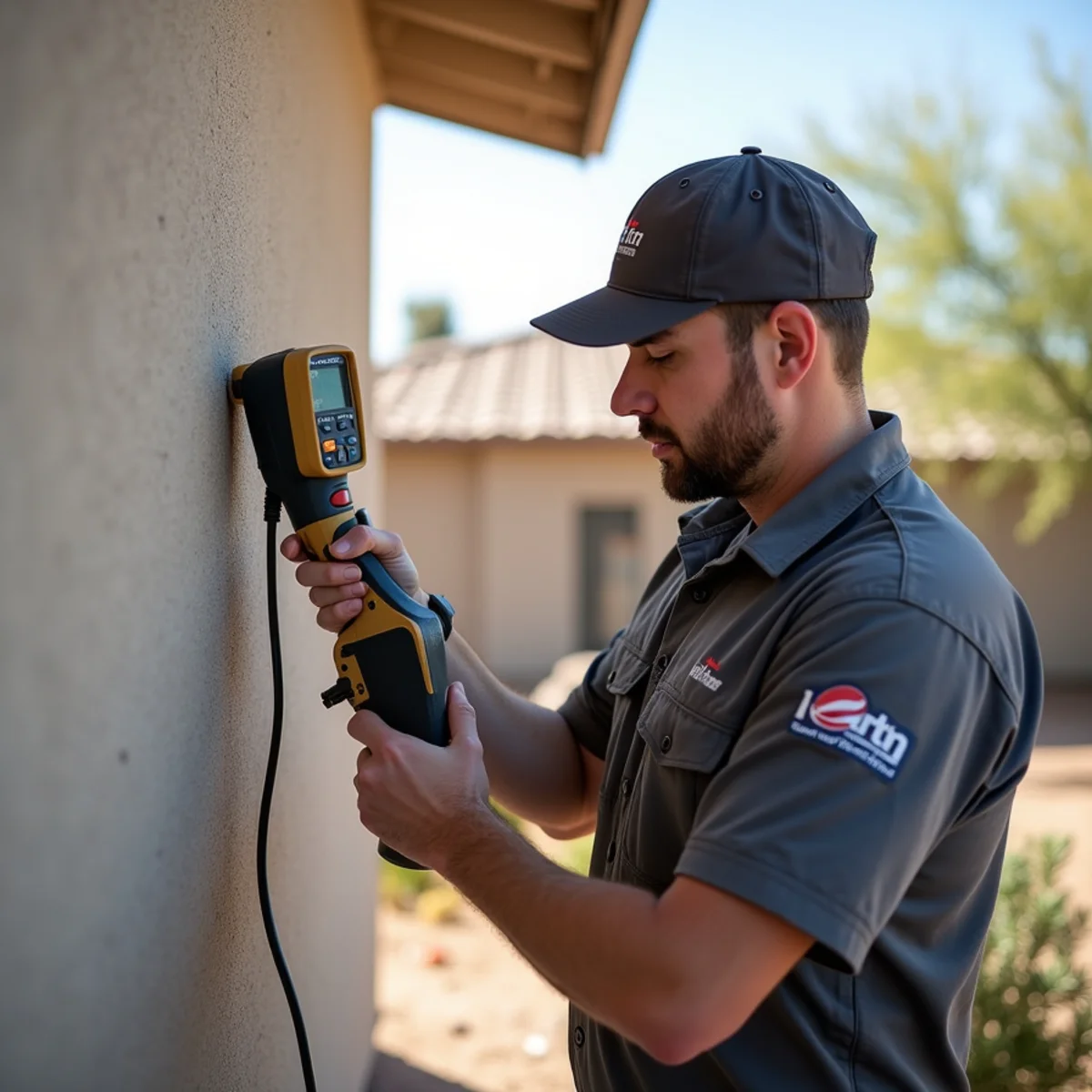
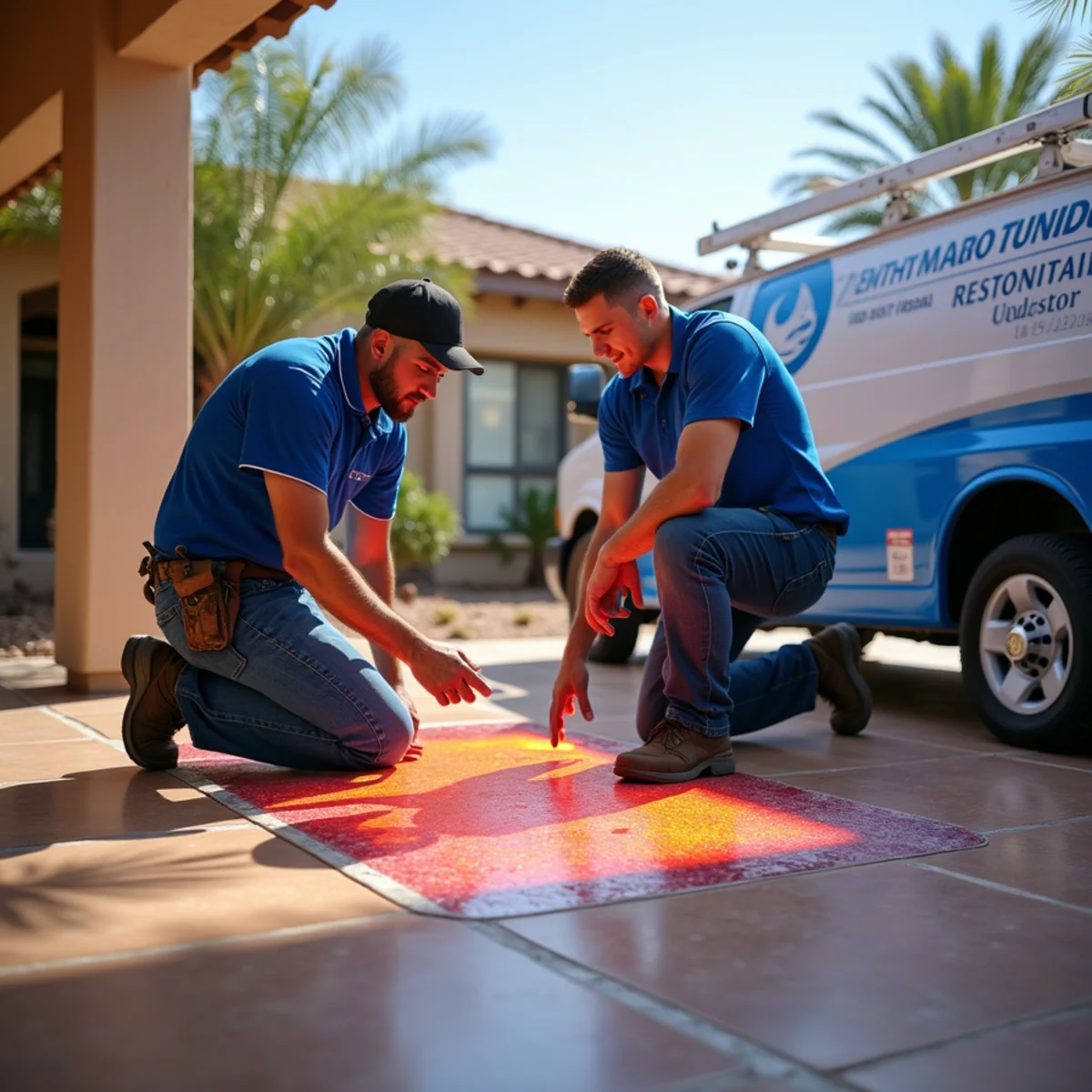
Guessing where a slab leak is hiding leads to jackhammering the wrong part of your floor. Professional leak detection uses acoustic listening equipment, pressure testing, and thermal imaging to pinpoint the failed section before anyone touches the concrete. That precision is the difference between a small access cut and tearing up half a room.
What waiting actually costs
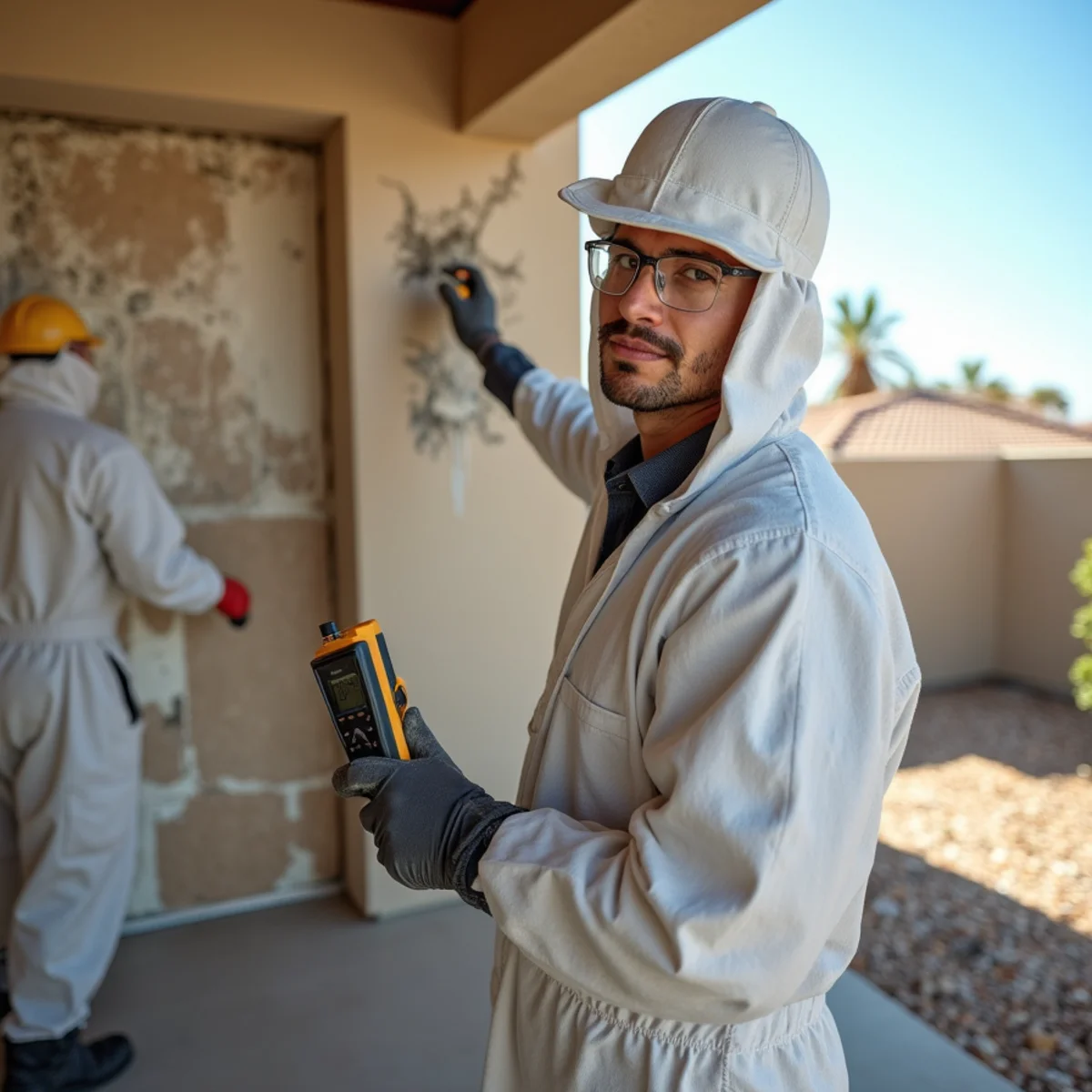
A slab leak is not just a plumbing problem — it is a water-damage problem that compounds. Left alone, the constant moisture wicks into wall bottoms and baseboards, undermines flooring adhesives, and creates exactly the warm, damp conditions mold needs. In Tempe's heat, mold can take hold within 24 to 48 hours of materials staying wet, and a slab leak keeps them wet indefinitely. Saturated soil can also shift the foundation itself, opening cracks that get expensive fast.
What the fix looks like
Once the leak is located, a plumber repairs the line — by spot-repairing the failed section, rerouting it, or repiping, depending on the pipe's overall condition. Then the water damage has to be dealt with, and that is our part. We extract standing water, open and dry the affected slab, wall cavities, and flooring with commercial equipment, and use professional structural drying to pull moisture out of the concrete and framing — not just the surface. Skipping that step is how a repaired leak still turns into a mold job three weeks later.
If you suspect a slab leak in your Tempe home, do not wait for the floor to buckle. Our crew handles slab leak water damage across the city, and our base off W Auto Dr near the I-10 Broadway Curve keeps us minutes from most mid-century neighborhoods. Call us anytime at (866) 688-0301 — we answer the phone at 2 a.m.
Frequently Asked Questions
No. Locating a slab leak requires acoustic and thermal equipment, and the repair means accessing a pipe encased in concrete. This is a job for a licensed plumber on the pipe and a restoration crew on the resulting water damage. What you can do yourself is run the water-meter test and shut off the main if the leak is severe.
It varies widely with how long the leak ran and how far the water spread. Clean-water slab leaks caught early typically fall in the lower Category 1 range, while weeks of hidden seepage that reaches framing and triggers mold costs considerably more. We give an itemized estimate before any work starts.
Often, yes — an unexplained jump in your bill is one of the earliest and most reliable signs. A supply-line slab leak wastes water continuously, so even a small one adds up over a billing cycle.
We aim for a 60-minute response across Tempe, 24/7. Even if the plumbing repair is scheduled for later, getting extraction and drying started early limits the water damage and the mold risk.
Need Help With This in Person?
Our local crew handles it 24/7. Explore the related services and areas below, or just call (866) 688-0301.