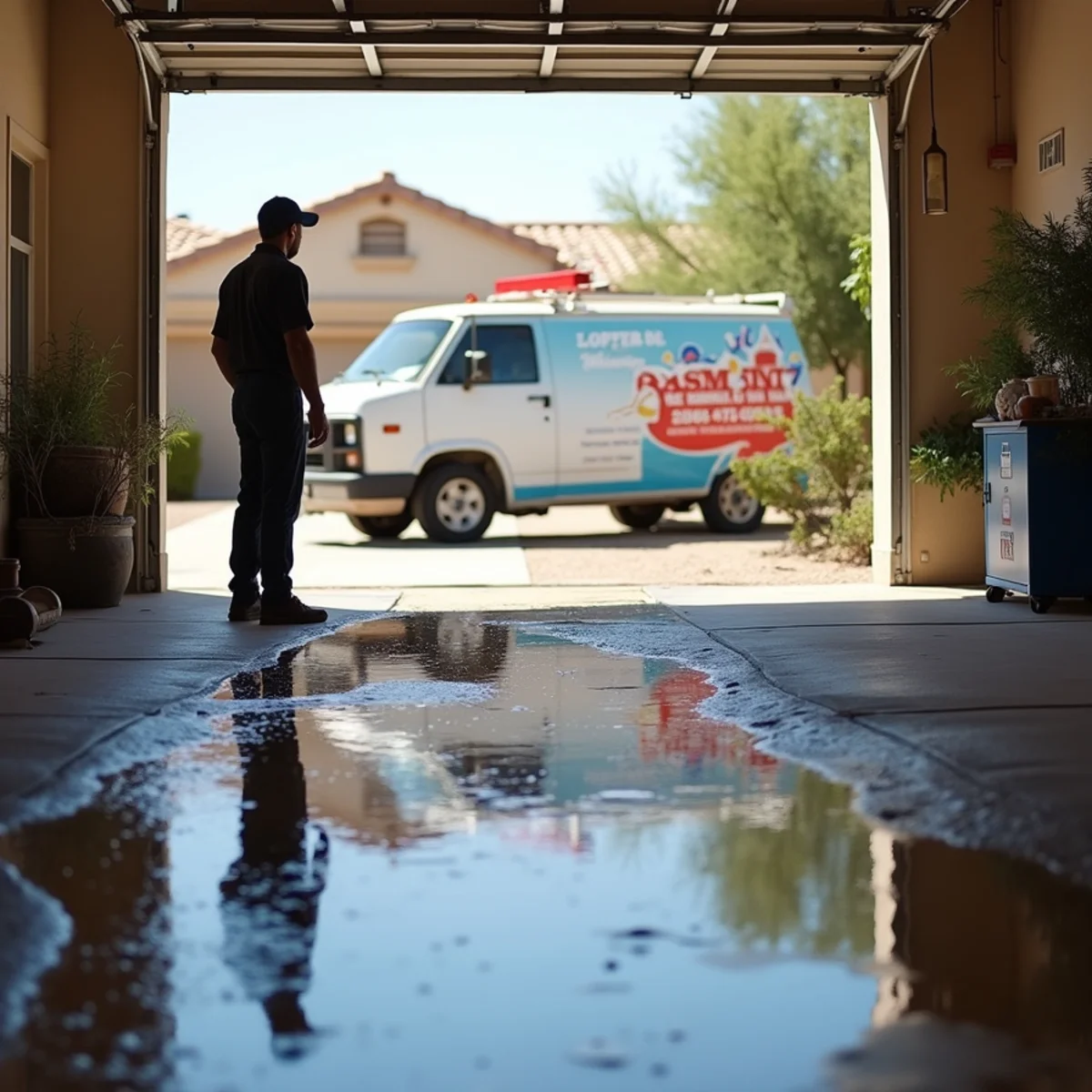
The leak was small. A supply line under the bathroom sink wept for a day or two before you noticed, and you told yourself what everyone in Arizona tells themselves: it is a dry climate, it will just evaporate. Three days later there is a black bloom creeping up the vanity's side panel and a smell you cannot place. The dry-climate reasoning just cost you a remediation bill.
Here is the uncomfortable truth about mold in Tempe: our outdoor air is bone dry, but the inside of a wet wall cavity is a different world. Mold does not care what the humidity is on your patio. It cares about the moisture six inches inside your drywall — and after a leak, that spot is a rainforest.
The 24-to-48-hour rule
The industry standard, backed by IICRC guidance, is simple and unforgiving: mold can begin to grow within 24 to 48 hours of materials staying wet. Not weeks. Hours. Spores are already present in every building — they are in the air around you right now — and all they need to activate is moisture and something to eat. After a leak, both arrive at once.
Why 'it's a dry climate' is a dangerous myth
Arizona's low ambient humidity actually works against you in one specific way: it breeds complacency. Homeowners assume any water will evaporate, so they under-react to leaks that someone in a wetter climate would attack immediately. Meanwhile, the water that soaked into your subfloor, wall cavity, or carpet pad is sealed away from that dry desert air. It cannot evaporate through drywall and baseboard. It just sits there, warm and trapped, doing exactly what mold needs.
What mold needs — and how Tempe heat delivers it
Mold requires four things, and a Tempe leak supplies all four fast:
- Moisture — from the leak itself, held inside porous building materials.
- A food source — drywall paper, wood, carpet backing, and household dust are all edible to mold.
- Warmth — mold thrives between roughly 77 and 86 degrees, and the interior of a Tempe wall in summer sits right in that band.
- Time — as little as a single day of undisturbed moisture.
That temperature point matters. In much of the country a wall cavity runs cool. In Tempe from June through September, the space behind your drywall is warm around the clock, and that heat acts like an accelerant on the mold clock.
The realistic timeline
Here is how a typical hidden leak progresses in a Tempe summer:
- Hours 0–24: Water saturates porous materials. No visible mold yet, but spores are activating.
- Hours 24–48: Mold colonies establish on the wettest surfaces — often inside the wall where you cannot see them.
- Days 3–7: Visible growth and a musty odor appear. What started as a drying problem is now a contamination problem.
- Week 2 and beyond: Colonies spread through the cavity and into the HVAC, and the remediation scope — and cost — climbs sharply.
Where mold hides in a Tempe home
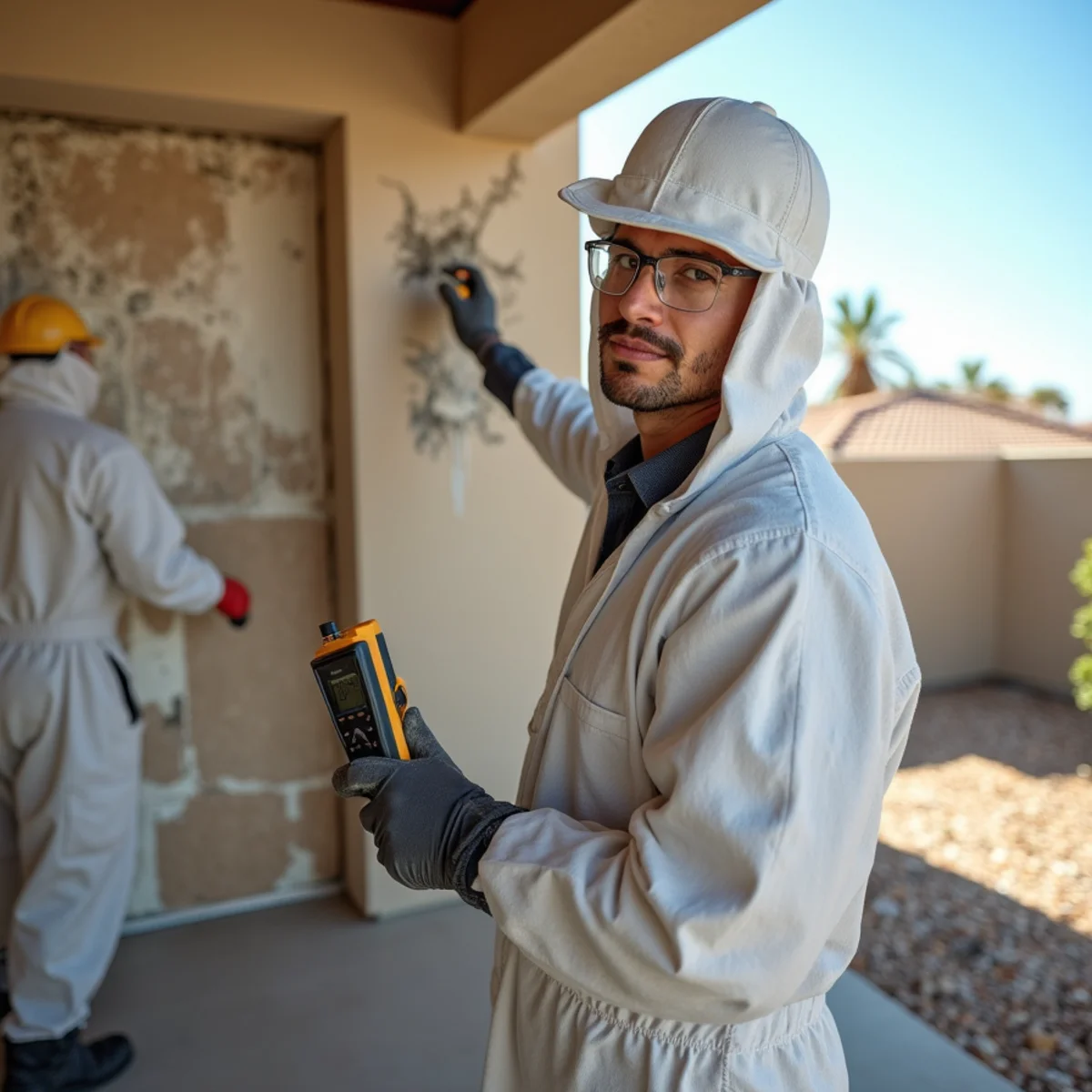
Because the growth is usually out of sight, people miss it until the smell arrives. The usual hiding spots are behind and under things: inside wall cavities, beneath vinyl and laminate flooring, under carpet padding, behind baseboards, inside cabinet bases, and in the drywall around window and roof leaks. Neighborhoods with original mid-century finishes, like Escalante, often have the paper-faced drywall and wood trim that mold feeds on most readily.
Why fast drying beats remediation every time
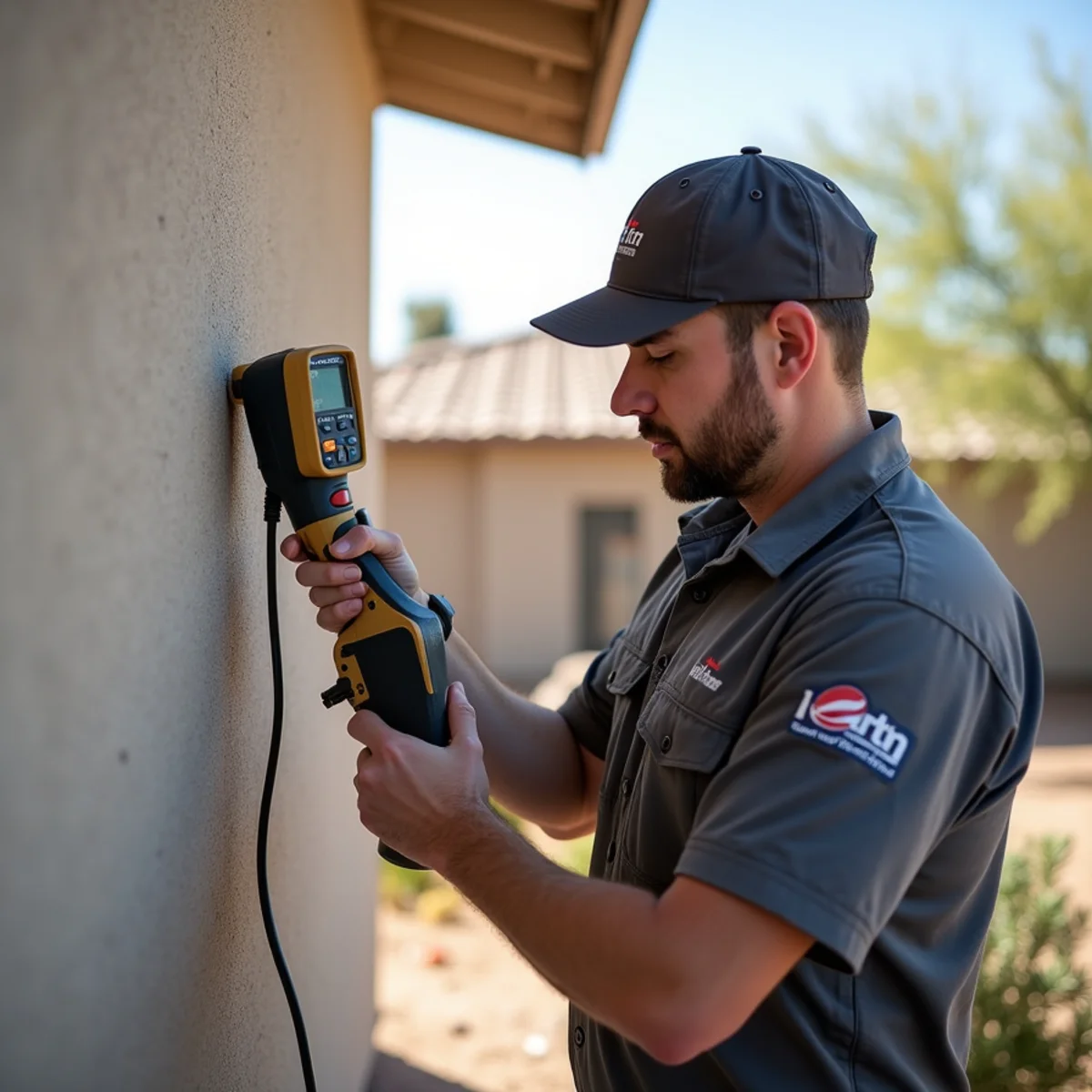
This is the whole point. If the structure is dried properly within that first 24-to-48-hour window, you often prevent mold entirely — a drying bill instead of a remediation bill. Professional structural drying pulls the trapped moisture out of framing, subfloor, and wall cavities that box fans never reach. Miss the window, and the job changes character: now it is containment, removal of contaminated materials, HEPA filtration, and professional mold remediation — more disruptive, more expensive, and slower.
For a sense of what remediation runs when the window is missed, see our breakdown of mold remediation cost across Scottsdale and Tempe. But the better path is the one that avoids it: dry the structure completely and quickly. We handle mold after water damage throughout Tempe, and our crew off W Auto Dr can usually be at your door within the hour.
Frequently Asked Questions
Absolutely. Outdoor humidity is irrelevant to what happens inside a wet wall. Once water is trapped in drywall, subfloor, or carpet pad, the enclosed space stays humid and warm regardless of the desert air outside — and mold begins within 24 to 48 hours.
Within 24 to 48 hours of the materials getting wet. That is the window where thorough professional drying can stop mold before it starts. After about two days, you are increasingly looking at remediation rather than prevention.
A musty odor is often the first sign of mold growing where you cannot see it — inside a wall, under flooring, or behind a cabinet. Do not wait for it to become visible. That smell is your cue to have the area inspected and moisture-tested.
It speeds it up. Mold grows fastest between about 77 and 86 degrees, and the interior of a Tempe wall cavity sits in that range all summer. The heat behind your drywall acts like an accelerator on the standard 24-to-48-hour timeline.
Need Help With This in Person?
Our local crew handles it 24/7. Explore the related services and areas below, or just call (866) 688-0301.