
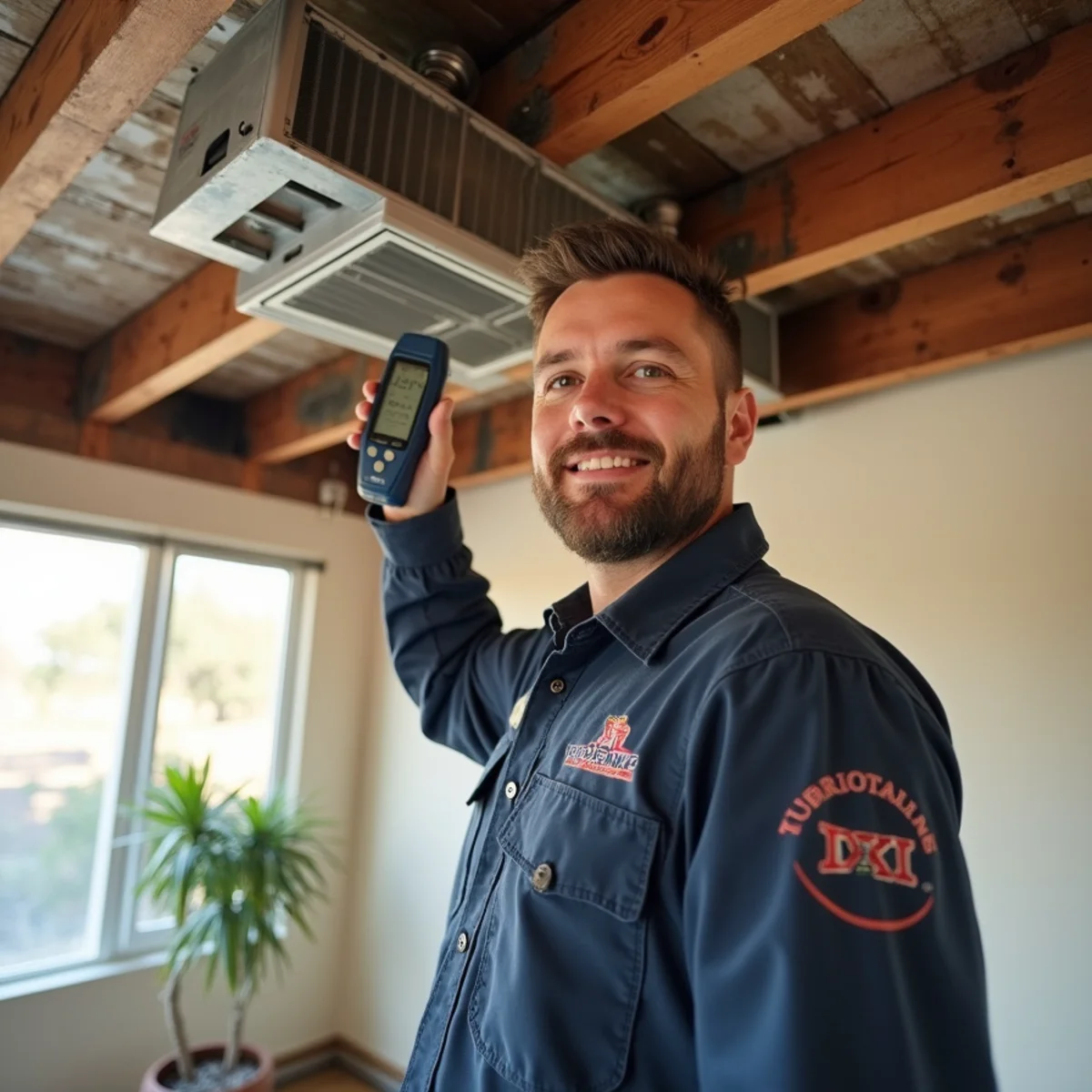
Your air conditioner does more than cool your house in a Tempe summer — it pulls gallons of water out of the air every day and drains it away. When that drain clogs, the water backs up and finds your ceiling, your closet, or the drywall around the air handler. We get these calls all summer, and almost every one was preventable back in April.
Condensate maintenance is fifteen minutes of work that saves a ceiling. Do it before the season, not after the flood.
Where All That Water Comes From
As warm, humid air passes over the cold evaporator coil, moisture condenses out — the same way a glass of iced tea sweats on a summer day. That water drips into a pan under the coil and flows out through a narrow PVC condensate line. On a hard-running Tempe system in July, that can be five to twenty gallons a day.
All of it depends on one small drain line staying clear. When algae, dust, and mineral scale from our hard water build up inside that line, it plugs — and then the water has to go somewhere.
Monsoon humidity makes it worse. When July dew points climb, the coil pulls even more water out of the air, and a line that limped through the dry heat of May finally plugs solid. That is why so many condensate failures land in the back half of summer, right when the system is working hardest and you can least afford to lose it.
The Pre-Season Condensate Checklist
Run this before the first big cooling week, ideally in March or April. Kill power to the system at the breaker and the outdoor disconnect before you start.
- Locate the condensate drain line — a white PVC pipe near the indoor air handler that often ends outside near the slab.
- Find the access tee, the capped vertical fitting on the drain line near the unit.
- Pour a cup of distilled vinegar down the access tee to break down algae and slime.
- Clear the line: attach a wet/dry vac to the outdoor end and pull the clog, or flush until it runs freely.
- Check and clean the primary drain pan under the air handler.
- Confirm the secondary drain pan and its own drain line are clear and open.
- Test the float switch by lifting it — the system should shut off.
- Replace the air filter, since a dirty filter ices the coil and overloads the drain.
Attic Air Handlers Are the High-Stakes Version
Plenty of Tempe homes — including many in Holdeman and the surrounding central neighborhoods — keep the air handler in the attic or a ceiling closet. That is the worst place for a condensate overflow, because gravity carries the leak straight down through the ceiling drywall and into the rooms below.
- Make sure the secondary (emergency) drain pan is present and not rusted through.
- Confirm the secondary drain line exits somewhere visible — often over a window — so a drip warns you.
- Add a float switch on the secondary pan as well as the primary.
- Check attic ductwork for sweating and missing insulation, which drips water of its own.
A Yearly Tune-Up Pays for Itself
Do the fifteen-minute clear yourself, but pair it with a professional tune-up before the season. A tech checks the refrigerant charge, coil cleanliness, and drain slope — a coil starved of airflow or low on charge ices up and then dumps a slug of melt water into the pan all at once, overwhelming even a clear line. Catching that in spring is far cheaper than an August ceiling repair.
While you are at the unit, drop a pan treatment tablet in the drain pan. These slow-dissolving tablets keep algae from regrowing in the standing water of the pan and the first few inches of line, which is exactly where clogs start. They cost a few dollars and last the whole season.
Signs Your Line Is Already Clogging
Catch it early and it is a quick clear. Miss it and it becomes a ceiling repair.
- A water stain or a sagging spot on the ceiling under an attic air handler.
- A full or overflowing drain pan.
- The AC shutting itself off — that is a working float switch doing its job.
- Musty smells coming from the vents or around the air handler.
- A drain line that drips little or nothing outside while the system runs hard.
When the Ceiling Already Got Wet
If condensate has already come through, move fast — attic and ceiling water spreads across a wide area and soaks insulation that holds moisture for days. Shut the system off, clear anything under the drip, and get the wet materials measured before you assume they are fine.
Wet drywall and saturated attic insulation do not dry on their own inside a closed ceiling cavity, and our summer heat starts the mold clock within 24 to 48 hours. This is where professional appliance-leak cleanup and real structural drying earn their keep — we pull the moisture out of the ceiling assembly and confirm it is dry with meters, not guesswork. We run these calls throughout Holdeman and central Tempe every cooling season. For a closer look at attic overflows, see our guide to AC condensate overflow in Tempe attics.
Frequently Asked Questions
Clear and treat it once before each cooling season, then pour a cup of vinegar down the access tee mid-summer. Our hard water and dust make lines clog faster here than in milder climates, so a mid-season flush is cheap protection.
Almost always a clogged condensate line or a full drain pan overflowing from an attic air handler. The water backs up past the pan and follows gravity down through the ceiling drywall. Shut the system off and clear the line before the stain spreads.
It is a small safety switch that cuts power to the AC when the drain pan fills, stopping an overflow before it reaches your ceiling. Yes, you want one — especially on an attic or closet air handler, where a clog otherwise floods the rooms below.
Usually, yes. Cut the power, attach a wet/dry vac to the outdoor end of the line to pull the clog, then flush with vinegar to kill the algae. If it clogs again within weeks, have an HVAC tech check the pan slope and the coil.
Need Help With This in Person?
Our local crew handles it 24/7. Explore the related services and areas below, or just call (866) 688-0301.