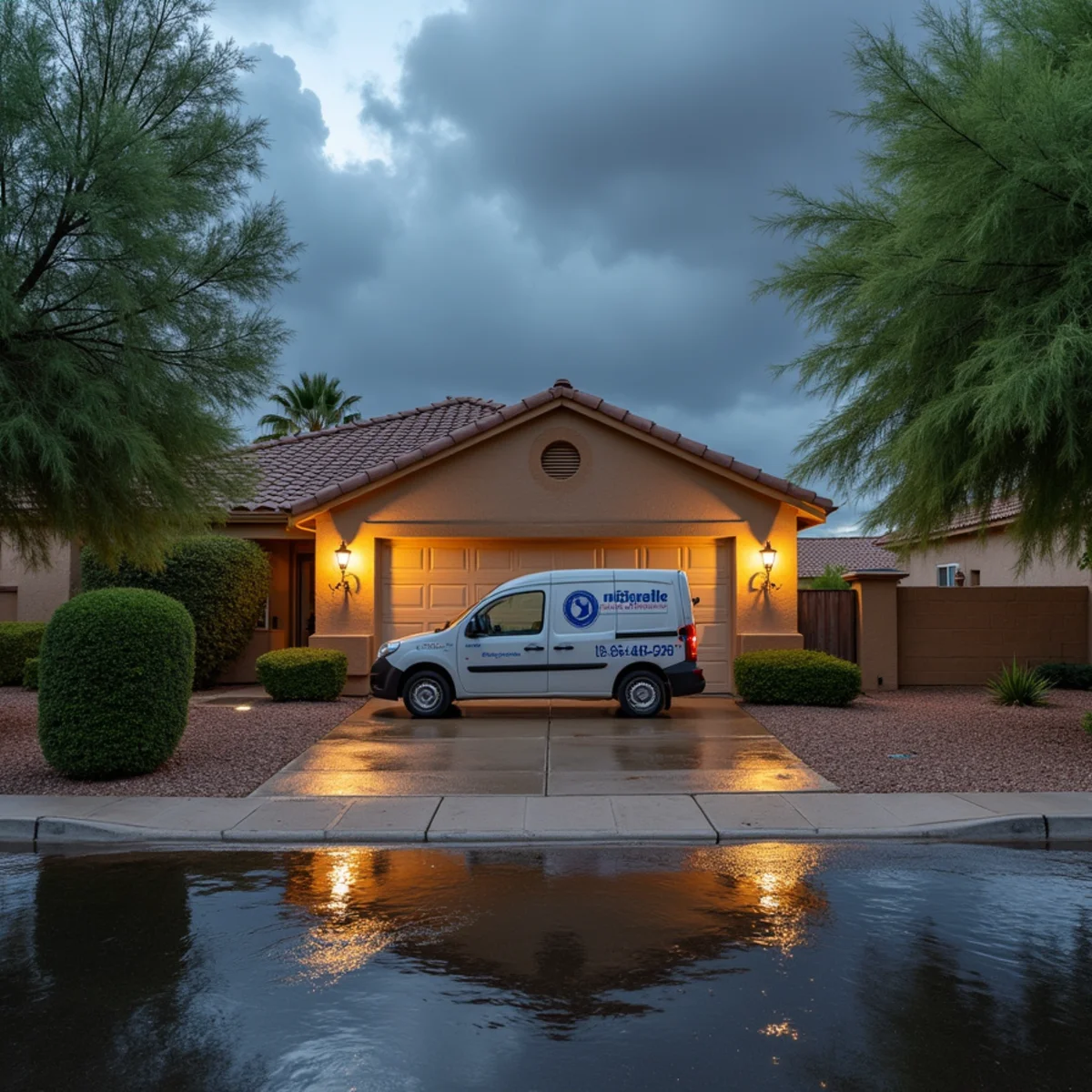
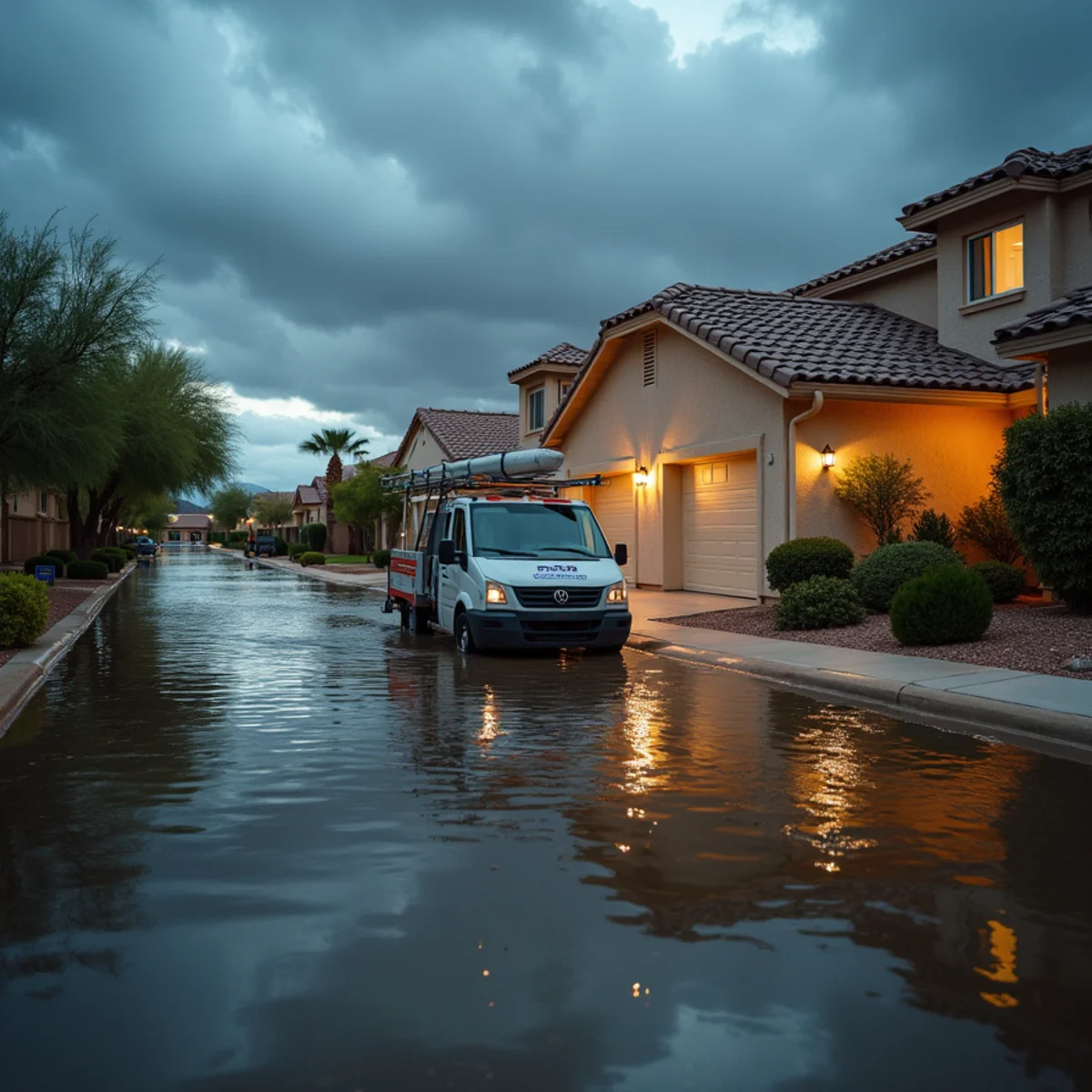
The first monsoon storm of the season does not knock politely. One microburst can drop an inch of rain in twenty minutes, drive it sideways under your roof tiles, and back up a clogged drain until the water finds the path of least resistance — usually your living room. By the time the sky clears, the damage is already done.
Monsoon season in Arizona runs June 15 through September 30. The homeowners who come through it dry are the ones who prepped in May, not the ones scrambling when the haboob is already on the horizon. Here is the checklist we give our own neighbors.
Start High: Inspect the Roof Before June
Most monsoon water damage we see in Tempe starts at the roof, not the ground. Wind lifts tiles, exposes underlayment, and drives rain into places gravity never would. Walk your roofline — or hire someone who will — and look for trouble before the first storm.
- Cracked, slipped, or missing tiles and shingles
- Dried, cracked caulk around vents, skylights, and flashing
- Ponding spots on flat and low-slope roofs that never fully drain
- Debris dams in the valleys where two roof planes meet
- Loose or rusted flashing around the chimney and evaporative cooler
Flat roofs are their own animal, and Tempe has plenty of them. They rely on interior drains and scuppers that clog with dust and palm debris. A blocked scupper turns a flat roof into a shallow pool, and that standing weight will find every seam eventually.
Clear Every Drain, Gutter, and Scupper
Water needs somewhere to go. When the paths are blocked, it goes where you do not want it. Spend an afternoon clearing the whole drainage system while it is dry and safe to work.
- Flush gutters and downspouts, then run a hose to confirm they carry water well away from the foundation.
- Clear roof scuppers and interior roof drains of dust, gravel, and nests.
- Rake leaves and roofing granules out of yard drains and area drains.
- Extend downspout outlets so they discharge at least four feet from the slab.
- Confirm your yard still slopes away from the house, not toward it.
Flood irrigation and the SRP canals in older Tempe neighborhoods add a wrinkle. When a monsoon storm lands on top of an irrigation day, the ground is already saturated and has nowhere to put the extra water. If you are on flood irrigation, know your schedule and keep low vents and door thresholds clear.
Stage Sandbags and Learn Your Water's Path
Sandbags are cheap insurance, and the time to get them is before the forecast turns. Maricopa County and several Tempe fire stations run sandbag stations during the season, but supplies run out fast once a storm is actually coming. Watch your yard during the next rain and note where water pools and which way it runs — that tells you exactly where to build your barrier.
- Stack bags at garage thresholds, low doorways, and the downhill side of the house.
- Keep a stash of 15 to 20 empty bags and a tarp in the garage.
- Place bags before the storm, not during — you cannot fill sandbags in a downpour.
- Protect below-grade window wells and any sunken patio or entry.
Seal the Building Envelope
The building envelope is everything that keeps outside water out, and monsoon wind finds the weak spots. Walk the exterior with a tube of caulk and a fresh eye.
- Re-caulk gaps around windows and exterior door frames.
- Replace cracked or flattened weatherstripping and door sweeps.
- Confirm the weep screed at the base of stucco walls is clear of soil and mulch.
- Check that the garage door bottom seal still makes full contact with the floor.
Build a Simple Indoor Kit
When the power flickers and water starts coming in, you do not want to be hunting for supplies in the dark. Keep a small monsoon kit where you can reach it.
- A flashlight and fresh batteries for every adult in the house.
- A wet/dry shop vac for small, quickly-caught intrusions.
- Towels, a mop, and a squeegee staged near likely entry points.
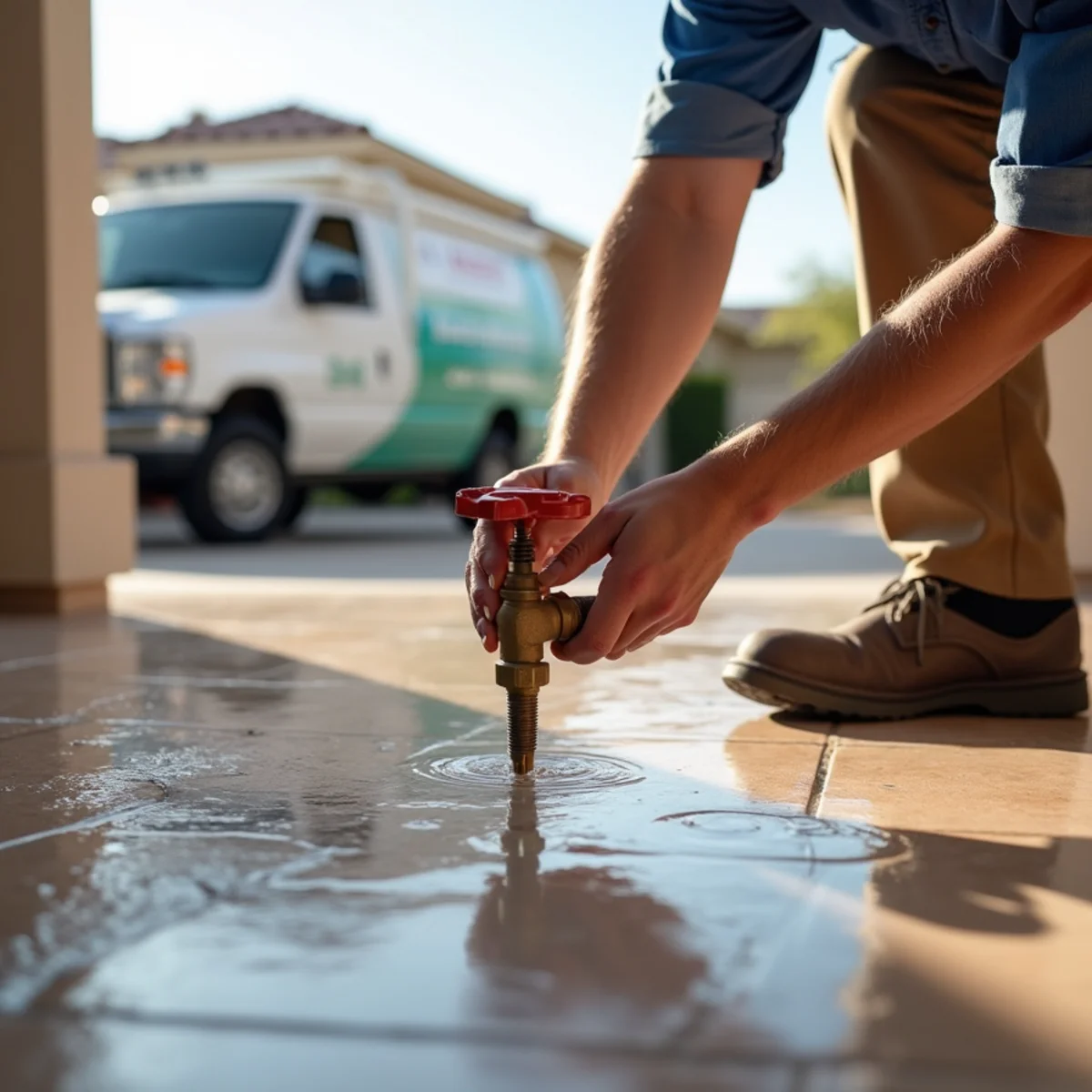
- Your main water shut-off location marked and tested in advance.
- A short list of phone numbers, including a 24/7 restoration crew.
Do Not Forget the Yard, Pool, and AC Pad
Prep does not stop at the walls. A pool that is already full to the tile has no room to absorb a monsoon downpour, so drop the level a few inches before a big storm and clear the deck drains. Trim palm fronds and dead branches that a microburst can turn into projectiles or drain-clogging debris. And check that your AC condenser sits on a pad above the surrounding grade — a unit that stands in a puddle after every storm is a unit headed for an early failure.
When the Storm Gets In Anyway
Even a well-prepped home can lose to a hundred-year storm. Tempe has seen them — the September 2014 storm dropped record rain and put the county under a state of emergency. If storm water gets into your home, move fast. Get people and pets to safety, kill power to soaked rooms if you can reach the panel without standing in water, and start documenting everything for your claim before you clean.
Then call for help before the water spreads. Standing monsoon water is usually contaminated, and it soaks into subfloors and wall cavities where a mop cannot reach. Our flood cleanup crews and 24/7 monsoon flood emergency response cover the Tempe service area around the clock, and we aim to be at your door within about an hour. For the storm-night version of this plan, keep our monsoon flood emergency checklist somewhere you can find it.
Frequently Asked Questions
Finish your prep in May, before the season opens on June 15. Roof inspections, drain clearing, and sandbag sourcing all get harder and slower once storms are actually rolling through, and sandbag stations empty out fast.
It depends on how the water got in. Wind-driven rain that enters through a storm-damaged roof is often covered by a standard policy, while rising surface water from a flash flood usually requires separate flood insurance. Document everything and open the claim quickly.
Maricopa County and several Tempe fire stations run seasonal self-fill sandbag stations. Grab your bags early in the season and stage them at home, because the stations get picked clean in the hours before a big storm.
We answer the phone 24/7 and aim for about a 60-minute response across Tempe. Our base is on W Auto Dr near the I-10 Broadway Curve, so most of the city is only minutes away even in bad weather.
Need Help With This in Person?
Our local crew handles it 24/7. Explore the related services and areas below, or just call (866) 688-0301.