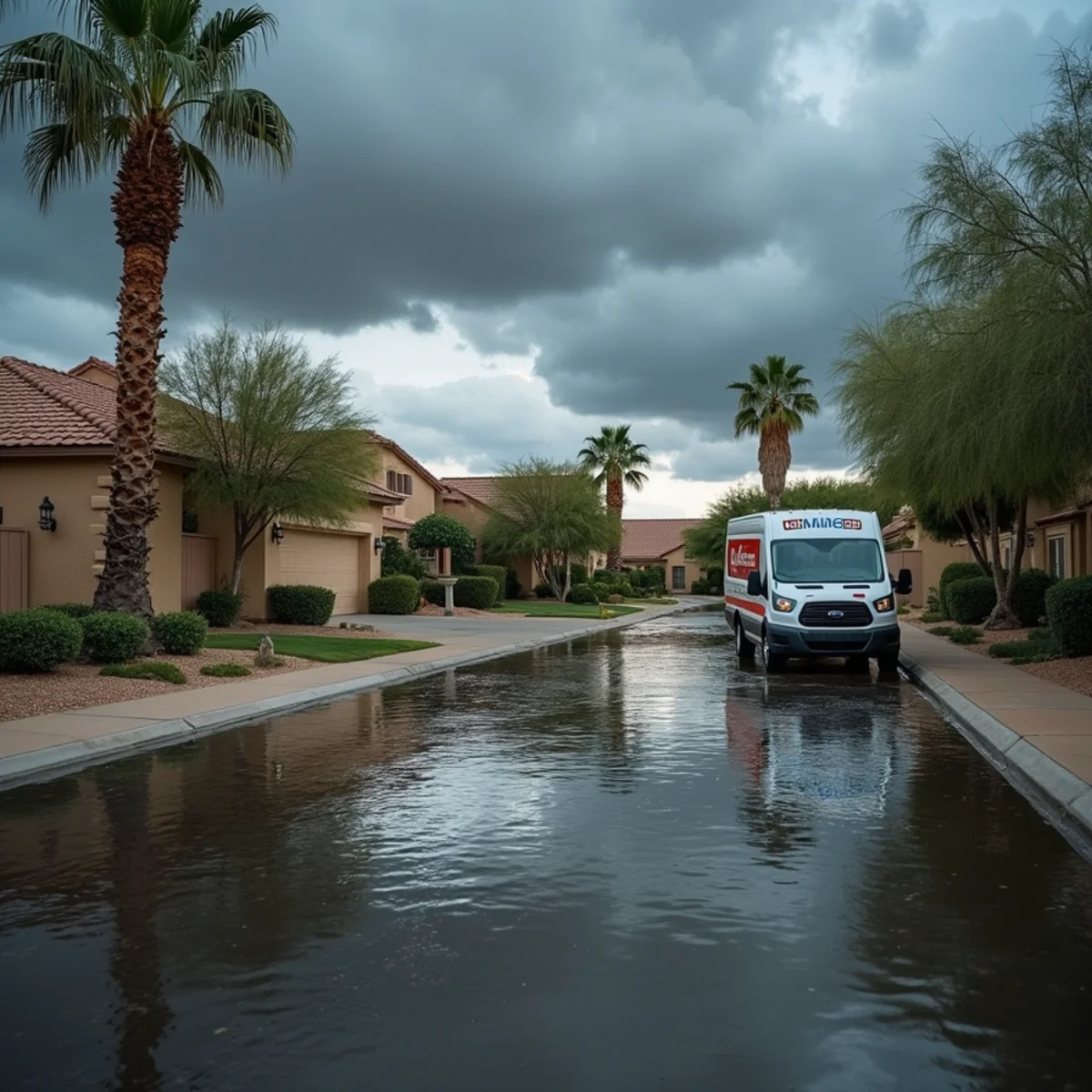
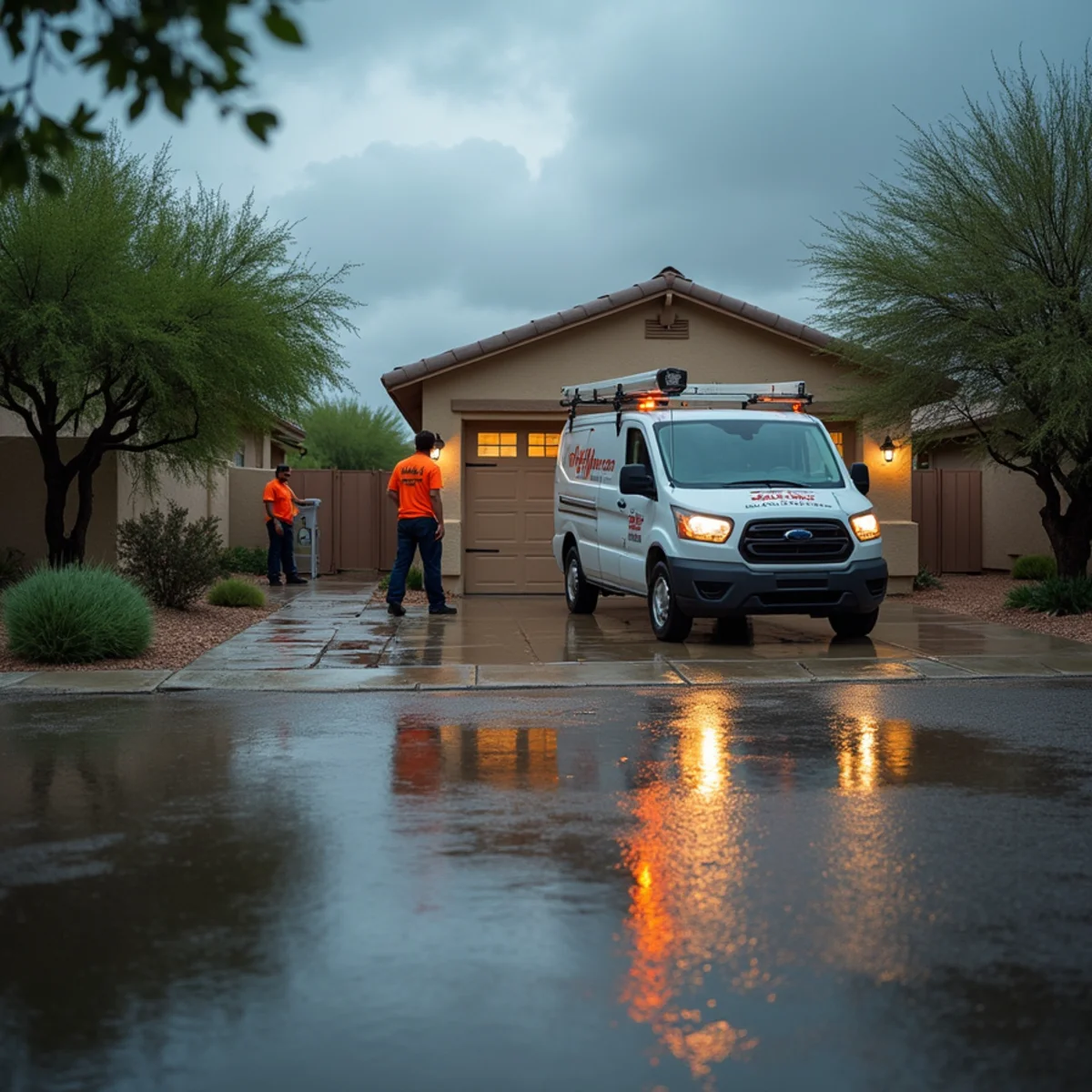
The Tempe monsoon does not knock. One evening the sky turns brown with a haboob, the temperature drops, and forty minutes later the streets are running like rivers. Between June 15 and September 30, a single storm can drop a month of rain in an hour — and it does not care whether you were ready.
Homeowners who scramble during the storm lose the most. They hunt for sandbags that are already gone. They drive into flooded intersections. They discover their patio drains were clogged only when water is coming under the back door. The fix is a plan you set up before the first storm. Here is the before, during, and after checklist we give our own neighbors.
Before the storm: prep you do in June
The work that saves your home happens on a calm, dry day — ideally before the season opens on June 15. Run this list once at the start of monsoon season.
- Clear roof valleys, gutters, and scuppers of debris so water has somewhere to go.
- Test your yard and patio drains with a hose; a slow drain now is a flood in July.
- Walk your roofline and reseal obvious gaps around vents, flashing, and swamp coolers.
- Grade dirt and mulch away from the foundation, not toward it.
- Locate your main water shut-off and label your electrical panel.
- Pick up sandbags early. The City of Tempe offers self-serve sandbag stations to residents during monsoon season — go before a storm is in the forecast, because sand and bags run out fast once the sky turns.
- Move irreplaceable documents and electronics off the floor in any room that has flooded before.
During the storm: safety first, always
Once the water is moving, your only job is keeping people safe. Property is replaceable; people are not.
- Stay out of moving water. Six inches can knock you down and a foot can float a car. Tempe's underpasses and the low ground near the Salt River bottom flood fast.
- Never drive around a barricade or into a flooded wash. Arizona's Stupid Motorist Law can leave you paying for your own rescue — and it is not worth your life.
- If water is entering the house, cut power to the affected rooms at the breaker — but only if you can reach the panel without standing in water.
- Place your pre-filled sandbags at the doors and the garage threshold the water is heading toward.
- Move upward and inward — get people, pets, and valuables to the driest, highest part of the home.
- Keep standing water and electricity apart. If you are unsure it is safe, leave the house.
After the storm: the first 24 hours decide the cost
When the rain stops, the clock starts. Standing water and soaked materials are a mold problem in the making, and Tempe's heat only speeds it up. Work this list as soon as it is safe to move around.
- Photograph and video everything before you move or throw away anything — your claim depends on it.
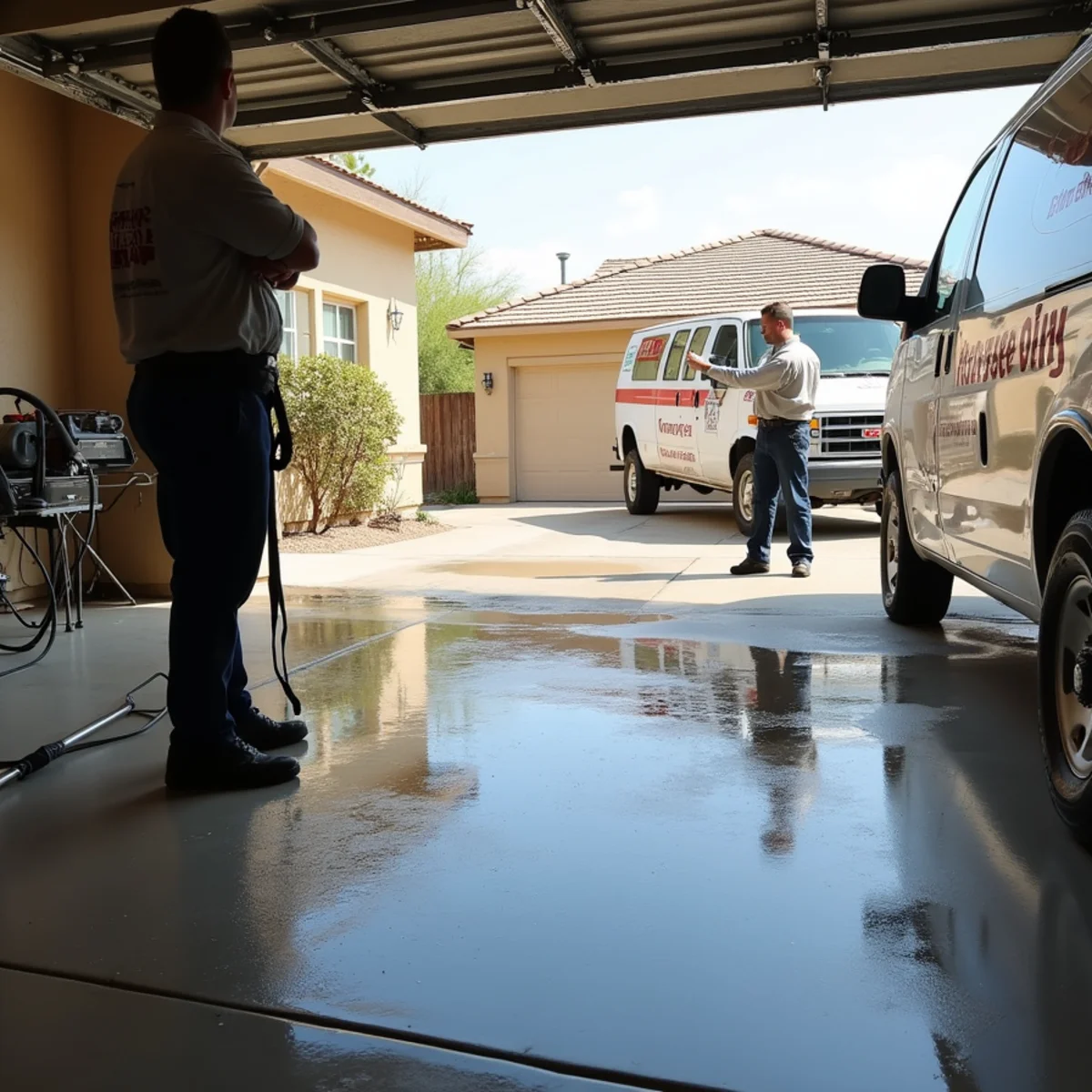
- Get standing water out and air moving, but do not assume a dry surface means a dry structure.
- Pull back wet carpet and check the pad and subfloor; monsoon water that sat is rarely clean.
- Watch for the smell and stain of moisture inside walls near where the water came in.
- Open your insurance claim and call a restoration crew before mold sets in.
Why Tempe floods the way it does
Much of Tempe sits on flat, slab-on-grade lots where water has nowhere to drain but sideways. Neighborhoods near the Salt River bottom — including Papago Park–Riverside — sit closest to the historic flood path, and the September 8, 2014 record storm proved how fast a hundred-year rain can overwhelm even a prepared home. When that much water lands on hard desert ground that cannot absorb it, it goes into garages, down window wells, and under doors.
None of this means your home is doomed. It means the prep list matters. Homes that cleared their drains, staged their sandbags, and knew where the shut-off was came through 2014 far better than the ones that improvised in the dark. The same is true block by block: a home with graded soil and clear scuppers can stay dry while the house next door takes water in the garage. Prep is the variable you actually control.
When to call for help
Call the moment water has entered living space, gotten into walls, or sat long enough to worry you. Do not wait for morning — overnight is when a savable floor becomes a replaceable one. Our monsoon flood emergency service runs 24/7 through the whole season, and our base off W Auto Dr near the Broadway Curve keeps a crew close to most of the city. We answer the phone at 2 a.m. during a haboob, because that is when the calls come.
For a printable version to tape inside a cabinet door, see our Tempe monsoon prep checklist.
Frequently Asked Questions
Officially June 15 through September 30. The most intense storms — haboobs, microbursts, and flash floods — usually hit from July into early September. Do your prep before June 15 so you are not scrambling once the first storm is in the forecast.
The City of Tempe operates self-serve sandbag stations for residents during monsoon season. Supplies run out quickly once a storm is forecast, so fill yours early in June and store them dry. Stations are typically fill-your-own, so bring a shovel.
No. Runoff carries fertilizer, oil, and often sewage from overwhelmed drains, so treat any monsoon flooding as contaminated. It needs professional cleanup with proper protective gear and sanitization, not just extraction and drying.
It depends on how the water entered. Wind-driven rain through a damaged roof is often covered; rising ground water usually requires separate flood insurance. Document everything and file promptly, and check your policy for the distinction.
Need Help With This in Person?
Our local crew handles it 24/7. Explore the related services and areas below, or just call (866) 688-0301.