You wake up to soaked carpet in your Tempe apartment, and the water keeps spreading. Maybe the unit upstairs overflowed a tub. Maybe a supply line behind the wall let go while you were in class. Either way, you rent — you do not own the building, you are not sure what you are allowed to touch, and you have no idea who pays for what.
That confusion costs renters money every single semester near ASU. Tenants throw out ruined belongings before photographing them. They wait two days for a property manager to call back while mold takes hold in the drywall. They assume the building's policy covers their laptop and mattress — it does not. Slow down. Here is the exact order of operations that protects your safety, your security deposit, and your stuff.
Step 1: Stop the water, then make the space safe
If the water is coming from something inside your unit — an overflowing toilet, a burst supply line under the sink, a failed water heater — shut off the local valve. Toilets and sinks have a small oval shut-off on the wall or floor behind them; turn it clockwise. If you cannot find or reach a shut-off, the building's main valve is the property manager's job, so call the emergency maintenance line right away.
Water plus electricity is the one thing worth panicking about. If water is near outlets, power strips, or your breaker panel and you can reach the panel without standing in water, cut power to the affected rooms. If you cannot, leave it and wait. No rug is worth a shock.
Step 2: Document everything before you move a single thing
Your phone is your most important tool right now. Photos and video are what stand between you and a denied renters-insurance claim or a withheld deposit. Capture the whole scene before you start hauling wet things around.
- Wide shots of every affected room with the water visible
- Close-ups of the source — the overflowing fixture, the wet wall, the ceiling stain
- The waterline against baseboards, furniture, and your belongings
- Each damaged item on its own, with brand and serial numbers where you can
- A short video narrating the date and what happened, for a timestamp
Keep every photo. You will need this twice — once for your renters insurance, and once if your landlord ever tries to blame you for damage that was actually the building's fault.
Step 3: Notify your landlord or property manager — in writing
Call the emergency maintenance line first so someone can shut off the building water and start repairs. But a phone call is not a record. Follow up the same day with a text or email that states what happened, when you found it, and what is damaged. Arizona's landlord-tenant act requires landlords to keep the unit habitable and to repair the building itself — and a same-day written notice is how you prove you did your part on time.
Step 4: Who pays for what — the building vs. your belongings
This is where most renters get it wrong. There are two separate buckets of damage, and two separate policies behind them.
- The building and anything attached to it — carpet, drywall, cabinets, the structure — is the landlord's responsibility and their insurance. You do not pay to dry out or replace the apartment itself unless you caused the leak through negligence.
- Your personal belongings — furniture, electronics, clothes, textbooks — are yours. The landlord's policy does not cover them. Only your own renters insurance does.
Renters insurance is cheap, and near ASU many leases require it. If you have a policy, open a claim and hand over the photos from Step 2. If the flood came from a neighbor's unit or a building failure, your insurer may go after that party to recover your deductible. For the fuller breakdown of who is liable when, read our guide on renters, landlords, and water damage in ASU rentals.
Step 5: Protect what you can still save
While you wait for maintenance or a restoration crew, buy yourself time. Move electronics, furniture, and anything with sentimental value to a dry room. Lift wet items off the floor. Hang up soaked clothes. Slide foil or a plastic lid under furniture legs so stain and rust do not transfer to carpet you might get charged for later.
Step 6: When it becomes a health or code issue
Sometimes the landlord or property manager stalls. If the water is sewage or backed up from a drain, if it has been sitting for days, or if you smell mold and the manager will not act, you have options. Tempe's code compliance division handles habitability complaints, and the Maricopa County health department covers sewage and sanitation hazards. Document your written requests first — those records are what make a complaint stick.
You should not be living in standing water or breathing mold spores because a repair is slow. If the unit is unsafe, say so in writing and escalate.
Step 7: When a restoration crew comes in — and who calls them
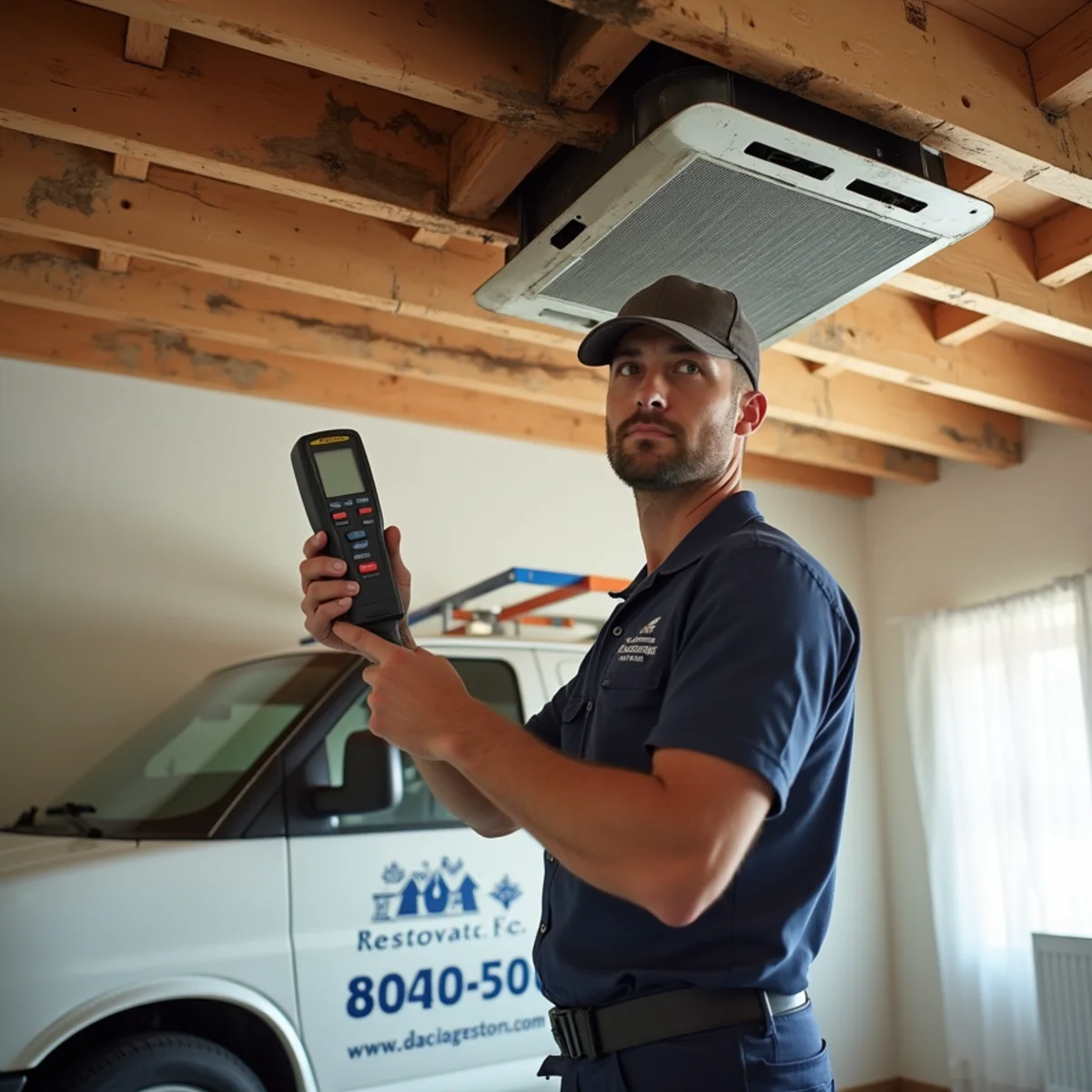
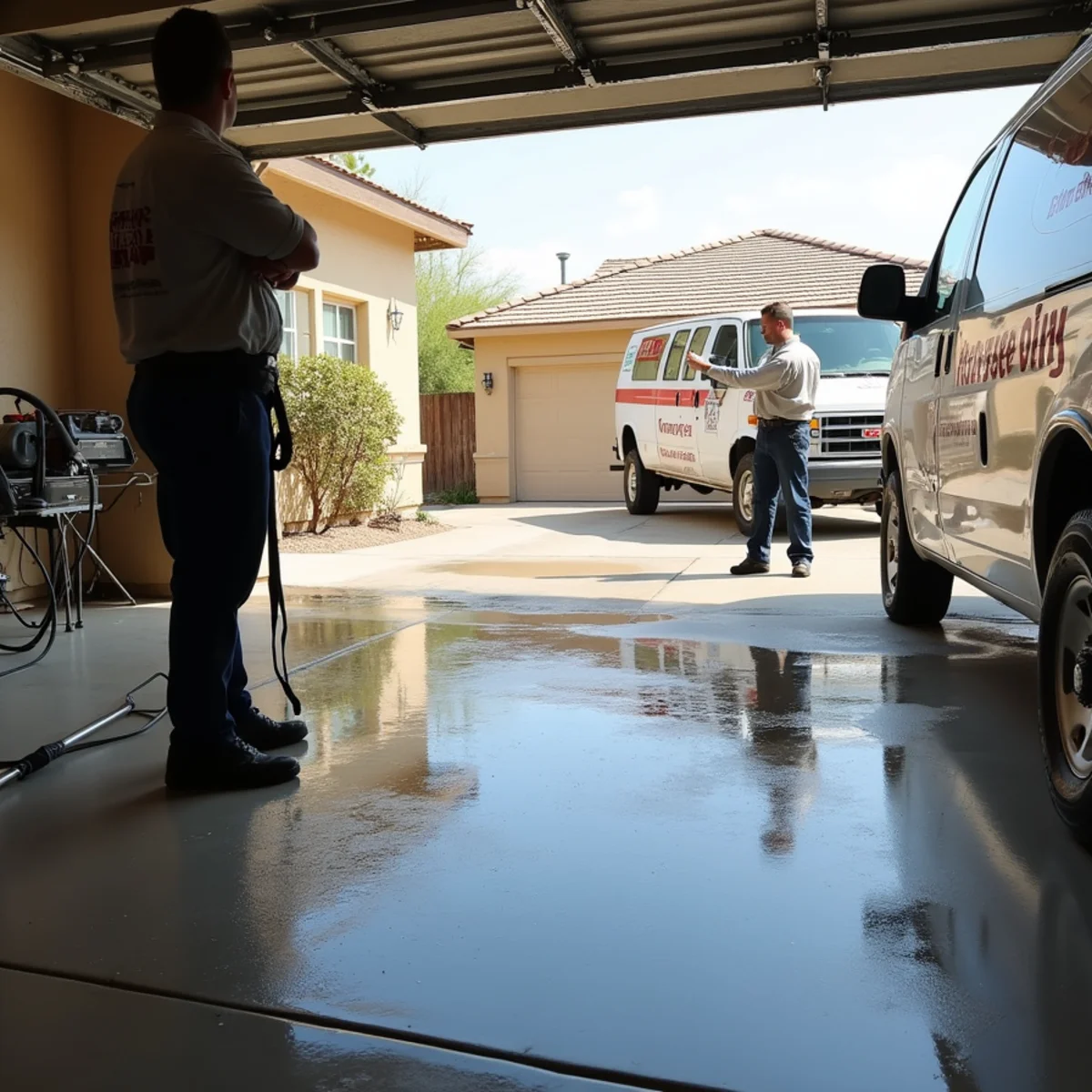
Big apartment floods need real equipment. A shop vac and the building's box fans will not pull water out of the carpet pad, the subfloor, and the shared wall cavity — and that hidden moisture is exactly what becomes a mold problem the whole building inherits. Professional apartment water damage response brings truck-mounted extraction, commercial air movers, and moisture meters that find the water behind the drywall.
Usually the property manager hires the restoration company, because it is their building. But if they cannot reach anyone at 1 a.m. and the water is spreading, a good manager will approve emergency water removal and extraction on the spot to stop the loss. We work with Tempe landlords and tenants near campus constantly — our base off W Auto Dr keeps a crew minutes from the University Heights neighborhood and the rest of the ASU rental belt. We answer the phone at 2 a.m., and we bill the responsible party, not the panicked student on the phone.
Frequently Asked Questions
No. Damage you did not cause is not your responsibility. The building structure is the landlord's, and your neighbor's negligence can be pursued by their insurer or yours. Your renters insurance covers your personal belongings — document everything and file promptly.
No. A landlord's policy covers the building, not your furniture, electronics, or clothes. Only renters insurance covers your belongings. Many ASU-area leases require it for exactly this reason — a policy is inexpensive and pays for itself the first time a pipe fails.
The same day, in writing. Call the emergency maintenance line to stop the water, then follow up with a text or email that timestamps your report. Prompt written notice keeps you protected and starts the landlord's legal obligation to repair.
Usually the property manager, since it is their building. But if they are unreachable and water is spreading, emergency mitigation can start right away to limit the loss. We coordinate with Tempe property managers and bill the responsible party directly.
Need Help With This in Person?
Our local crew handles it 24/7. Explore the related services and areas below, or just call (866) 688-0301.