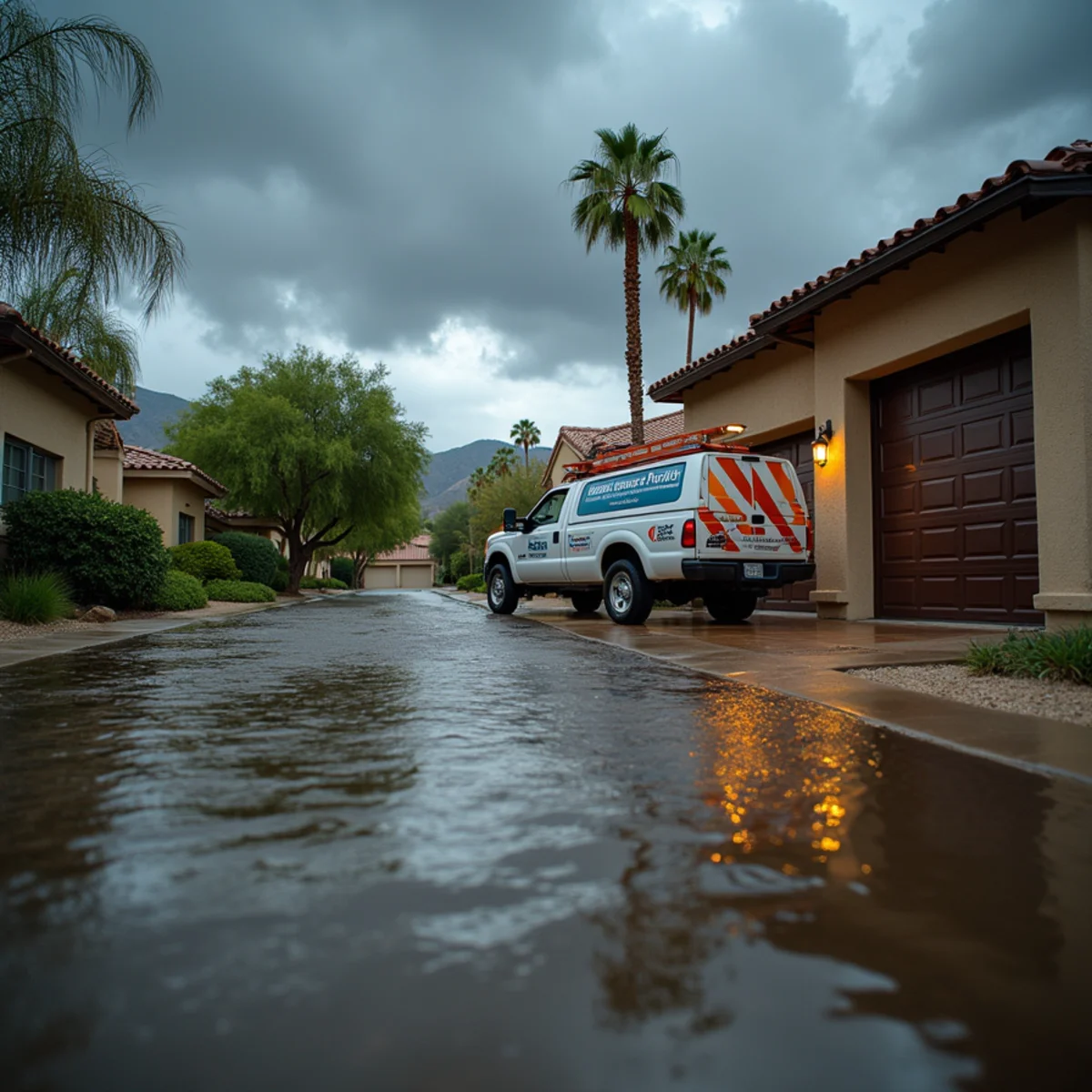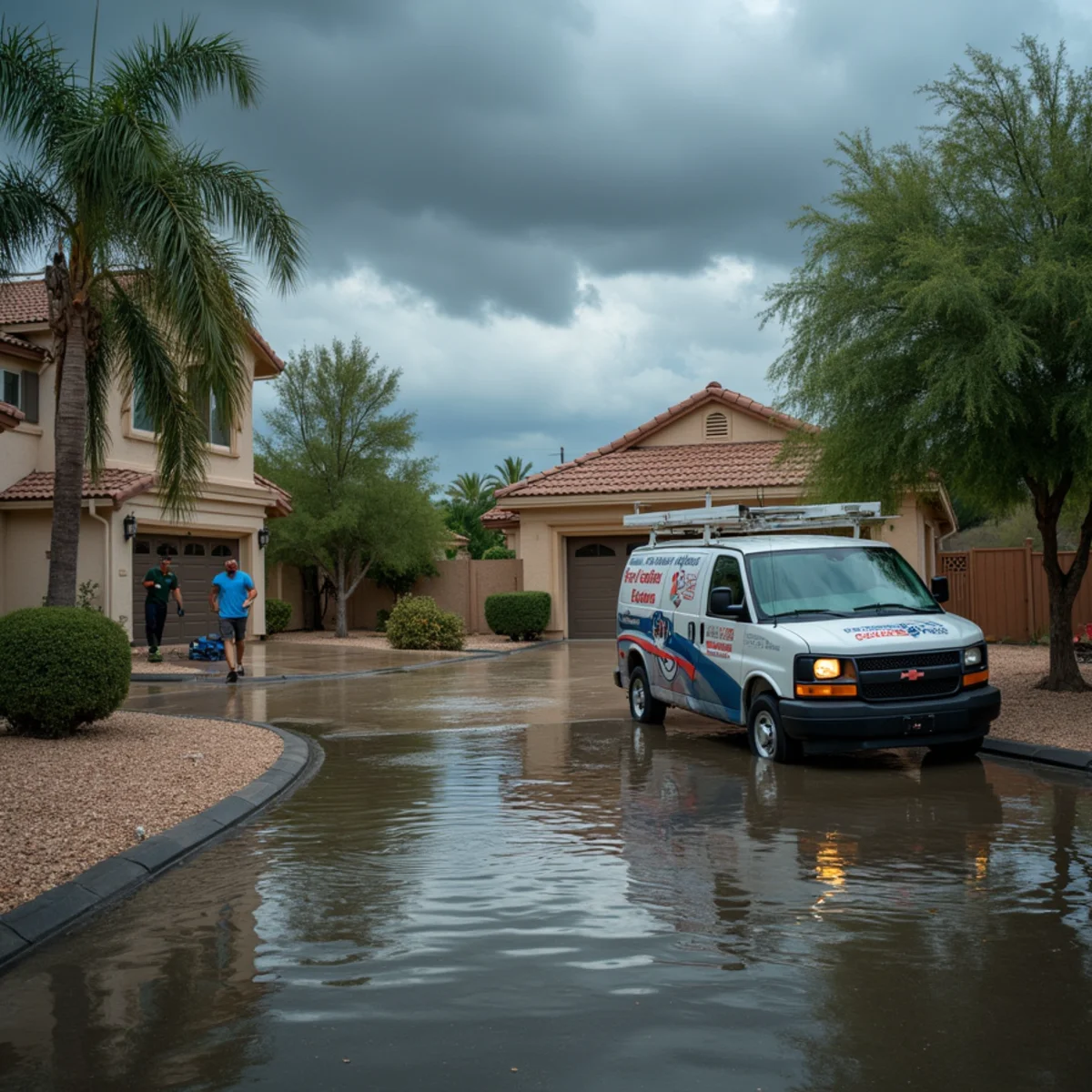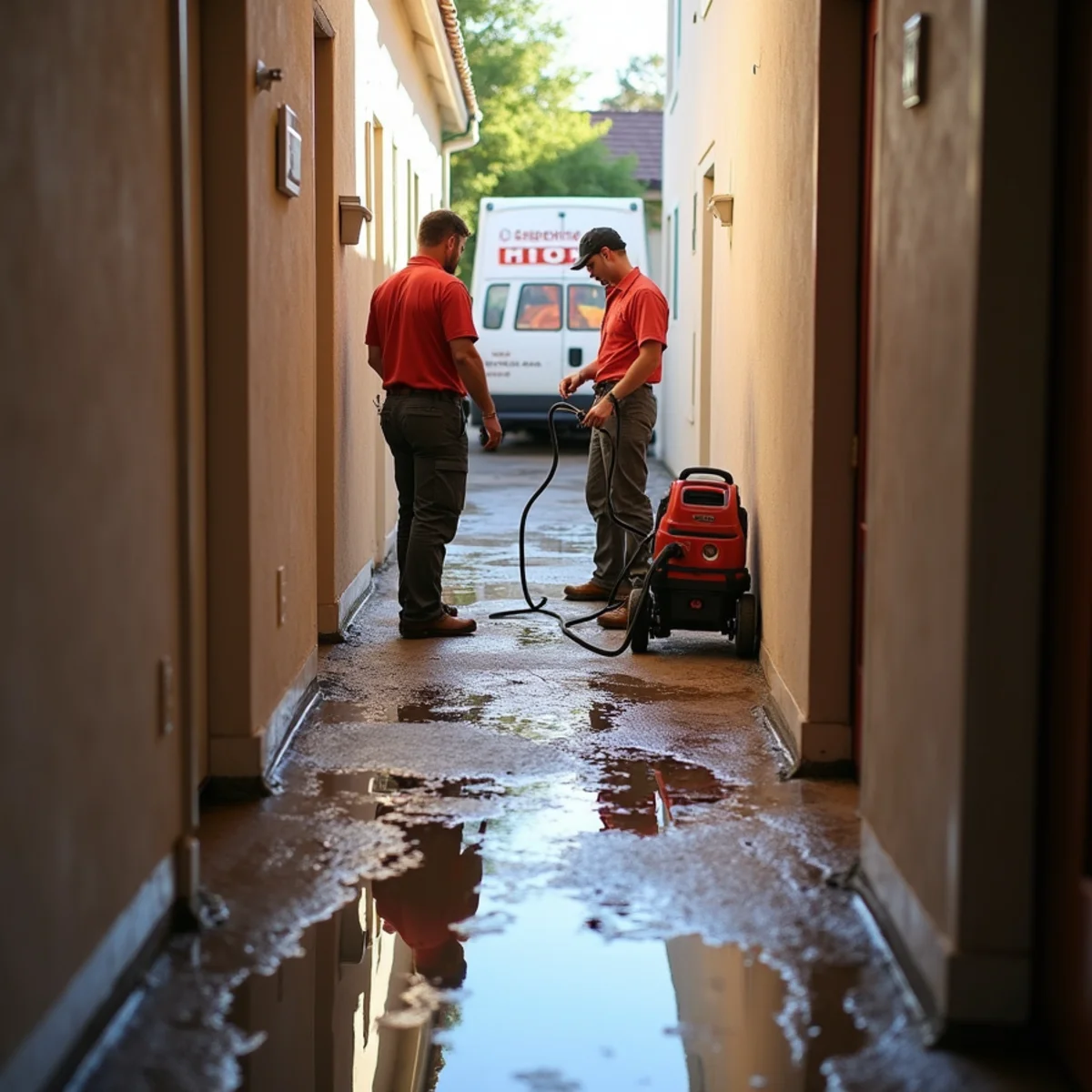
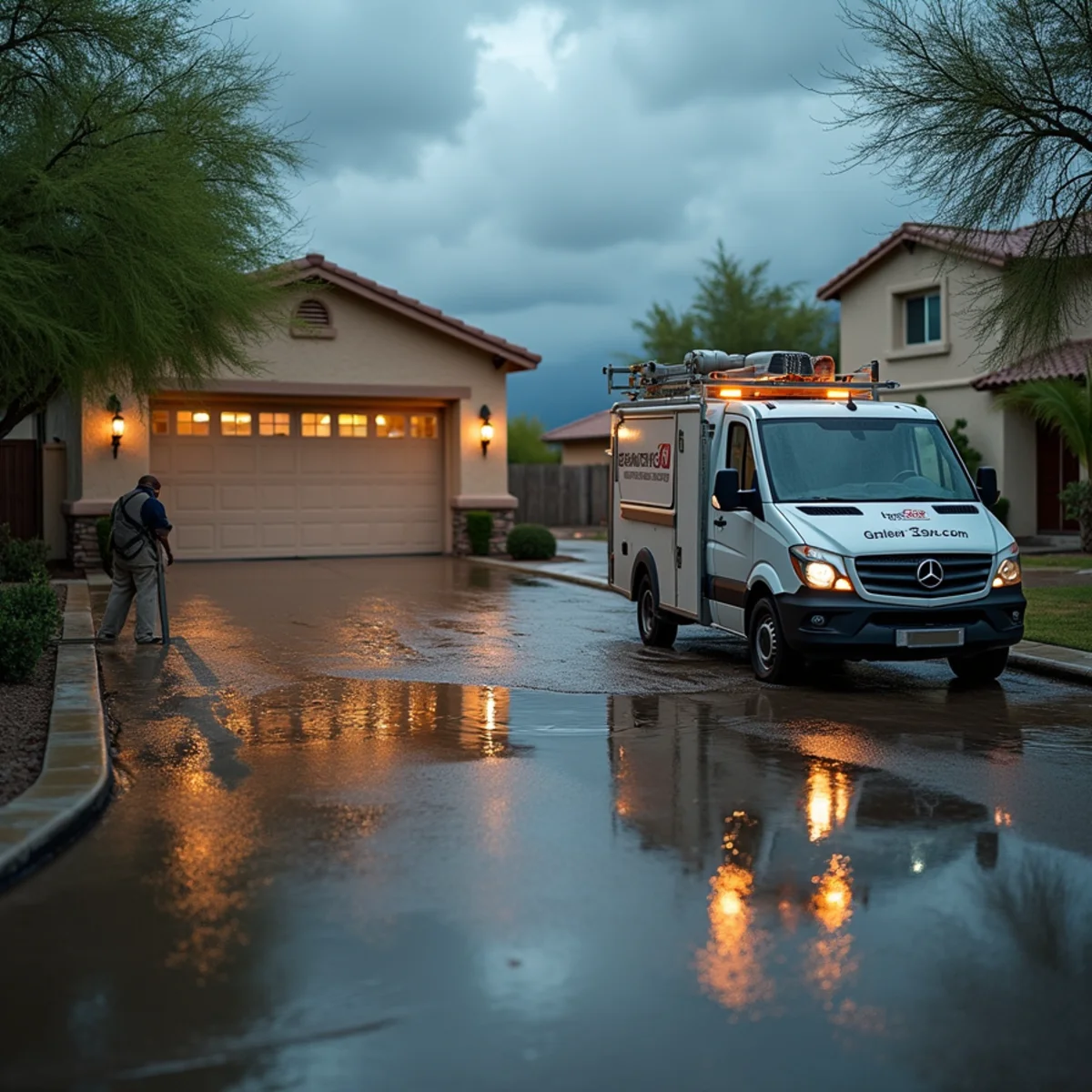
The fire alarm is screaming, water is pouring from the ceiling across the whole office, and here is the strange part — there is no fire. A single sprinkler head let go, and it is not going to stop on its own. In the time it takes to figure out what happened, hundreds of gallons can hit your floor, your desks, and every computer under that ceiling.
Fire sprinklers are one of the best life-safety systems ever built. But an accidental discharge is a water damage event most business owners never see coming — because it comes from the system meant to protect them. And the water it dumps is not the clean water you would expect.
Here is what actually happens when a head lets go, why it is worse than a plain burst pipe, and how Tempe offices dry out and get back to work without losing a whole floor of equipment.
How a sprinkler goes off with no fire
A sprinkler head is held shut by a small glass bulb or a fusible link. Anything that breaks that seal opens the head — and heat is only one of the triggers. Most accidental discharges in offices have nothing to do with fire at all.
- Physical impact — a forklift, a ladder, a pallet, or moving furniture that clips a head
- Freezing — a rare Tempe cold snap bursts water in an unheated line or an exposed riser
- Corrosion — old pipes and heads degrade from the inside, especially on hard water
- Overheating from a nearby heat source, a space heater, or attic temperatures in summer
- Manufacturing defects, or a system left over-pressurized
Why sprinkler water is worse than it looks
People assume sprinkler water is clean, like a supply line. It usually is not. Water sits stagnant in those pipes for years, and what comes out is dark, rusty, and full of sediment — closer to Category 2 gray water than to clean Category 1.
- Volume and pressure — a single head can flow roughly 15 to 25 gallons a minute until someone shuts the riser
- It spreads fast across an open floor plan, under cubicle walls, and down into the floor below
- The water is stagnant pipe water — rusty, dirty, and staining, not clean
- It lands directly on the densest concentration of electronics you own
- In a multi-story building it runs straight into the tenant beneath you
The first 15 minutes
Sprinkler water does not slow down while you decide what to do. Move now, in order:
- Get people out and account for staff — the alarm assumes a fire until you confirm otherwise
- Shut down the system at the riser or main control valve, or have the fire department and your monitoring company do it
- Cut power to the affected area if water is near outlets or the panel and it is safe to reach
- Move or cover electronics and critical documents that are not soaked yet
- Photograph everything for the claim before any cleanup begins
- Call a fire suppression water cleanup crew that handles this specific kind of loss
Drying an office full of electronics and cubicles
An office is a hard dry-out. Cubicle systems wick water up their panels, carpet tile hides it underneath, and the electronics complicate everything. This is not a job for a couple of box fans and an open window. Get it wrong and the water you leave behind returns as warped flooring and mold weeks later.
- Truck-mounted extraction to pull the standing water fast before it spreads further
- Immediate assessment of computers, servers, and network gear before anything is powered back on
- Moisture mapping under raised floors, cubicle bases, and into wall cavities
- Documented drying with commercial air movers and dehumidifiers, verified by meter
- Sanitizing for the stagnant pipe water, not just drying it out
- Coordination with your IT team and the building's fire-system contractor to recharge the sprinklers
Prevent the accidental discharge
Most accidental discharges are preventable with basic care and a little awareness. None of these steps cost much, and every one of them beats drying a flooded office:
- Keep at least 18 inches of clearance below every sprinkler head — never stack storage against them
- Add head guards in warehouses, storerooms, and anywhere a forklift or ladder works
- Keep up the required annual fire-sprinkler inspections and flag corroded heads
- Insulate exposed lines and risers against the rare hard freeze
- Train staff never to hang anything from sprinkler pipes or heads
Recover fast, reopen faster
An accidental sprinkler discharge feels like a disaster because it arrives with alarms and no fire to explain it. But it is a water loss like any other, and it responds to the same fast, methodical work: stop the flow, treat the water as contaminated, dry to a meter, and protect the electronics. If your business sits along Downtown Mill Avenue or anywhere in our Tempe service area, we handle the whole event — commercial water damage restoration from the first gallon to the final moisture reading — so you are back to work instead of watching the ceiling. We answer 24/7, because sprinkler heads do not check the clock.
Frequently Asked Questions
Usually contaminated. Water sits stagnant in sprinkler pipes for years, so it comes out rusty, full of sediment, and closer to Category 2 gray water than clean water. Treat soaked materials accordingly — they need sanitizing and proper drying, not just a wipe-down.
Anything that breaks the head's glass bulb or fusible link. The common culprits are physical impact from a forklift or ladder, corrosion in old heads and pipes, a rare freeze in an exposed line, overheating near a heat source, and occasional manufacturing defects or over-pressurized systems.
A single head typically flows roughly 15 to 25 gallons a minute, and it does not stop until someone shuts the riser or control valve. Over even a few minutes that is hundreds of gallons across your floor — which is why knowing where your shut-off is matters so much.
Sometimes — if they were not powered on when the water hit and they are assessed before anyone tries to restart them. Do not power up wet computers, servers, or network gear. Have them evaluated first; drying and cleaning can save equipment that a premature restart would destroy.
Need Help With This in Person?
Our local crew handles it 24/7. Explore the related services and areas below, or just call (866) 688-0301.