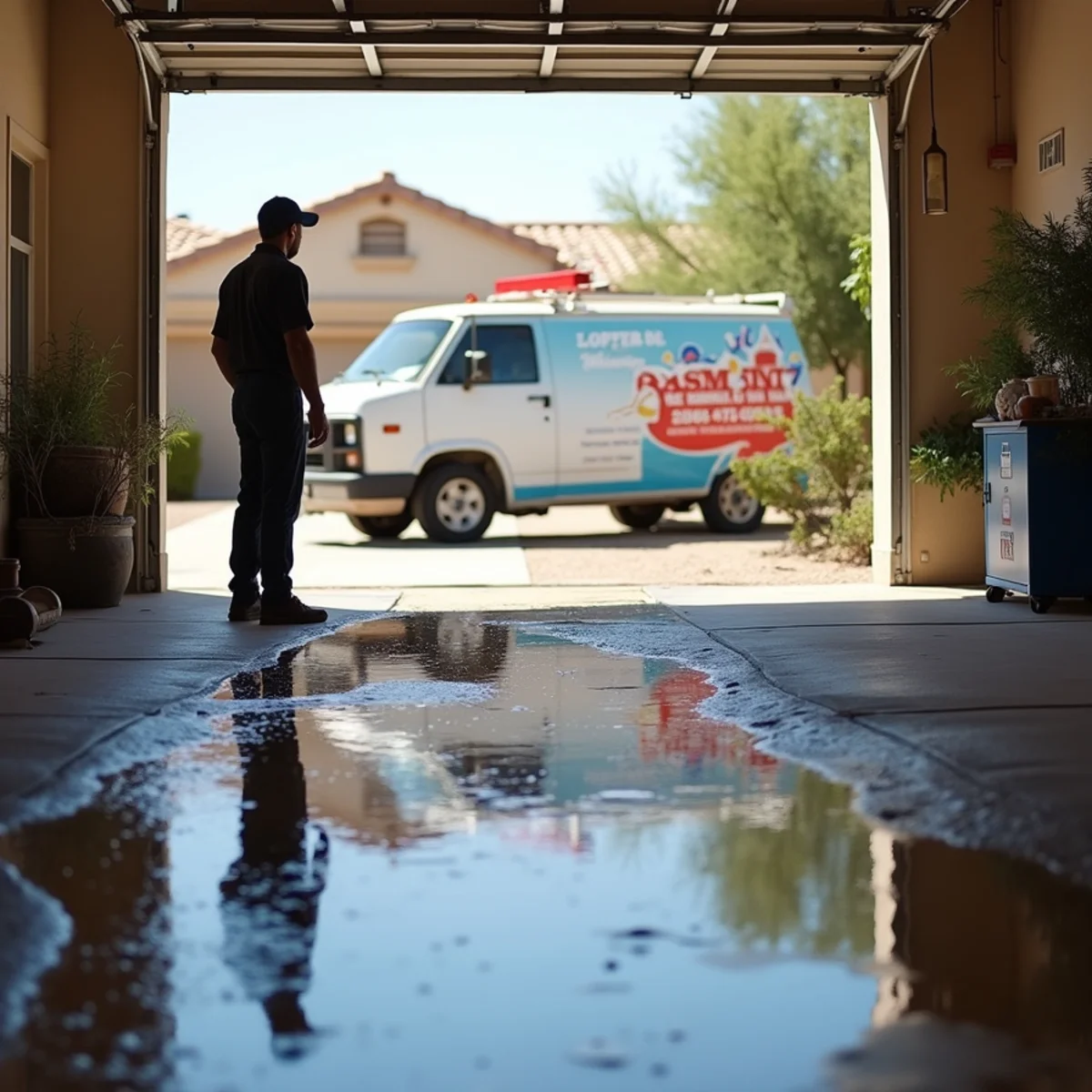
Standing water is spreading across your floor, and somewhere in the back of your mind a calculator is running: the carpet, the tile, the furniture — what of this is coming back, and what is headed to the curb? The honest answer has almost nothing to do with how the water looks and everything to do with what is in it. Two floods that look identical can have completely different outcomes.
Restorers sort water into three categories, and that classification drives every save-or-toss decision we make. Here is what actually survives Category 1 clean water versus Category 3 black water — for carpet, pad, and tile specifically.
The three categories, quickly
Category is about contamination, not volume. A thimble of sewage is more dangerous than a bathtub of clean supply water.
- Category 1 — clean water from a broken supply line, a water heater, or an overflowing sink with no contaminants. Typical Tempe Category 1 restoration runs roughly $1,500 to $5,000.
- Category 2 — gray water carrying some contamination: dishwasher or washing-machine discharge, or a toilet overflow without solids. Roughly $3,000 to $8,000.
- Category 3 — black water: sewage backups, toilet overflows with solids, and floodwater from outside. This water carries bacteria and pathogens and is an immediate health risk.
Category 1: what you can usually keep
Clean water gives you the best odds. Caught quickly and dried properly:
- Carpet: usually salvageable. It can be lifted, cleaned, and re-laid over new padding once the subfloor is dry.
- Carpet pad: often replaced regardless. Padding is inexpensive, acts like a sponge, and dries slowly — pulling and replacing it is faster and safer than trying to save it.
- Tile and grout: typically fine. The tile itself is non-porous; the concern is water that traveled through grout lines or a cracked tile into the subfloor beneath.
- Baseboards and lower drywall: often dried in place if addressed fast.
Category 3: what has to go
Black water flips the logic. Now the guiding rule is that porous materials that absorbed contaminated water cannot be reliably sanitized and must be removed and discarded:
- Carpet: discarded. Porous carpet backing traps bacteria that cleaning cannot guarantee to remove.
- Carpet pad: always discarded — no debate.
- Drywall and insulation the water reached: cut out and removed.
- Tile: often salvageable, because a hard, non-porous surface can be cleaned and disinfected — but only if the water did not undermine the setting bed or reach a porous subfloor through the grout.
This is the core distinction: Category 3 destroys porous materials but often spares hard, sealable surfaces. Your ceramic tile may wipe down and disinfect just fine while the carpet three feet away is a total loss.
Carpet, specifically
Carpet is the material people most want to save and most often ask about. With Category 1 water and a fast response, the carpet face frequently comes back; the pad underneath usually does not, because it holds water against the subfloor and slows the whole dry-out. With Category 3 water, both carpet and pad go. There is no cleaning process we would stake your family's health on for sewage-soaked carpet.
Tile and grout, specifically
Tile is the survivor. Glazed ceramic and porcelain are non-porous, so even Category 3 water usually leaves the tile itself reclaimable after disinfection. The vulnerabilities are the grout lines, which are porous and can harbor contamination, and the subfloor or thinset beneath, which can stay wet long after the surface looks dry. Water that gets under tile through a crack or failed grout can debond it from the slab, and trapped moisture there is a classic hidden mold source.
Whatever the category, the first move is the same: get the water out fast, because standing time is what pushes Category 1 toward Category 3 and turns savable materials into losses. We provide rapid flood cleanup and professional water extraction across the East Valley, including Dobson Ranch and the wider Mesa service area. Call (866) 688-0301 and we will classify the water, protect what can be saved, and give you an itemized plan for the rest.
Frequently Asked Questions
Category 1 is clean water from a supply line or water heater with no contaminants. Category 3, or black water, is grossly contaminated — sewage backups, toilet overflows with solids, and outdoor floodwater — and it poses an immediate health risk. The category determines what can be cleaned and saved versus what must be removed.
It depends entirely on the water. With clean Category 1 water and fast drying, the carpet is often salvageable while the pad is replaced. With Category 3 black water, both the carpet and pad are discarded, because contaminated porous materials cannot be reliably sanitized.
The tile itself usually can — glazed ceramic and porcelain are non-porous and can be cleaned and disinfected. The risks are the porous grout lines and any water that reached the subfloor beneath through cracks or failed grout, which can debond tile and hide moisture.
Fast. Category 1 water typically degrades to Category 2 within about 48 hours as it absorbs contaminants and microbes from the materials it sits in, and it can reach Category 3 if left to stagnate. Prompt extraction is what preserves your options.
Need Help With This in Person?
Our local crew handles it 24/7. Explore the related services and areas below, or just call (866) 688-0301.