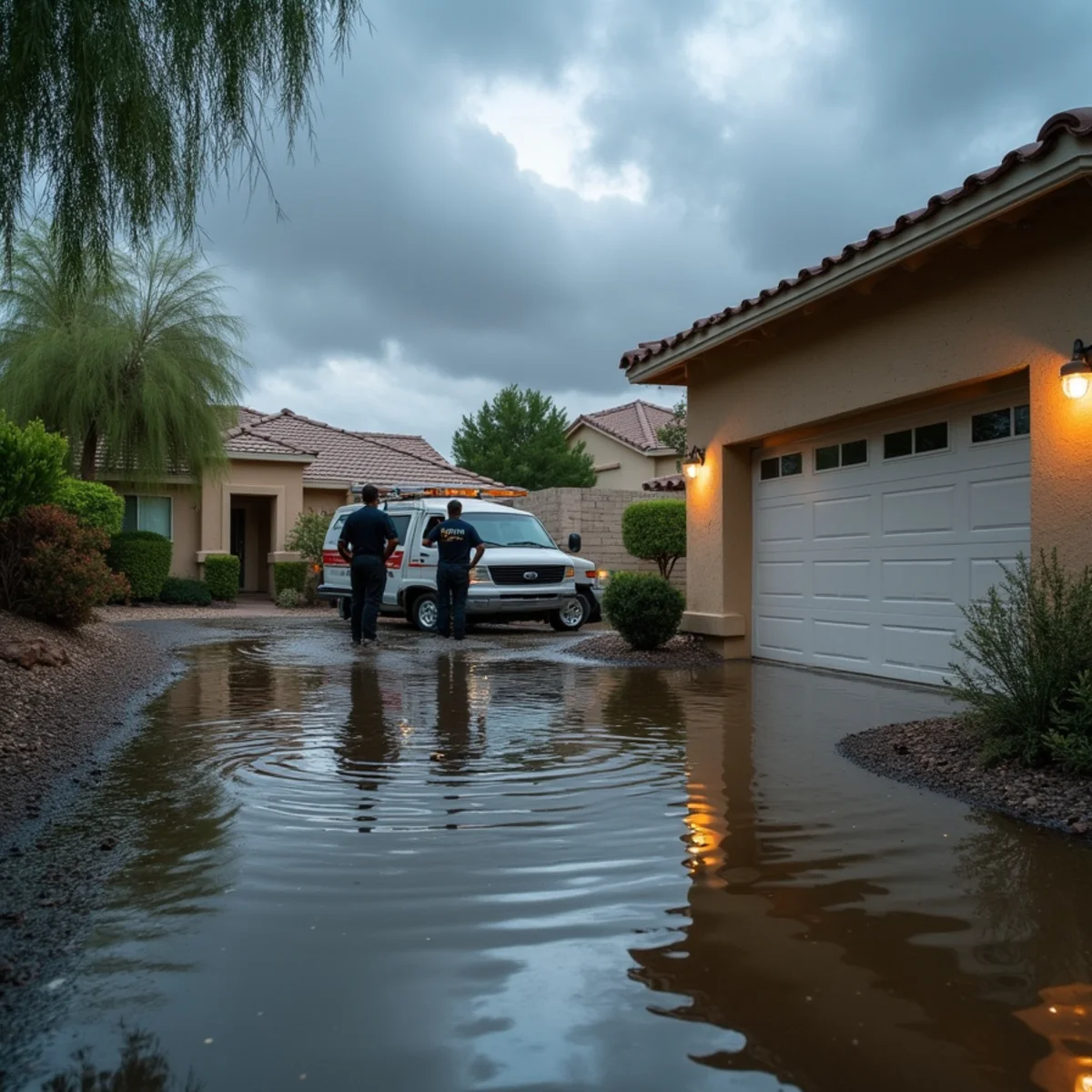
The monsoon is hammering the roof, and now there is a brown stain spreading across your bedroom ceiling. Maybe it is dripping. Maybe the drywall is starting to sag into a heavy, dark bubble. A ceiling leak during a Scottsdale storm is alarming for good reason — that bulge is pounds of water held back by a thin skin of wet drywall, and when it lets go, it lets go all at once.
The wrong move is to stand under it and poke around, or to do nothing and hope it holds. Both end badly. There is a right way to relieve the pressure, contain the water, and protect the room until the rain stops and a crew can get on the roof. Here is the emergency playbook for a monsoon ceiling leak.
First: get everything out from under it
Move fast. Pull furniture, electronics, and rugs out of the drip zone, or throw plastic sheeting over them. Put a bucket, tote, or trash can under the active drip, and lay towels around it. Assume the leak is bigger than the single spot you can see — water travels along the framing and finds the lowest point to come through, so the drip is rarely right under the actual roof failure.
Relieving a bulging ceiling — safely
This is the part people get wrong. A sagging, water-filled bubble in the drywall is going to fail. It is safer to release it on your terms, in a controlled way, than to let it burst and bring down a wide sheet of soaked ceiling.
- Clear the area beneath and place a large bucket or tote directly under the bulge.
- Put down a tarp or towels to catch splash and protect the floor.
- Standing to the side — never underneath — use a screwdriver or a stick to make one small hole at the lowest point of the bulge.
- Let the water drain in a controlled stream into the container. One clean hole relieves the pressure and stops the sheet from tearing loose.
- Empty the container as it fills, and keep people and pets clear until the drip stops.
That single relief hole trades a small, patchable puncture for saving the rest of the ceiling and everything under it.
Contain, then document
Once the pressure is off, keep containing until the storm passes. Do not go up on a wet tile or flat roof during a monsoon — that is how people get hurt. Manage it from inside until it is safe to look up top.
Then document for your claim. Photograph the ceiling stain, the bulge or relief hole, the drip path, and any damaged belongings. Wind-driven rain that enters through a storm-damaged roof is often covered by a standard homeowners policy, while a slow, long-neglected leak may not be. Clear photos taken during the event are what make that case.
Why Scottsdale roofs leak in the monsoon
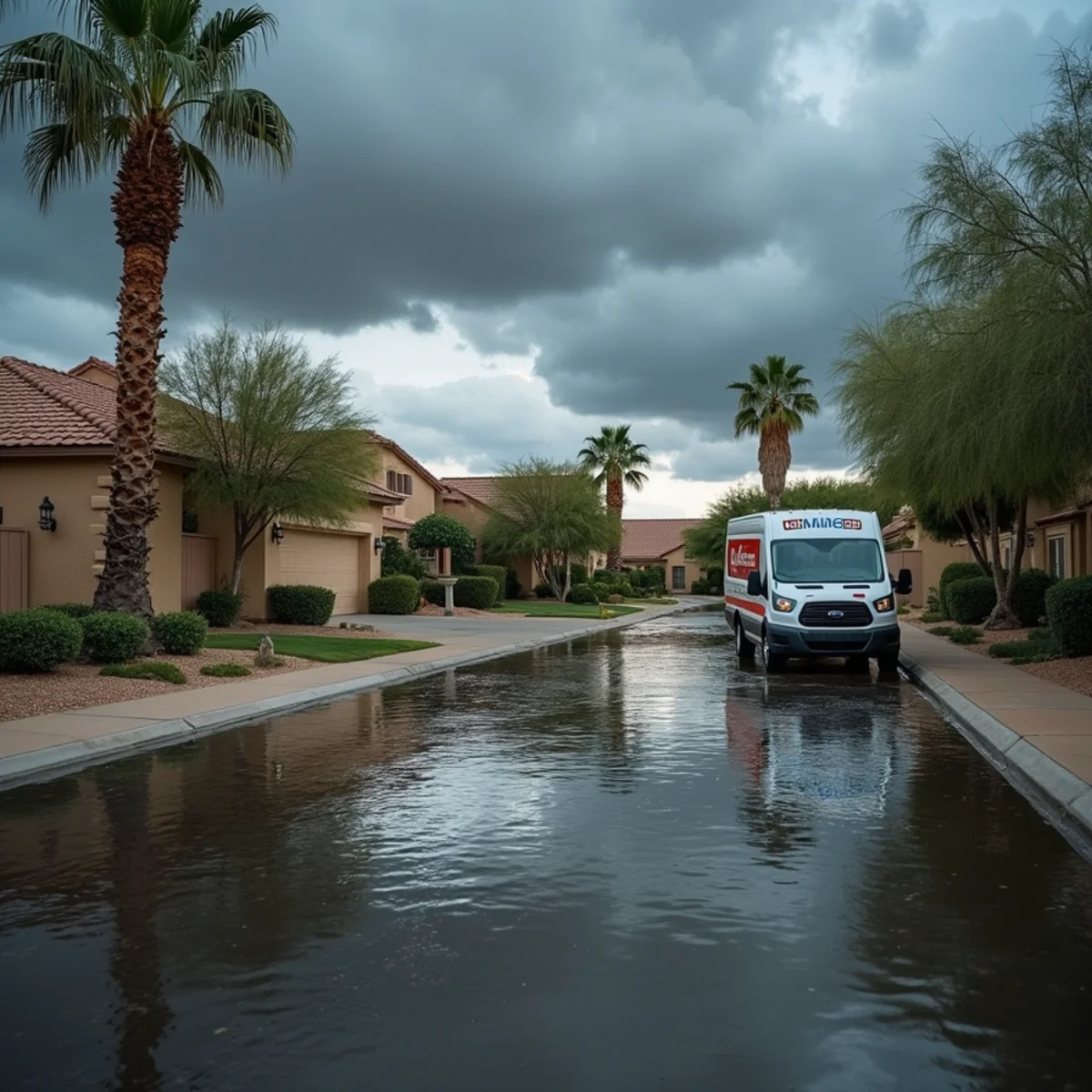
Scottsdale's rooflines are built for sun, not for a sideways hundred-year rain — and the monsoon delivers exactly that. Two roof types dominate here, and each fails in its own way.
- Flat and low-slope roofs: common on the mid-century and contemporary homes around Old Town Scottsdale, these rely on a membrane and good drainage. When a scupper or drain clogs, water ponds and finds every seam — and a microburst can lift and tear the membrane outright.
- Tile roofs: the tile is a rain shield, but the real waterproofing is the underlayment beneath it. In our sun, that felt underlayment dries out and cracks over the years. Wind-driven monsoon rain blows up and under the tile, hits the failed underlayment, and runs down the decking into your ceiling.
Either way, the leak you see inside is downstream of a roof problem you cannot see from the bedroom. We cover the roof side of this in detail in our guide to haboob and monsoon roof leaks on Scottsdale flat roofs.
Drying the ceiling and attic — the part that prevents mold
After the drip stops, the danger moves out of sight. Water sits on the top side of the drywall, soaks the insulation, and wets the framing and attic decking. Left alone in our heat, that becomes mold within 24 to 48 hours, and a sagging, stained ceiling weeks later even though the storm is long gone.
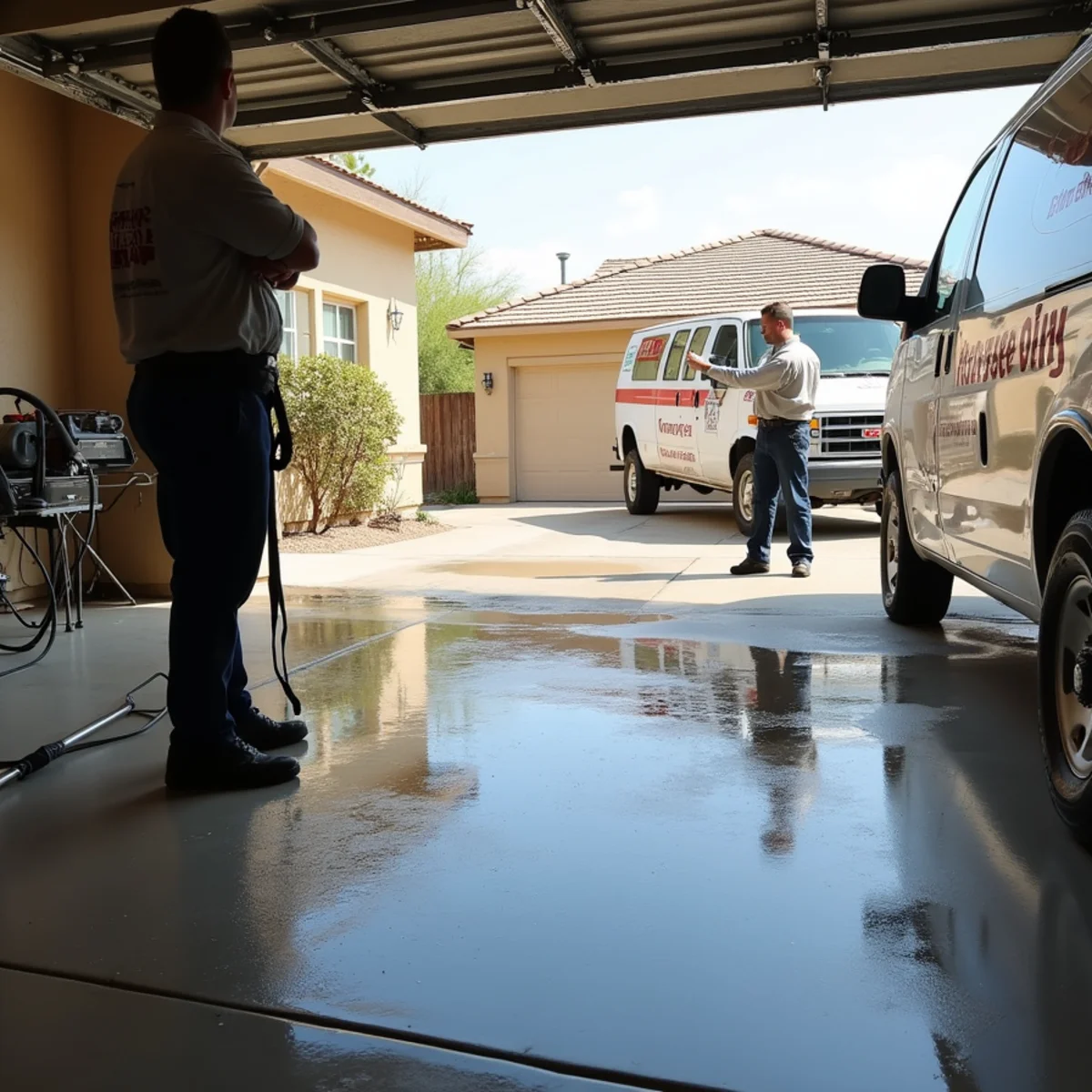
Professional emergency water removal handles the hidden side: pulling wet insulation, drying the cavity and framing with air movers and dehumidifiers, and monitoring with moisture meters until the structure is genuinely dry. If the leak brought down ceiling material or the water was fouled with roof debris and attic dust, that crosses into flood cleanup territory, with proper removal and sanitizing. We cover Scottsdale around the clock through monsoon season, and our crews stage close enough to reach most of the city fast.
When to call
Call as soon as the ceiling is actively leaking or bulging, or once you have relieved it and need the structure dried before mold sets in. We answer the phone at 2 a.m. during a storm, and we will get you contained and dried, then coordinate with your roofer so the fix holds through the next haboob. You get an itemized estimate for the water work — no guesswork, no scare tactics.
Frequently Asked Questions
Yes, carefully. A water-filled bulge will fail on its own and can bring down a wide sheet of ceiling. Standing to the side — never underneath — make one small hole at the lowest point and drain the water into a bucket. That controlled release saves the rest of the ceiling.
Tile is only the shield; the waterproofing is the underlayment beneath it. In Arizona sun that felt dries and cracks over years, so wind-driven monsoon rain blows under the tile and runs down the decking into your ceiling. The tiles can look perfect while the underlayment has failed.
Wind-driven rain through storm-damaged roofing is often covered, while a slow, long-neglected leak may be denied as a maintenance issue. Document the damage during the event with photos, file promptly, and keep records of the emergency mitigation.
Usually yes. Water stays trapped above the drywall in the insulation and framing, where it grows mold within a day or two in our heat. Professional drying with moisture meters confirms the cavity is dry, preventing a sagging, moldy ceiling weeks later.
Need Help With This in Person?
Our local crew handles it 24/7. Explore the related services and areas below, or just call (866) 688-0301.