A dishwasher rarely floods a kitchen in one dramatic wave. It leaks slowly — a weeping door gasket, a loose hose clamp, a hairline crack in the drain line — and it does it in the one place you never look: down and back, under the cabinets and behind the kickplate. By the time a warped floorboard or a musty smell finally tips you off, the water has been feeding the subfloor for weeks.
Hidden dishwasher leaks are among the sneakiest water-damage sources in a Tempe home, precisely because the evidence is out of sight until it is expensive. Here is how they hide, how professionals find them, and why drying under cabinets is a job box fans cannot do.
Why dishwasher leaks stay hidden so long
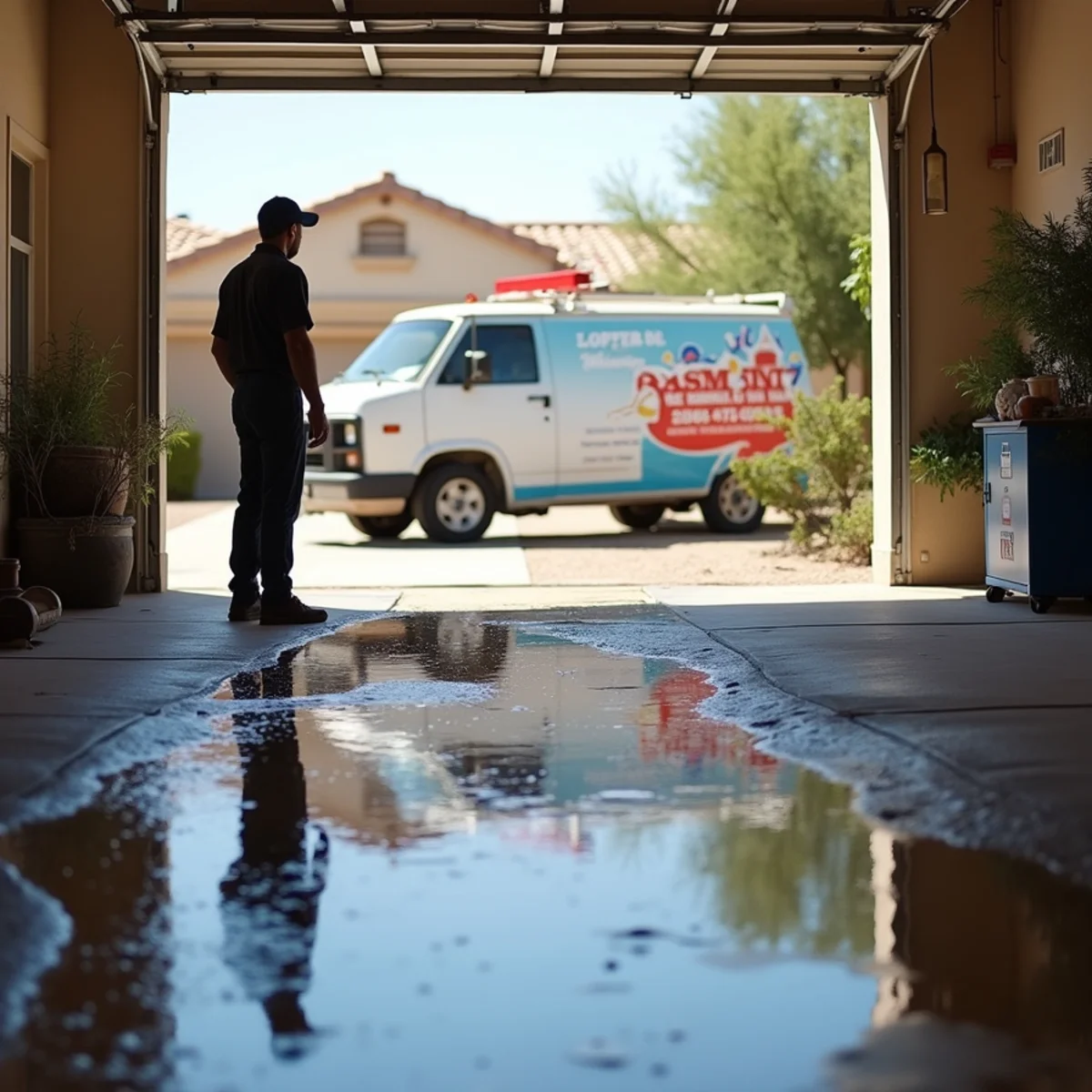
Three things conspire to keep these leaks invisible. The leak is usually small and slow, so there is never a puddle that demands attention. The water drains into the enclosed cavity beneath and behind the dishwasher — under the adjacent cabinets, below the kickplate, into the subfloor — where you never see it. And a kitchen is a wet, humid room anyway, so a little dampness does not raise alarms. The leak quietly saturates wood and drywall for weeks before a surface symptom appears.
Where the water actually goes
Follow the water and you understand the damage. From the base of the dishwasher it spreads outward and downward:
- Into the subfloor directly under and in front of the unit, where it warps and delaminates wood.
- Under the toe-kick and into the base of the neighboring cabinets, swelling particleboard and cabinet bottoms.
- Into the lower drywall and wall cavity behind the machine.
- Along the slab or subfloor to spots feet away from the actual leak, which is why the damage is often not directly under the dishwasher.
The usual leak points
When we pull a leaking dishwasher, the culprit is almost always one of a short list:
- The door gasket, cracked or worn, letting water escape at the bottom of the door.
- The water supply line or its fitting under the unit.
- The drain hose or a loose hose clamp, often where it connects under the sink.
- The circulation or drain pump and its seals.
- A cracked tub or a failed door latch that stops the seal from seating.
How professionals actually find it
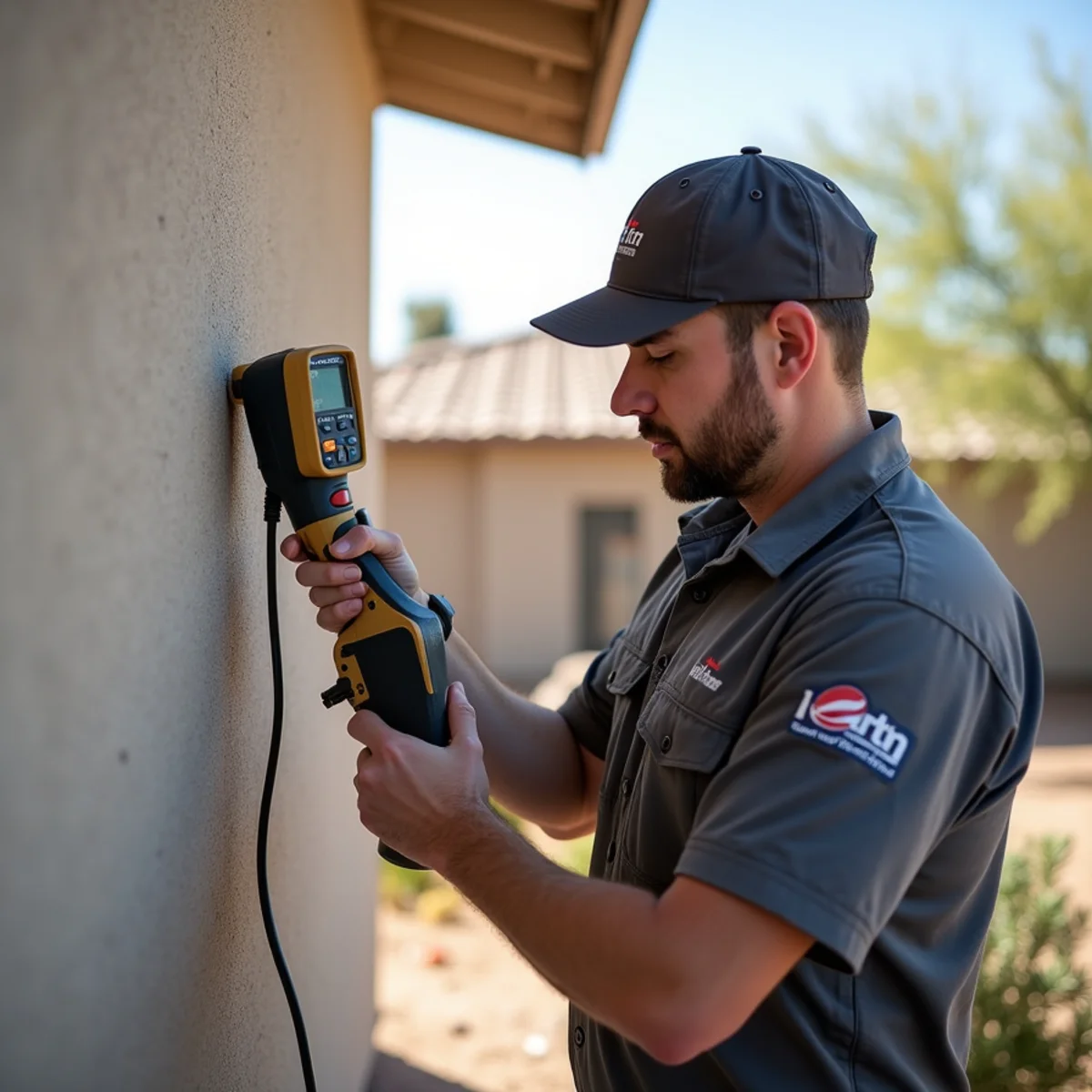
Guesswork means pulling cabinets that did not need to come out. Instead, we locate the moisture before we open anything up. Non-invasive moisture meters read dampness through flooring and cabinet panels; a thermal imaging camera reveals the cool footprint of evaporating water spreading under the cabinets; and pulling the kickplate lets us inspect the cavity directly. Mapping the wet area tells us the true extent — which is almost always larger than the visible symptom — a principle we rely on across every job and detail in moisture mapping in Tempe block homes.
Why drying under cabinets defeats a box fan
This is where DIY drying fails. The wet zone is inside an enclosed cavity with almost no airflow — under cabinet bases, behind the kickplate, beneath the subfloor. A fan blowing across the open kitchen floor does nothing for the moisture sealed in that pocket. Proper drying means creating airflow into the cavity itself, often by removing the kickplate and toe-kick, drilling discreet ventilation holes into cabinet bases, and running dehumidification to drop the moisture load in the enclosed space. Wet cabinet material that cannot be dried has to come out.
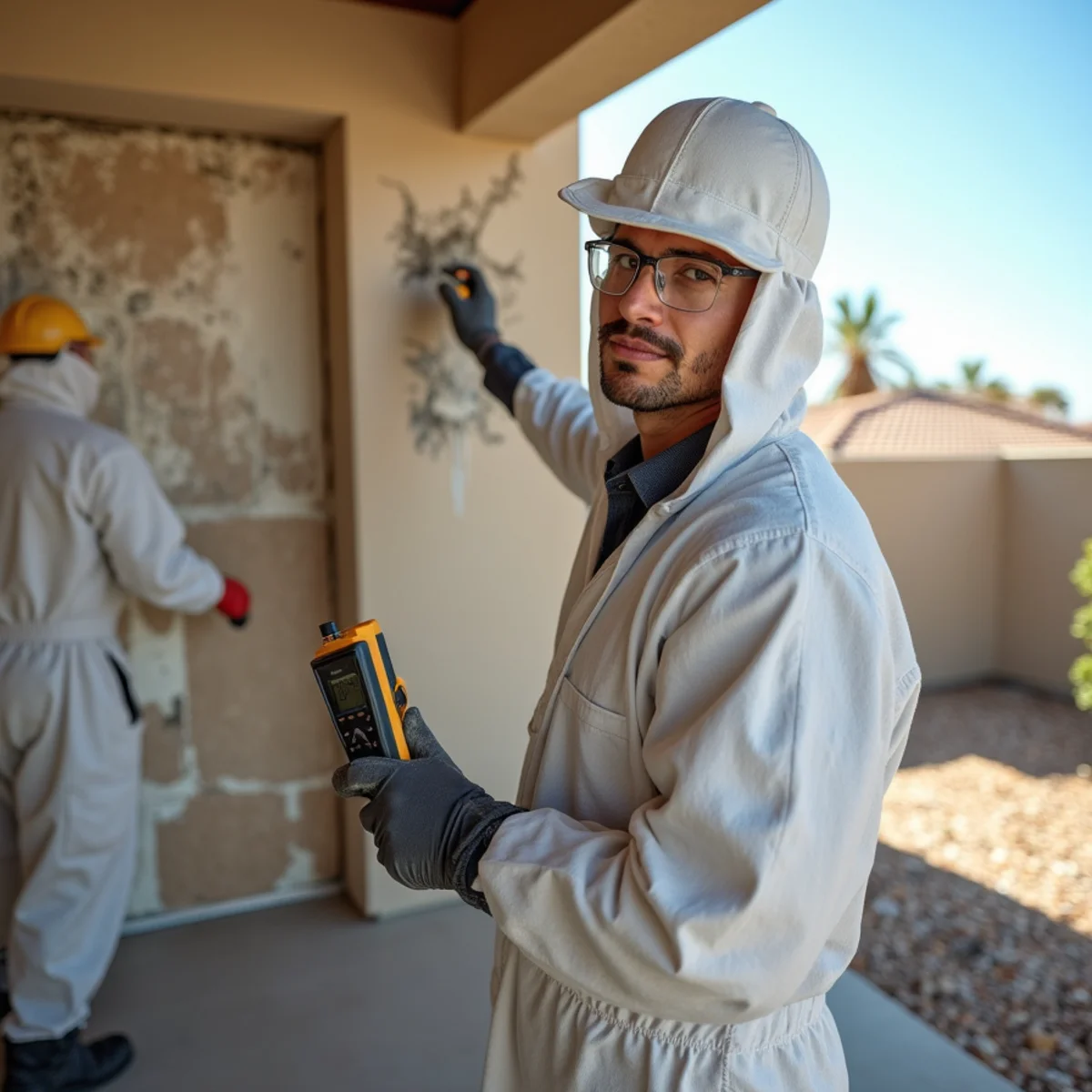
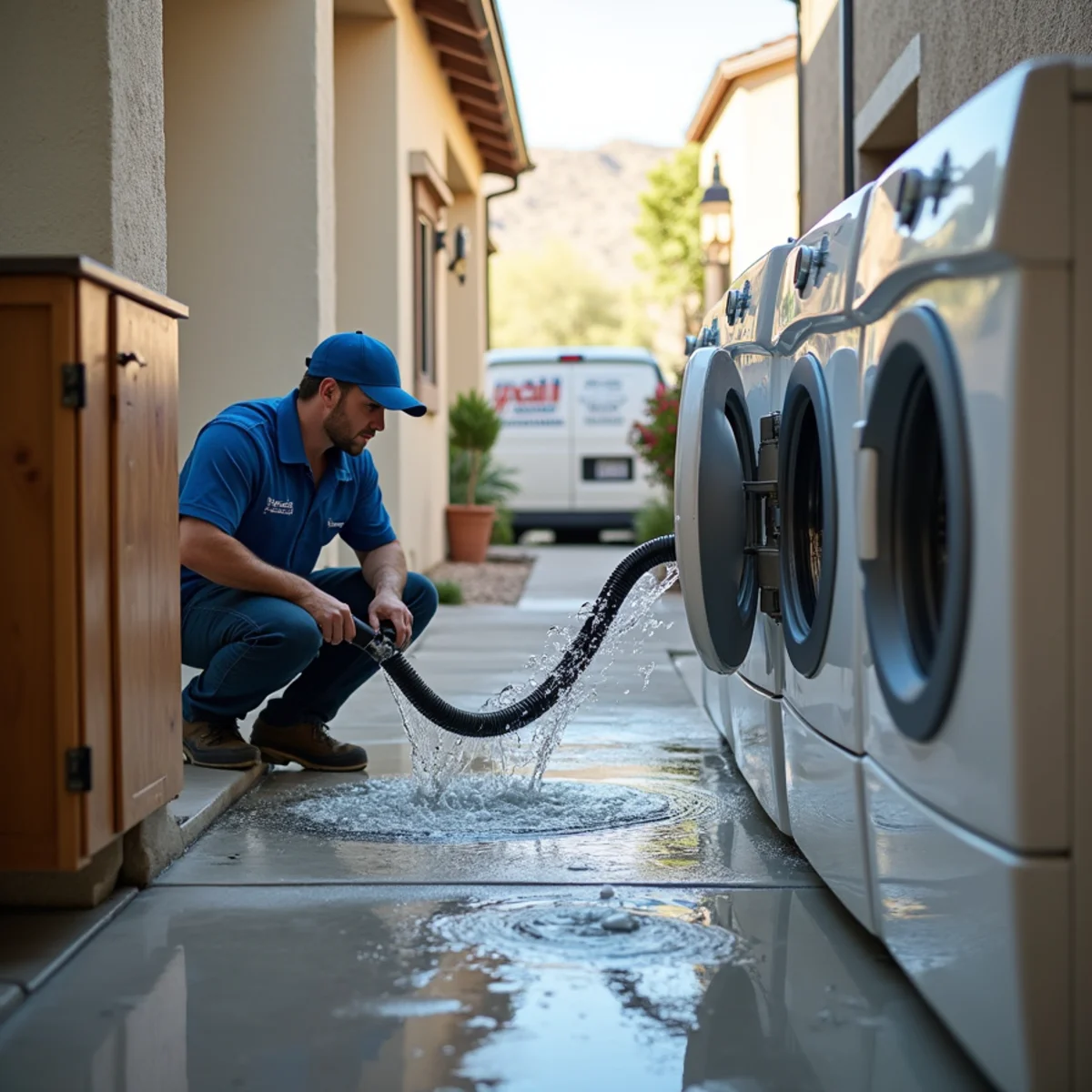
Because the damage hides and spreads, treating a dishwasher leak means finding every wet inch and drying the structure completely, not just wiping the floor. Our crew handles appliance leak water damage with the extraction and structural drying these enclosed leaks demand, and we watch closely for the mold that hidden moisture invites. We cover Tempe neighborhoods like Pepperwood around the clock — call (866) 688-0301 if your kitchen floor is telling you something is wrong.
Frequently Asked Questions
The early tells are subtle: warped or discolored flooring in front of the unit, a musty smell near the sink base, a soft or stained toe-kick, or peeling at the cabinet bottom. Because the water hides in the cavity below, a moisture-meter reading is the reliable way to confirm it before pulling anything apart.
Yes. A slow leak that runs for weeks quietly saturates the subfloor, cabinet bases, and lower drywall, warping wood and breeding mold in an enclosed space. The gradual, hidden nature is exactly what makes these leaks costly — the damage is well established before it becomes visible.
Because the moisture is trapped in an enclosed cavity with no airflow. A fan across the open floor cannot reach it. Effective drying requires opening the toe-kick, creating airflow into the cabinet base and subfloor, and running a dehumidifier to lower the moisture in that sealed pocket.
Not always. If the leak is caught early and the cabinet material is still sound, we can often dry it in place by venting the cavity. Cabinet bases made of particleboard that have swollen or delaminated usually cannot be restored and need to come out. Moisture readings guide that call.
Need Help With This in Person?
Our local crew handles it 24/7. Explore the related services and areas below, or just call (866) 688-0301.