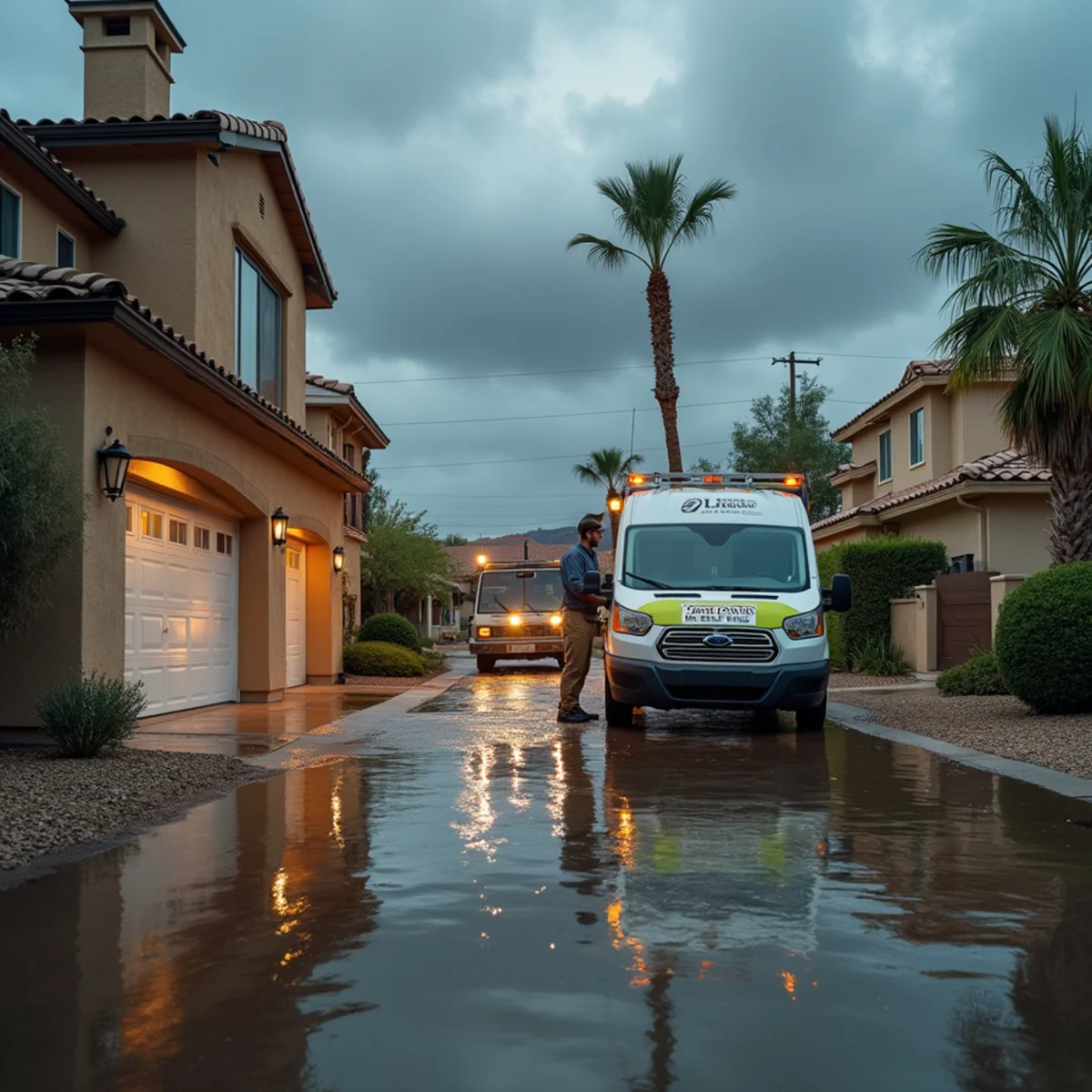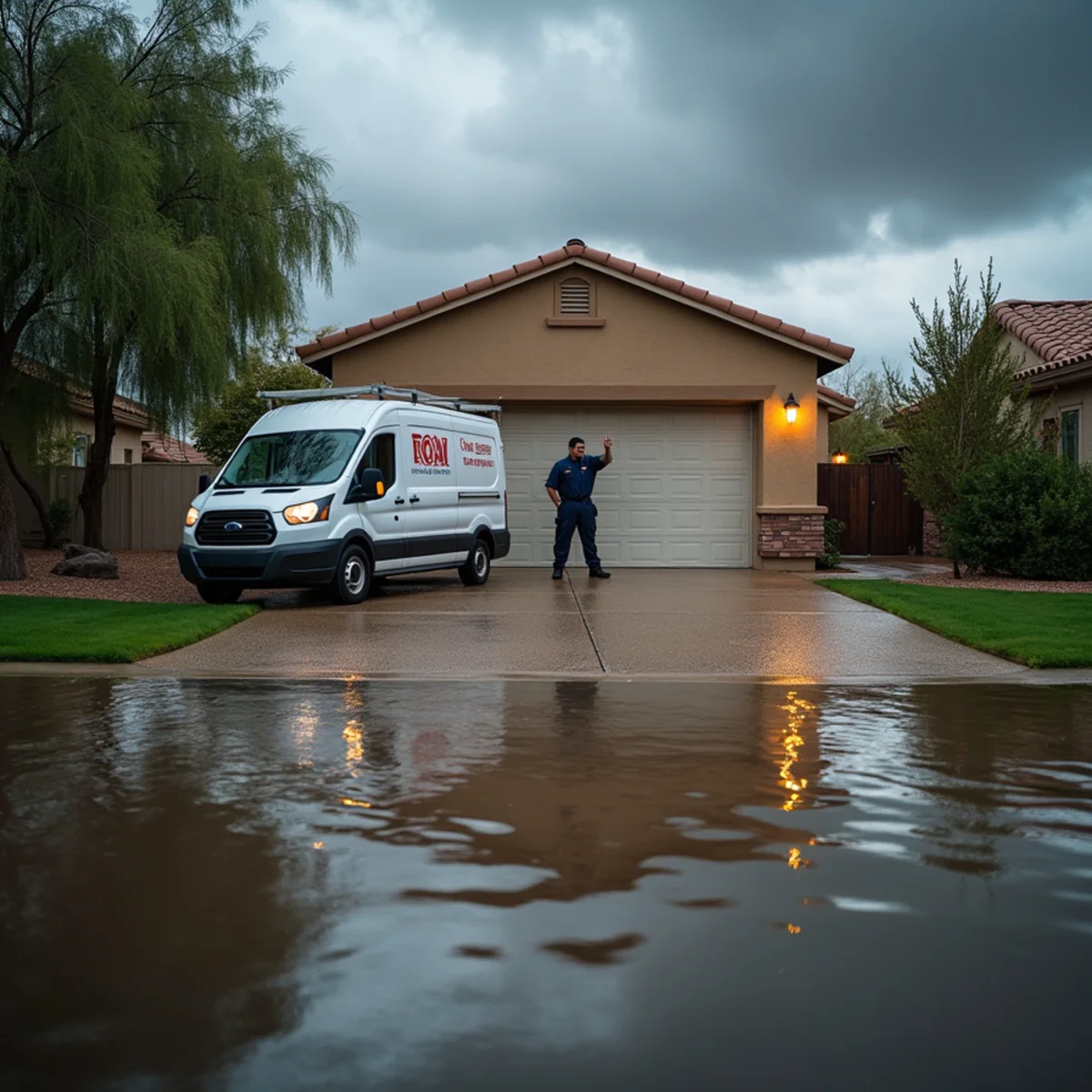
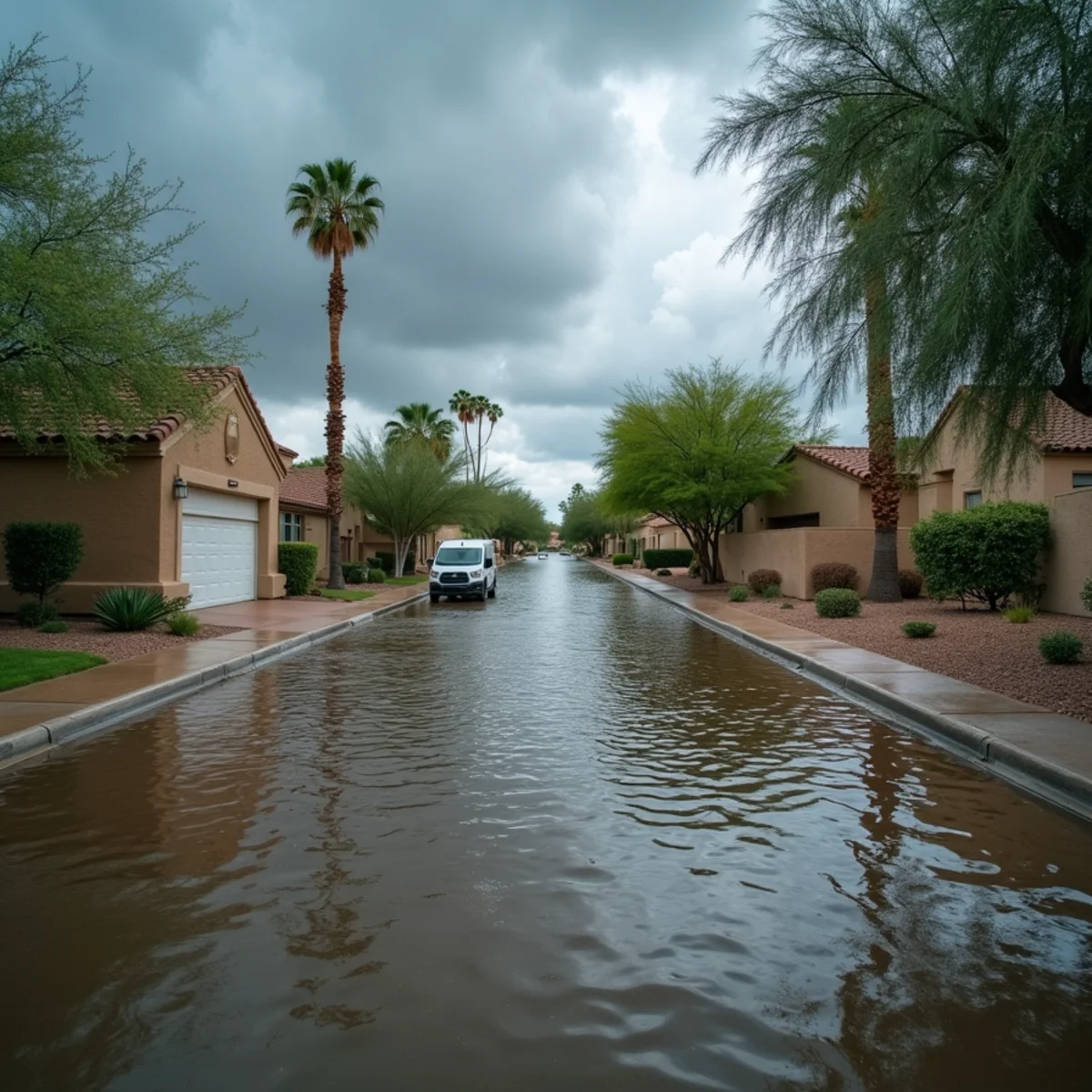
The haboob rolled in, the sky opened, and an inch of water came up through your floor or poured in under the door. You file a claim expecting your homeowners policy to handle it. Then comes the sentence that stuns people every monsoon season: flood is not covered.
It is one of the most misunderstood gaps in Arizona home insurance. Let us walk through what your policy does and does not cover when monsoon water gets into your Maricopa County home — and the one exception that catches everyone off guard.
Why homeowners insurance excludes flooding
A standard homeowners policy covers water that comes at your home from above and inside — a burst pipe, a roof the wind tore open, an overflowing appliance. What it almost universally excludes is surface flooding: water that rises from the ground up. Flash flooding, water sheeting across the desert and pooling against your foundation, a wash that jumped its banks — that is flood, and flood lives in a separate policy.
Maricopa County is real flood country
It is easy to assume the desert does not flood. The record says otherwise. On September 8, 2014, a 100-year-plus storm dropped historic rain across the Valley and pushed the county into a state of emergency, flooding homes and freeways that had been bone-dry the day before. Monsoon season runs June 15 through September 30, and every year microbursts and haboobs turn streets into rivers. Flat desert soil sheds water instead of absorbing it, so it runs — straight toward the low spot, which is sometimes your living room.
Separate flood insurance: NFIP and beyond
If surface flooding is a risk where you live, you need a flood policy, and it is a separate purchase from your homeowners coverage.
- The National Flood Insurance Program (NFIP), backed by FEMA, is the most common source and is available in participating Maricopa County communities.
- Private flood insurance exists too, sometimes with higher limits than the NFIP caps.
- Flood policies usually carry a waiting period — often around 30 days — so you cannot buy one as the storm clouds gather. You have to plan ahead.
- Being outside a mapped high-risk zone does not mean zero risk; plenty of Valley flood claims come from areas the maps call low-risk.
The roof-leak exception that fools people
Here is the nuance that flips claims both directions. If a monsoon microburst tears shingles or flashing off your roof and rain pours through that new opening, that is usually a covered homeowners loss — it is storm damage to the structure, not surface flooding. But if your roof was already failing and rain simply worked through worn-out material over time, the insurer calls it deferred maintenance and denies it.
So two homes on the same street can flood in the same storm and get opposite answers. The difference is the path the water took and the condition of what it came through. That is why documenting the source is not optional.
Before the next monsoon: get ahead of it
The worst time to learn your policy excludes flood is mid-storm. A short off-season checklist saves a lot of grief:
- Read your declarations page and confirm whether you carry any flood coverage at all — most Valley homeowners do not.
- If you sit near a wash, a low spot, or a historically flooded area, price an NFIP or private flood policy and account for the waiting period.
- Clear roof drains, scuppers, and yard drainage so storm water has somewhere to go besides your door.
- Keep a phone charged and a plan for where water would enter first, so you can document fast when it counts.
The 2014 storm taught the Valley a hard lesson: homes that had never taken on water in decades flooded in a single afternoon, and many owners found out about the exclusion only after the fact. Flood risk here is not about whether you sit inside a mapped zone — it is about whether the water has a path to your home.
What to do when monsoon water is in your home
- Stay safe — never wade into water near outlets or a submerged panel.
- Document the entry point and the damage before you touch anything.
- Get the water out fast; standing water plus our heat starts mold in 24 to 48 hours.
- Note the cause honestly — roof, window, or ground — because it decides which policy applies.
- Call your insurer and a restoration crew; do not wait to see if it dries on its own.
Whatever the coverage answer turns out to be, the water still has to leave your home today. We run flood cleanup and after-hours monsoon flood emergency response across the Valley, and we document the source so your claim — homeowners or flood — has the proof it needs. See how we cover the region on our Maricopa County service page.
Do not let a storm catch you assuming you are covered. Check your policy before June, and if a monsoon has already put water in your home, call (866) 688-0301. For the storm-season game plan, read our monsoon flood emergency checklist.
Frequently Asked Questions
No. Standard homeowners policies exclude surface flooding — water that rises from the ground and flows into your home. That requires separate flood insurance, such as an NFIP policy.
Water damage from a sudden roof or window failure is usually covered by homeowners insurance. Flood is water that rises off the ground and enters the home, and it is excluded — it needs a separate flood policy.
Usually yes — that is storm damage to the structure, not surface flooding, so a standard policy typically covers it. But if the roof was already worn out and rain worked through over time, the insurer may call it maintenance and deny it.
Through the NFIP in participating communities, or a private flood insurer. Note the waiting period — often about 30 days — so you must buy it before a storm, not as one approaches.
Need Help With This in Person?
Our local crew handles it 24/7. Explore the related services and areas below, or just call (866) 688-0301.