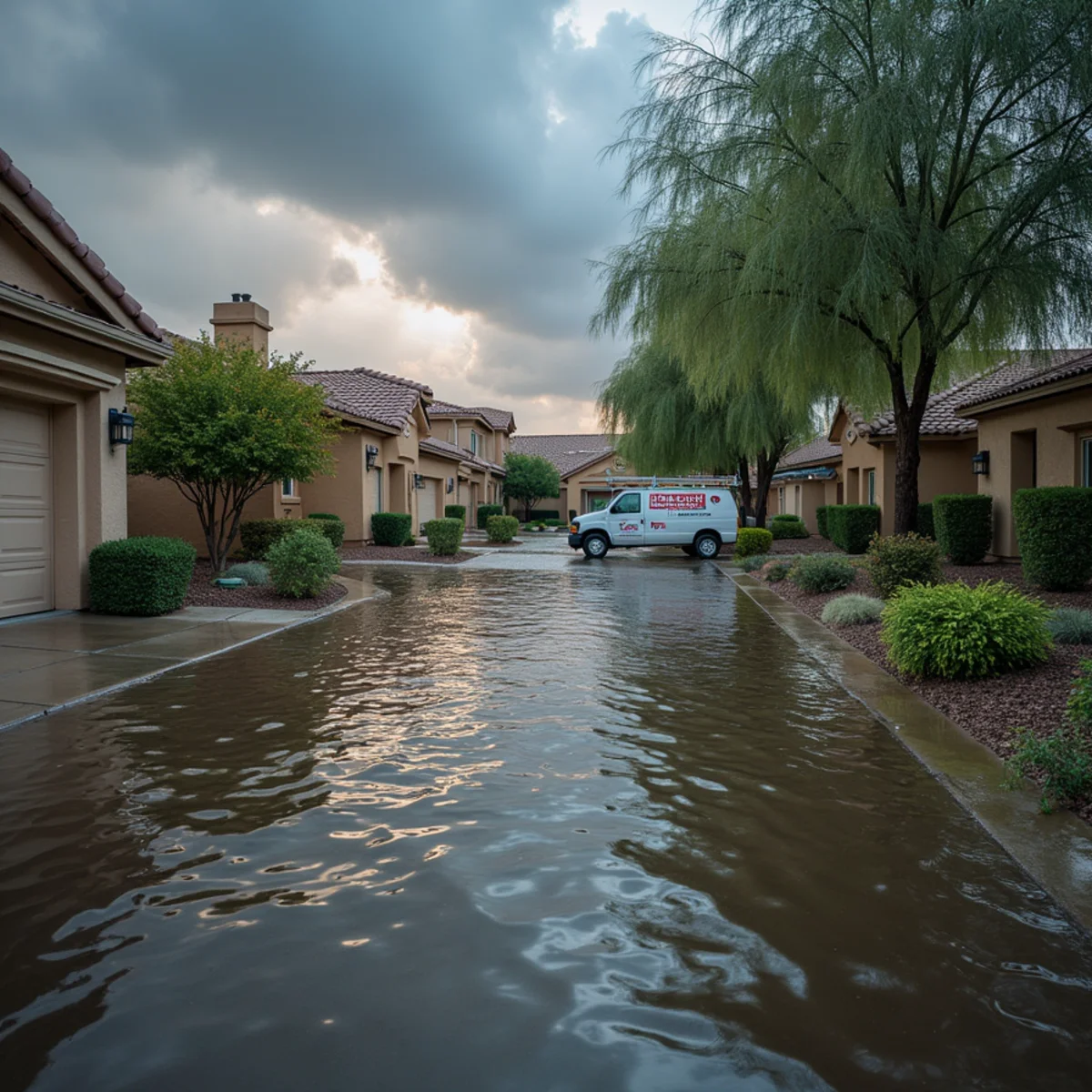
Every longtime Tempe homeowner remembers a monsoon that got out of hand. September 8, 2014 was the storm that rewrote the record books. A slow, soaking system parked over the Valley before dawn and dropped what forecasters called a 100-year rainfall in a matter of hours. Freeways turned into rivers. Cars floated. By that morning, Maricopa County had declared a state of emergency.
Here is the hard part. Water does not care that we live in a desert. When it arrives all at once, our streets, our flat lots, and our low slab-on-grade homes have nowhere to send it. The lesson from that day was not that Tempe is doomed to flood. It was that the homes that came through it best belonged to people who understood their risk before the sky opened.
What actually happened on September 8, 2014
The storm built overnight and unloaded during the morning commute. Rainfall totals across metro Phoenix broke records that had stood for generations. Stretches of Interstate 10 and surface streets flooded to the point of closure. First responders ran water rescues. Schools shut their doors. The county emergency declaration was not a formality. It reflected how much water fell, how fast, and how little of it the ground could take.
It landed squarely inside our monsoon season, which runs June 15 through September 30. Most years we brace for microbursts and haboobs, the violent short bursts that snap trees and drive rain sideways. September 8 was a different animal. It was a prolonged, soaking rain that simply would not stop, and that is what overwhelmed the drainage.
Why a desert city floods harder than you would expect
People assume dry ground drinks water quickly. The opposite is true. Sun-baked Sonoran soil sheds the first heavy rain almost like pavement, and that runoff has to go somewhere. In older parts of the East Valley, it goes toward the house.
- Hard, caliche-rich desert soil absorbs slowly, so the first inch mostly runs off across the surface
- Slab-on-grade homes sit only a few inches above the yard, so sheet flow reaches the door fast
- Flat lots and shallow drainage swales fill and back up during a long rain
- Many older neighborhoods were platted before modern retention-basin requirements existed
There is also the matter of scale. A short, violent microburst dumps a lot of rain on a small area in minutes and overwhelms the local drains. A slow, wide storm like the one in 2014 soaks the entire region at once, so every wash, basin, and street is trying to move water at the same moment and there is nowhere for the overflow to go. Both patterns flood homes. They just do it differently.
What the storm exposed about our homes
The damage we saw afterward was rarely dramatic. It was not geysers of water. It was water finding the lowest seam and walking in. Garage thresholds. Sliding-door tracks. The base of a block wall. Weep holes packed with years of dust. An inch of moving water against a slab-on-grade door will beat almost any weatherstripping ever made.
The 24 to 48 hour clock starts the moment rain stops
Here is what many homeowners learned the hard way that week. The danger did not end when the rain did. Wet drywall, soaked carpet pad, and damp baseboards trapped moisture inside the structure, and in Arizona heat, mold can begin to grow within 24 to 48 hours. The homes that dried fast came through clean. The ones whose owners decided to wait and let it dry on its own often traded a drying bill for a mold remediation bill.
One more thing worth saying plainly. Storm runoff that has crossed streets and yards is treated as contaminated water, so a flooded carpet is usually a removal job, not a save-it job. That is not caution for its own sake. It is what keeps a soaked pad from becoming the mold you are breathing next month. Professional flood cleanup removes the ruined porous materials and dries the structure underneath.
How to be ready before the next 100-year storm
- Walk your lot during the next rain and note exactly where water pools and which way it runs
- Clear roof scuppers, downspouts, and yard drains before June 15 every year
- Keep sandbags or filled water-diversion tubes on hand, and know where the city and county stage sandbag supplies
- Get anything valuable up off the garage and low-room floors and onto shelving
- Photograph your home in good condition now, so you have a before to compare against for any claim
Insurance is the piece people get wrong. Standard homeowners policies generally do not cover rising surface water from a storm. That is flood insurance, which is separate. If you want to understand the coverage gap before the next event, read our breakdown of monsoon flood insurance across Maricopa County, which covers the whole Maricopa County service area we respond to.
When the water is already inside
If a storm has already put water on your floor, the order of operations is simple. Stay safe around electricity, stop the water from spreading where you can, and call a local crew that runs around the clock. Our base off W Auto Dr near the Broadway Curve means a monsoon flood emergency crew is usually minutes away, with truck-mounted extraction and the moisture meters that find the water hiding in your walls.
September 8, 2014 is a reminder that the Valley can flood, and flood badly. Being ready is how you make sure the next record storm is a story you tell, not a renovation you pay for.
Frequently Asked Questions
Usually not for rising surface water from a storm. Standard homeowners policies cover sudden internal water, like a burst pipe, but flooding from outside typically requires separate flood insurance. Check your policy before monsoon season, not after.
Forecasters described it as a 100-year rainfall event that broke long-standing records across metro Phoenix, and it prompted Maricopa County to declare a state of emergency. The exact totals varied by location across the Valley.
No. Runoff that has crossed streets and yards is treated as contaminated, closer to gray or black water. Soaked carpet and pad from storm flooding generally need to be removed and the structure professionally dried and sanitized rather than simply dried in place.
We aim for about a 60-minute response across Tempe, 24 hours a day. During a major storm we prioritize by severity, but our W Auto Dr base keeps most of the city close.
Need Help With This in Person?
Our local crew handles it 24/7. Explore the related services and areas below, or just call (866) 688-0301.