If you own an older home in a flood-irrigated Tempe neighborhood, you know the routine. Every couple of weeks in the warm months, water arrives, your yard turns into a shallow lake for a few hours, and then it soaks away and the grass goes green. It is a cheap, effective way to keep a lawn and a few citrus trees alive in the desert. It is also, when something goes wrong, a fast way to get water where it does not belong.
Flood irrigation is a genuine piece of Valley history, delivered through the same Salt River Project canal system that has watered this land for over a century. But a system built to flood your yard on purpose has very little margin before it floods your slab by accident. The homes that stay dry are the ones whose owners understand exactly how the water moves.
What flood irrigation actually is
Flood irrigation does what it sounds like. On a set schedule, a measured amount of water is released into your yard, which has been graded and bermed to hold it. The water sits several inches deep, soaks into the soil, and recharges the ground so lawns and mature trees can make it through a Tempe summer. Neighborhoods that were once farmland, before the houses went in, often kept their irrigation rights, which is why you still see it in pockets of the older East Valley.
How SRP water reaches your yard
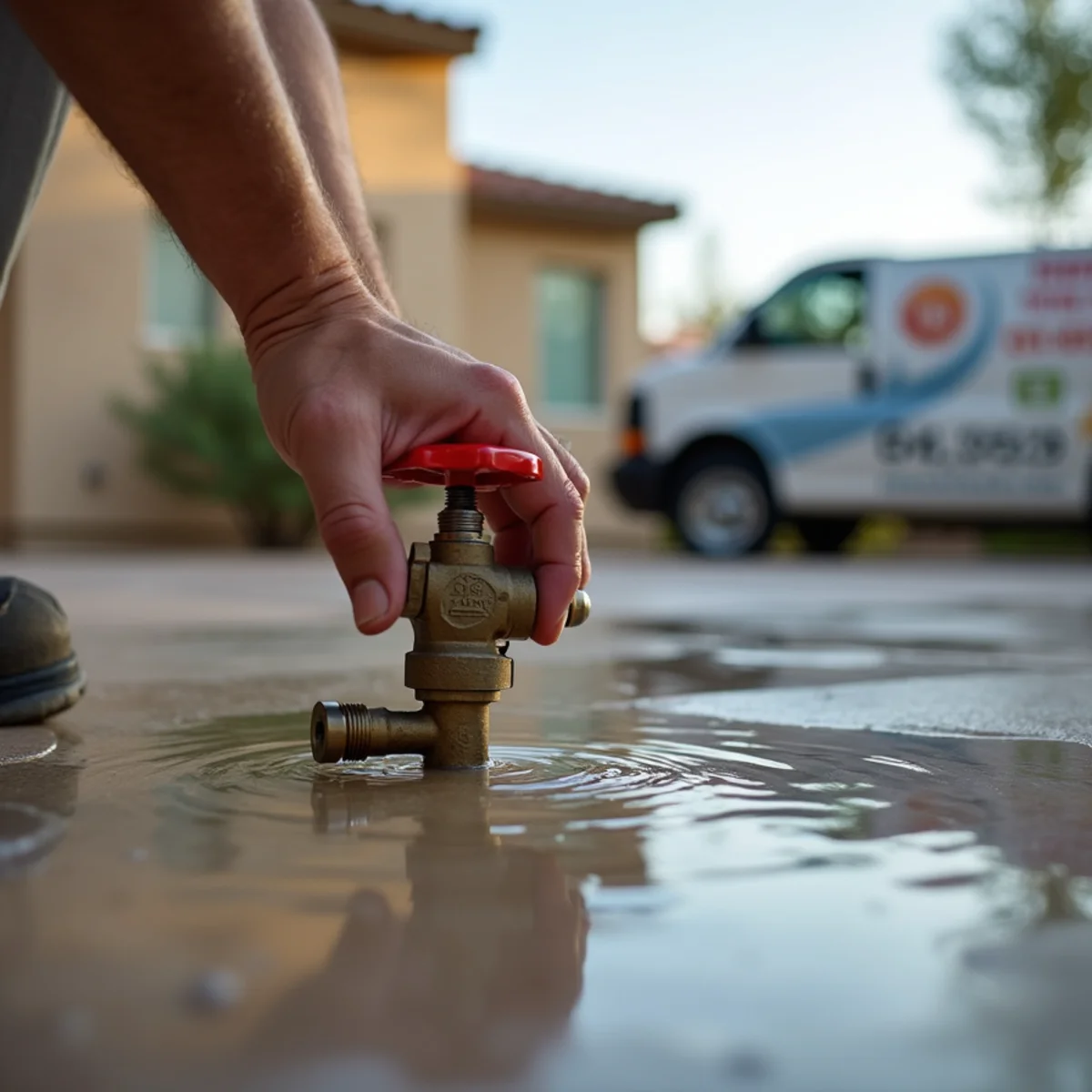
The water comes from the Salt River Project canal network, the same system of canals and laterals that has moved water across this valley for generations. Large canals feed smaller laterals and ditches, which branch down to individual streets and properties. On your scheduled turn, a gate or valve opens and lets the water flow into your yard. It is a gravity system, old and elegant, and it depends on grading, timing, and clear channels all working together.
Why a watered yard becomes an intrusion problem
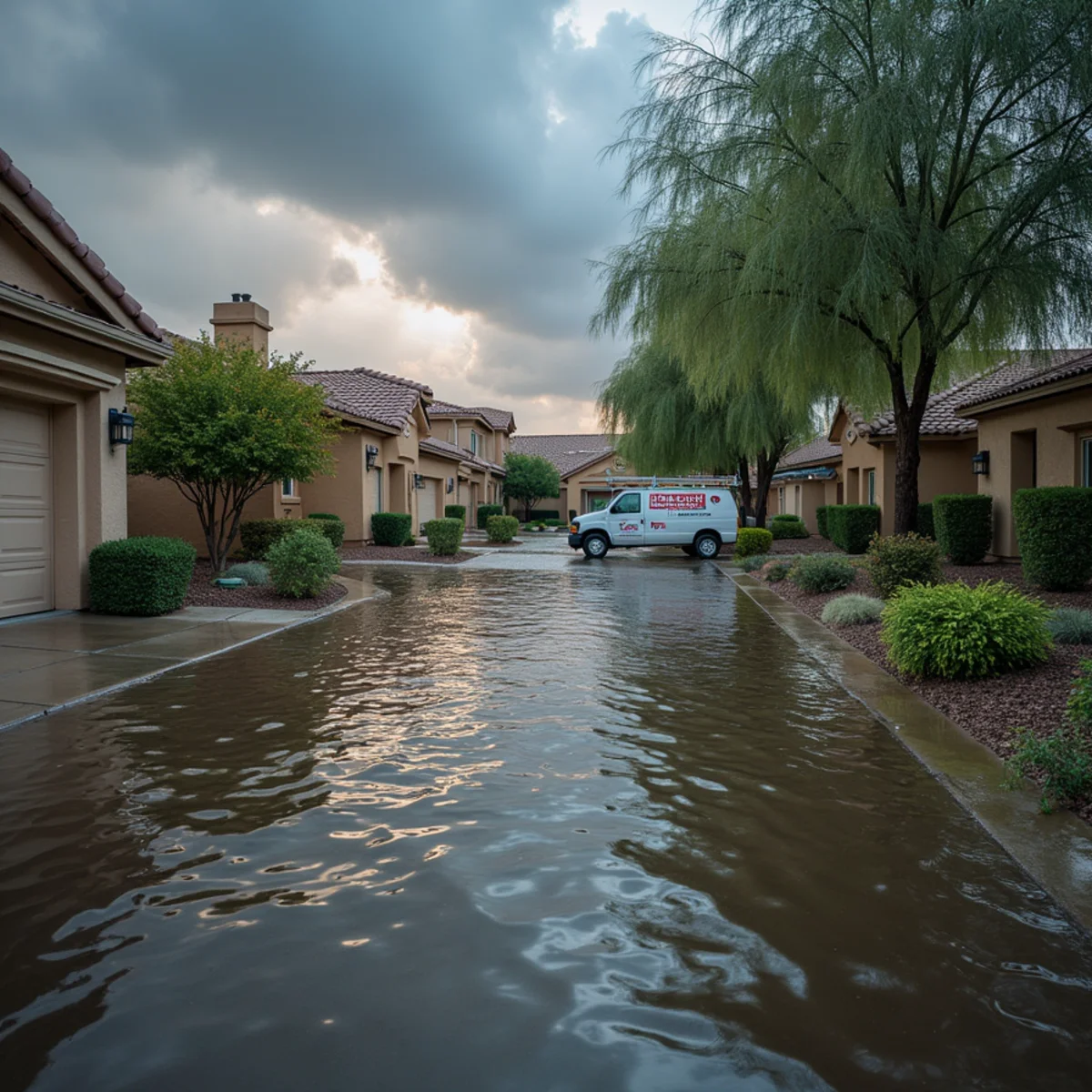
The trouble starts when the water does not drain the way it should, or there is more of it than the yard can hold. A few inches of standing water in a yard is by design. That same water against a slab-on-grade foundation, for hours, is a problem. Here is where it usually goes wrong.
- An irrigation gate left open too long, so the yard takes on more water than it can absorb
- A clogged or collapsed drainage path, so the water has nowhere to go but toward the house
- Yard grading that slopes toward the foundation instead of away from it
- Berms that have settled or washed down over the years, letting water pool against the walls
- Over-watering during a run that overlaps with a rainstorm
Where the water actually gets in
In neighborhoods like Sunburst Farms, where flood irrigation and big lots are part of the appeal, we see the same entry points over and over. The garage is the most common. Garage slabs are often the lowest floor in the house and the door seal sits right at grade, so irrigation water that pools at the driveway apron walks straight under the door.
After that it is slab seepage. Slab-on-grade homes have no basement and no crawlspace, just concrete on soil. When that soil is saturated for hours, moisture wicks up through the slab and through any crack or cold joint, showing up as damp flooring, dark grout lines, and peeling baseboards along an exterior wall.
What to do around irrigation day
- Know your schedule and be home, or have someone check, when the water is running
- Walk the yard and confirm the water is holding where it should and draining afterward
- Keep berms maintained and drainage channels clear of leaves and debris
- Regrade any spot where the yard has started to slope back toward the house
- Add a threshold seal or low barrier at the garage door if water reaches the apron
None of that is exotic. It is just paying attention to a system that is doing exactly what it was designed to do, and making sure your house is not in the path.
When the water is already inside
Once irrigation water is across your garage or seeping through the slab, time matters. That water has crossed soil and often mixes with fertilizer and yard debris, so it is not clean. The first step is fast water extraction to get it up before it soaks deeper into the slab and walls.
Then comes the part that separates a real fix from a cover-up. A wet slab does not dry from the surface in an afternoon. Proper structural drying uses air movers and dehumidifiers to pull moisture out of the concrete and framing, monitored with meters until the readings confirm the structure is dry. Skip that and you invite mold, which in Tempe heat can start within 24 to 48 hours. If you want to see how we track hidden moisture in slab homes, our guide to moisture mapping in Tempe block homes walks through it.
Flood irrigation is worth keeping. It is history, it is cheaper than sprinklers, and mature Tempe yards depend on it. Just treat it with the respect a yard full of water deserves, and know who to call the day it ends up in your house.
Frequently Asked Questions
Irrigation water that has crossed soil, fertilizer, and yard debris is treated as gray water once it enters a home. It is not sewage, but it is not clean, so soaked carpet and pad usually need removal rather than drying in place, and surfaces need sanitizing.
Garage slabs are often the lowest floor in the house and the door sits right at grade. When irrigation water pools at the driveway apron, it can flow under the door seal. Improving grade, keeping drainage clear, and adding a threshold seal usually helps.
Not directly, but repeated saturation around a slab-on-grade foundation drives moisture up through the concrete and any cracks, which mimics and can worsen slab moisture problems. Persistent damp flooring along an exterior wall is worth investigating.
Surface mopping is not enough. Concrete holds moisture, so it needs professional structural drying with air movers and dehumidifiers, monitored by moisture meters until readings confirm the slab and framing are dry. That prevents the mold that follows trapped moisture.
Need Help With This in Person?
Our local crew handles it 24/7. Explore the related services and areas below, or just call (866) 688-0301.